
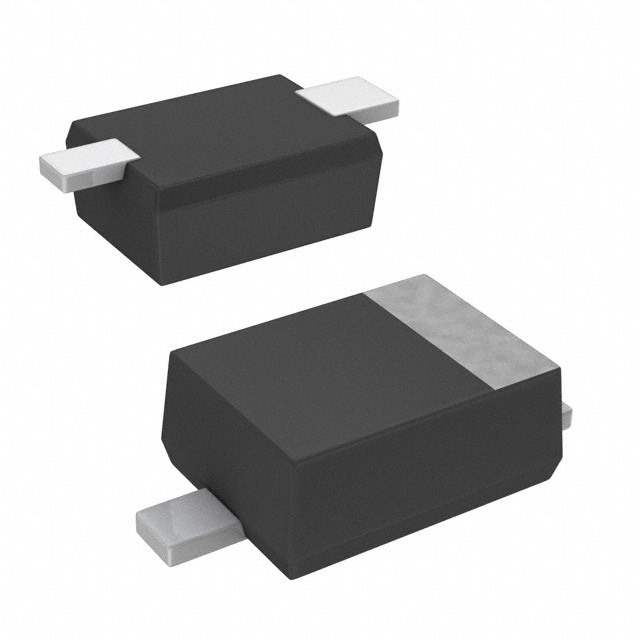
10 V Vz, 200 mW ceiling, SMini2-F5-B package, ±2.5% tolerance; lifecycle conflict drives the call.
Quick Engineering Summary
| Field | Value |
|---|---|
| Manufacturer | Panasonic |
| Category | Diodes - Zener - Single |
| Package | SMini2-F5-B |
| Core function | DIODE ZENER 10V 200MW SMINI2 |
| Key electrical range | Current - Reverse Leakage @ Vr: 50nA @ 7V; Maximum Power Dissipation: 200mW; Supply and Demand Status: Sufficient; Tolerance: ±2.5% |
| Reported stock | 411000 pcs reported — confirm on RFQ |
411000 pieces do not fix the lifecycle conflict
411000 pieces are on hand. That keeps a running line moving, but it does not settle the new-design question.
The conflict is plain: Active appears in the status fields, while the lifecycle signals also include 停止提供 and an Estimated EOL Date of Obsolete / End of life. That pushes the part into sustaining-only territory. If DZ2J100M0L is already qualified in production, the available stock and reel packaging buy time. For a fresh design, the lifecycle record is too contradictory to wave through. EU RoHS is compliant, but that is not the blocker.
The 200 mW ceiling matters more than the 10 V label
And that is the next filter. DZ2J100M0L is a 10 V zener with ±2.5% tolerance, so it fits only where that clamp window still keeps the protected node inside its allowed range, and where the circuit does not ask a small SMD zener to absorb more than its 200 mW maximum power dissipation.
The 30 Ohm maximum Zzt matters too. In a clamp or reference role, that tells you the knee is not especially stiff as current moves around, so the part should not be treated like an ideal 10 V wall. If the job is light bias stabilization or occasional overvoltage trimming, that may be acceptable. If the circuit needs a tighter response under changing current, this listing already points to a mismatch.
Forward behavior is bounded as well. The listing gives 1 V at 10 mA as a maximum forward drop point, which keeps the intended use centered on reverse-zener operation and puts any accidental forward bias under the same dissipation ceiling. Leakage is listed at 50 nA @ 7 V, useful when reverse bleed matters, but it is still only one point and not a full leakage curve across voltage and temperature. In short, DZ2J100M0L reads as a small-signal zener with a defined nominal voltage and modest power headroom, not a universal clamp.
The weak point is the missing thermal and surge picture
The weak point is obvious: the listing leaves out the thermal and surge details that would close the call. DZ2J100M0L still needs RθJC, a derating curve, surge current, and a package drawing or pinout reference.
Can you keep a line running on it?
Can we keep building with it? Yes—if the line already uses DZ2J100M0L.
The practical issue is continuity, not fit. The listing shows reel - TR packaging, 3k pcs per package, dry storage cabinet, and humidity protection package, with enough supply shown now to support existing production. Buy to the shipping format your line already handles, then get the lifecycle status reconciled before DZ2J100M0L goes into any new release.
View the Win-Source product page for DZ2J100M0L.
Key Takeaways for Engineers & Buyers
- Hold DZ2J100M0L to 200 mW as a dissipation ceiling, not a target.
- Use the ±2.5% Vz tolerance in the clamp window before releasing the rail.
- Buy in reel multiples of 3k pcs if the line is already qualified on DZ2J100M0L.