
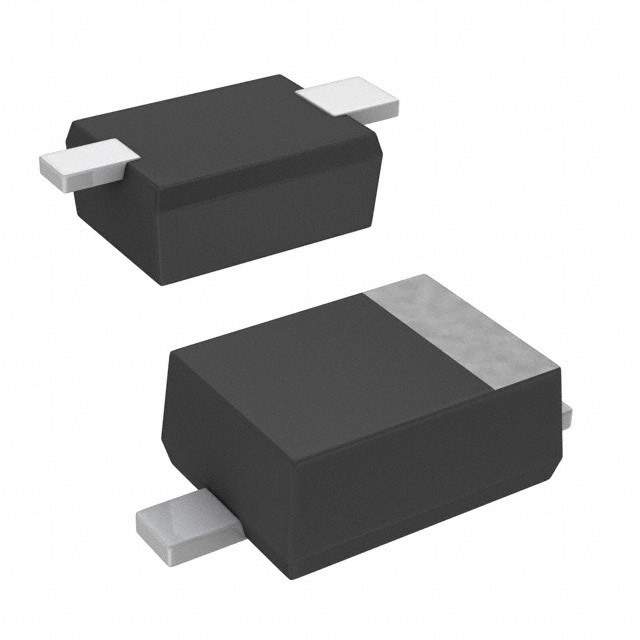
11V zener, 200mW ceiling, SMini2-F5-B package, ±5% tolerance; lifecycle conflict drives the call
Quick Engineering Summary
| Field | Value |
|---|---|
| Manufacturer | Panasonic |
| Category | Diodes - Zener - Single |
| Package | SMini2-F5-B |
| Core function | DIODE ZENER 11V 200MW SMINI2 |
| Key electrical range | Current - Reverse Leakage @ Vr: 50nA @ 8V; Maximum Power Dissipation: 200mW; Supply and Demand Status: Balance; Tolerance: ±5% |
| Reported stock | 1 pcs reported — confirm on RFQ |
The lifecycle conflict is the reason to hesitate
The weak point comes first: DZ2J11000L carries a direct lifecycle conflict. One field says Active, another says 停止提供, so this is not a clean choice for a new design even if the commercial status still looks open.
The case for using it is narrower. In an existing build that already uses an 11V single zener in SMini2-F5-B, the electrical listing is coherent enough for controlled replenishment, and EU RoHS is clear. My verdict stands: sustaining only. Don’t move DZ2J11000L into a fresh BOM until Panasonic status is reconciled.
What actually decides the fit here?
First question: does it close the clamp job without burning the thermal budget?
The listed 11V zener value sets the nominal target, but it does not settle the real operating window because the tolerance is ±5%. If rail margin is tight, that tolerance decides whether DZ2J11000L works as a comfortable shunt reference or pushes the protected node too high or too low at the edges, especially in designs that already have little room for stack-up from source variation and downstream limits.
The 200mW maximum power dissipation is a ceiling, not a normal operating point. That number limits how hard the device can be driven during sustained clamp events; miss it and the package becomes the failure point before the nominal zener voltage matters. The listing also gives 30 Ohm maximum impedance, and that matters because the clamp gets less stiff as current shifts. For a noise-sensitive reference node or a clamp that must stay close to nominal, 30 Ohm max keeps expectations realistic.
Then there is the forward side. The 1V maximum at 10mA is useful as a reverse-installation or transient-conduction ceiling, not as a description of normal zener breakdown behavior. Short version: DZ2J11000L fits low-power 11V clamp duty where the dissipation budget is modest and the tolerance band is acceptable.
Wrong for hard clamps, fine for small SMD protection
Not for energy-heavy clamp duty. A 200mW ceiling in an SMD SMini2-F5-B body rules DZ2J11000L out of jobs where the zener must absorb repeated or extended stress, and the listing gives no surge figure to show how much abuse it can take.
It does fit compact board-level protection and simple bias or reference functions that want an 11V nominal zener in a very small footprint. The 50nA reverse leakage at 8V is low enough to keep pre-breakdown loss from dominating light-duty sensing nodes, and SMD mounting with reel packaging suits automated assembly better than hand-loaded service hardware.
The missing datasheet items are not minor
200mW is not enough by itself. The open items are surge capability, thermal resistance, and the package drawing or pinout. Without those, DZ2J11000L cannot be closed for transient stress, ambient headroom, or land-pattern confirmation.
View the Win-Source product page for DZ2J11000L.
Key Takeaways for Engineers & Buyers
- Treat 200mW as the dissipation ceiling; don’t size DZ2J11000L from the 11V nominal alone.
- Lock package fit to SMini2-F5-B before release; the listing gives no drawing or pinout.
- With stock at 1 and reel packaging, reserve DZ2J11000L for existing production only.