
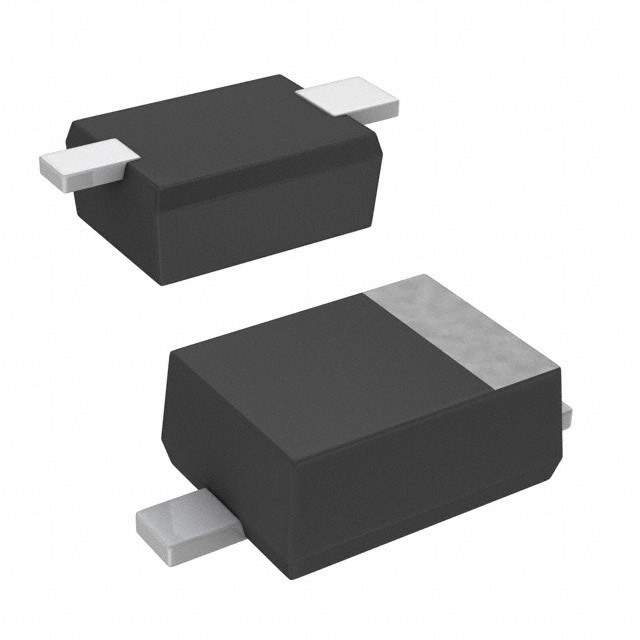
12 V zener, 200 mW ceiling, SMini2-F5-B package, ±5% tolerance, 1 V at 10 mA forward limit
Quick Engineering Summary
| Field | Value |
|---|---|
| Manufacturer | Panasonic |
| Category | Diodes - Zener - Single |
| Package | SMini2-F5-B |
| Core function | DIODE ZENER 12V 200MW SMINI2 |
| Key electrical range | Current - Reverse Leakage @ Vr: 50nA @ 9V; Maximum Power Dissipation: 200mW; Supply and Demand Status: Balance; Tolerance: ±5% |
| Reported stock | 7700 pcs reported — confirm on RFQ |
The lifecycle conflict is real, even though stock exists
The weak point comes first: DZ2J12000L shows conflicting lifecycle signals, with Active in one field and 停止提供 in another. That alone keeps it from being a clean new design-in choice, because continuity is the first question on a small protection diode and this listing does not answer it cleanly.
For existing production, the picture is better. Stock is listed at 7700 pieces, packaging is Reel - TR, and the part is EU RoHS compliant, so a running line can keep moving if this exact 12 V zener in SMini2-F5-B is already qualified. Secure sustaining volume, then clear the lifecycle status before letting DZ2J12000L spread into new assemblies.
200 mW is the number that keeps this part honest
200 mW is the ceiling that decides whether this part belongs in the circuit at all. By itself, it does not define a safe operating point, and it does not close the thermal question because the listing gives no thermal resistance or derating curve, but it does draw a hard boundary around the job: light clamp or reference duty, not repeated abuse in a package expected to sort out the heat on its own.
The 12 V zener rating is the next filter. With ±5% tolerance, DZ2J12000L fits rails and nodes that can absorb that spread; if the threshold budget is tight, that tolerance is reason enough to walk away. The 30 Ohm maximum impedance matters for the same reason. A zener with that ceiling will not hold like an ideal 12 V wall as current shifts, so regulation around the knee still depends on the full curve.
The forward side sets another limit. The listing gives 1 V at 10 mA as a maximum forward-drop condition, not a target operating point. That tells you the forward penalty if polarity flips, but it does not replace the forward curve, and that missing curve is what decides dissipation and fault behavior in real clamp events.
Wrong for surge work, fine for small board-level clamps
Not for surge work. With a 200 mW ceiling in an SMini2-F5-B SMD body, DZ2J12000L fits low-energy bias rails, signal clamps, and simple board-level references where 12 V nominal is the target and space is tight.
It does not belong where you need a published surge current, heavy transient absorption, or a threshold tighter than ±5%.
7700 pieces help today, but the datasheet gaps still matter
7700 pieces support immediate builds, and Reel - TR suits automated placement. That answers the near-term supply question. It doesn't finish the technical one.
The missing items are concrete: no derating curve, no thermal resistance, no pinout or package drawing in this listing, and no zener voltage test current or full V-I curve. Those points decide ambient headroom, land pattern confidence, and how the 12 V rating behaves once current moves away from the single conditions shown here.
View the Win-Source product page for DZ2J12000L.
Key Takeaways for Engineers & Buyers
- Treat 200 mW as the dissipation ceiling when sizing any DZ2J12000L clamp duty.
- Resolve the Active versus 停止提供 lifecycle conflict before releasing DZ2J12000L into a new BOM.
- Match the footprint to SMini2-F5-B and reel handling before committing the line.