
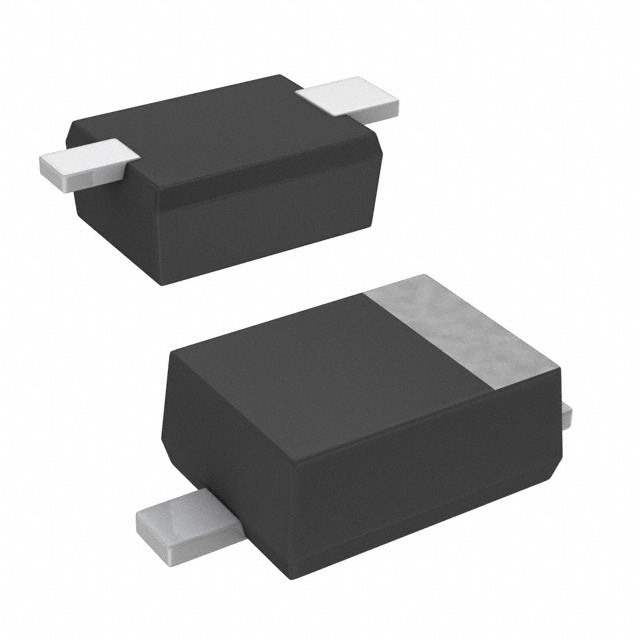
15V zener, 200mW ceiling, SMini2-F5-B package, ±2.5% tolerance; lifecycle conflict is the real decision point
Quick Engineering Summary
| Field | Value |
|---|---|
| Manufacturer | Panasonic |
| Category | Diodes - Zener - Single |
| Package | SMini2-F5-B |
| Core function | DIODE ZENER 15V 200MW SMINI2 |
| Key electrical range | Current - Reverse Leakage @ Vr: 50nA @ 11V; Maximum Power Dissipation: 200mW; Supply and Demand Status: Sufficient; Tolerance: ±2.5% |
| Reported stock | 68888 pcs reported — confirm on RFQ |
200mW is the number that decides this part
200mW is the ceiling that matters most here. The 15V zener value sets the clamp target, but it does not answer the thermal question; maximum power dissipation does, especially in a small SMini2-F5-B body where a light reference or protection role is one thing and sustained clamp duty is another.
The other useful pair is 1V at 10mA in forward conduction. That is a forward-drop limit under a stated current, not a zener operating point, and it still consumes dissipation budget if polarity is reversed or the node swings through forward bias. Add the 40 Ohm maximum impedance and the fit becomes clear: DZ2J150M0L suits low-power regulation and protection work, not clamp roles that demand low dynamic impedance and broad power headroom.
The constraint is lifecycle, not stock
The constraint is the split lifecycle signal. Active and 停止提供 cannot both support a clean new-design call, even with 68888 in stock, reel packaging, and EU RoHS compliance.
Good for small 15V clamps, narrow for anything harsher
Use it carefully.
DZ2J150M0L fits compact SMD rails and signal nodes where a 15V nominal zener, ±2.5% tolerance, and 50nA reverse leakage at 11V matter more than raw surge handling. That leakage figure is easy to skip past, but it matters on high-impedance sensing and housekeeping rails because a sloppier shunt can move the node before the clamp is ever needed.
The limits are just as plain. The 40 Ohm maximum Zzt is a ceiling on impedance, not a promise of tight clamping under every transient, and the 200mW maximum power dissipation is still the first wall you hit. If the design expects repeated surge energy or long clamp dwell in a hot ambient with little copper to spread heat, this listing does not support that assignment.
What is missing is concrete, not abstract: no reverse-recovery time, no junction capacitance, no thermal resistance, and no derating curve. For DZ2J150M0L, those gaps decide whether the package is simply compact or actually workable in the transient environment you have.
Weak documentation depth, but the buy format is clear
Weak point first: the listing is thin where stress behavior should be explicit. Strong point second: the buy format is straightforward for a running line. DZ2J150M0L comes on reel - TR, quantity per package is 3k pcs, and storage is called out as dry storage cabinet and humidity protection package.
So keep it tied to near-term sustaining demand, with reel quantity matched to line consumption, rather than opening a fresh design around a part whose lifecycle story is split in two.
View the Win-Source product page for DZ2J150M0L.
Key Takeaways for Engineers & Buyers
- Treat 200mW as the dissipation ceiling; don't size DZ2J150M0L from the 15V nominal alone.
- Lock reel planning to 3k pcs and TR packaging before releasing a build around DZ2J150M0L.
- Resolve the Active versus 停止提供 lifecycle conflict before adding DZ2J150M0L to a new BOM.