
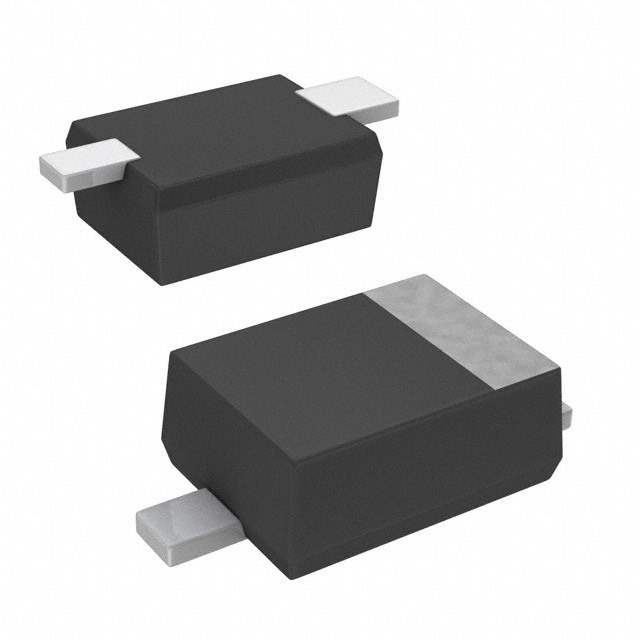
18V Zener, 200mW ceiling, SMini2-F5-B package, with lifecycle conflict shaping the buying call
Quick Engineering Summary
| Field | Value |
|---|---|
| Manufacturer | Panasonic |
| Category | Diodes - Zener - Single |
| Package | SMini2-F5-B |
| Core function | DIODE ZENER 18V 200MW SMINI2 |
| Key electrical range | Current - Reverse Leakage @ Vr: 50nA @ 13V; Maximum Power Dissipation: 200mW; Supply and Demand Status: Sufficient; Tolerance: ±2.5% |
| Reported stock | 60000 pcs reported — confirm on RFQ |
So this is a sustaining-line part
And that conclusion comes from the lifecycle conflict, not the electrical line items. DZ2J180M0L is marked Active, but it also carries a stop-supply signal, so the safe call is existing production only. That keeps you from qualifying it into a fresh platform and then finding the commercial status was softer than the word Active suggested.
EU RoHS is compliant, and 60000 on hand is enough to support a running line right now. It doesn't settle the new-design question.
The package fit is narrow
Keep it local.
DZ2J180M0L fits small SMD rail-clamp or reference duty where SMini2-F5-B is already acceptable and the board can stay within a 200mW ceiling.
200mW is the number that bites first
200mW is the hard ceiling. It decides whether DZ2J180M0L belongs in the discussion at all. For a Zener, that limit rules out casual clamp use where fault energy is not tightly bounded, and it still does not tell you the safe ambient by itself because no derating curve or thermal resistance is listed.
The 18V Zener value with ±2.5% tolerance is the next filter. It is tight enough for an 18V nominal clamp or reference target, but it does not show how the part behaves away from the test condition because the listing gives no curve detail around breakdown. The 60 Ohm maximum Zzt matters for the same reason: regulation stiffness is not something to assume away in a lightly biased node.
Forward conduction is bounded, not broadly characterized. The listing gives 1V at 10mA as a maximum forward-drop point, so if your fault path can drive the diode forward, that number belongs in the dissipation budget rather than being treated as a normal operating promise.
The weak point is documentation depth
The weak point is documentation depth, though the stocking position is better than the lifecycle wording. If DZ2J180M0L is already released on a BOM, the practical move is to secure the reel-form supply you need while stock is present and keep the part confined to that existing build.
What is missing is concrete. There is no reverse-recovery time, so you cannot judge whether DZ2J180M0L is harmless in a fast transient path. There is no junction capacitance, which leaves high-impedance or signal-adjacent clamp use unresolved. There is no thermal resistance or derating curve, so the 200mW ceiling cannot be translated into ambient headroom. Pinout and package drawing are absent here as well, and for a tiny body like SMini2-F5-B that is not clerical; it decides footprint release, polarity marking, and assembly risk.
That is the real stop point. The part may still be perfectly serviceable, but this page does not carry the items that close layout and thermal signoff.
View the Win-Source product page for DZ2J180M0L.
Key Takeaways for Engineers & Buyers
- Treat 200mW as the dissipation ceiling and check your clamp duty against it.
- Hold the rail target to 18V with the listed ±2.5% tolerance, not a tighter assumption.
- Buy reel quantity against the current 60000 stock if DZ2J180M0L is already on a running line.