
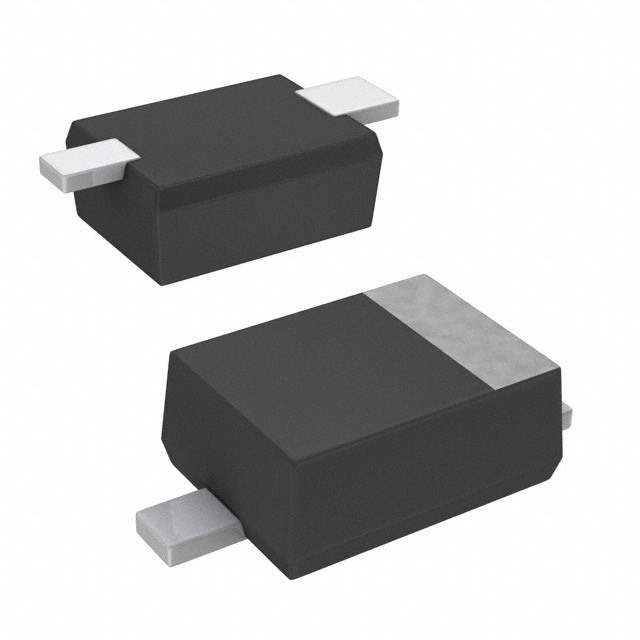
20V zener, 200mW ceiling, SMini2-F5-B SMD package, ±5% tolerance
Quick Engineering Summary
| Field | Value |
|---|---|
| Manufacturer | Panasonic |
| Category | Diodes - Zener - Single |
| Package | SMini2-F5-B |
| Core function | DIODE ZENER 20V 200MW SMINI2 |
| Key electrical range | Current - Reverse Leakage @ Vr: 50nA @ 15V; Maximum Power Dissipation: 200mW; Supply and Demand Status: Sufficient; Tolerance: ±5% |
| Reported stock | 11700 pcs reported — confirm on RFQ |
Use it to hold a running line
Not for new platforms.
The lifecycle call is the deciding factor. Status fields say Active, while another lifecycle signal says 停止提供, and that conflict is enough to keep this device out of a clean new design-in unless you already have a hard reason to preserve it. For sustaining work, the picture is better: the part is listed as EU RoHS compliant, comes in the SMD SMini2-F5-B package, and shows 11700 pieces available in reel packaging, which is enough to support an existing build while you decide whether it is a bridge part or something you can keep longer.
The electrical story is straightforward. A 20V nominal zener value with ±5% tolerance sets a usable clamp window, but not a precision reference, and the 200mW maximum power dissipation is a firm ceiling that quickly rules out any role involving sustained surge energy or warm ambient operation. That leaves DZ2J20000L in low-power board-level protection and bias duties, not in positions where the package is expected to absorb repeated abuse and protect the rest of the circuit by force.
200mW is the number that bites first
200mW comes first.
It is the hard ceiling, and in this package it matters more than the 20V label. The 1V at 10mA forward figure is also only a forward-conduction limit, useful for spotting accidental forward bias but not for judging zener behavior under pulse load.
The fit is small-signal clamping, not energy handling
The constraint is dissipation, not nominal voltage. SMini2-F5-B and SMD mounting point this device toward dense board work where footprint matters and the zener is clipping modest fault energy, not replacing a larger transient suppressor.
The 20V nominal Vz decides rail fit, while the ±5% tolerance rules out jobs where the knee must be tightly controlled. The 80 Ohm maximum impedance points the same way: regulation stiffness is limited, so a circuit that depends on a sharp, low-dynamic-impedance clamp does not get that case made here. Reverse leakage, 50nA at 15V, is low enough to keep leakage-sensitive bias networks in play, but only at that stated test point.
Buy the reel, but don't buy the story whole
So the purchasing constraint is clear: the listing is reel - TR, with 3k pcs per package. That is a poor fit for a handful of lab samples and a good fit for continuity on an existing assembly.
Lifecycle ambiguity still sits over the decision. Secure the quantity needed for the current build, then pull the full datasheet and reconcile the conflicting status fields before keeping DZ2J20000L on the approved list.
The missing curves are what close the decision
What does a buyer need next? The missing thermal and surge details.
There is no derating curve for the 200mW limit, no thermal resistance, and no surge or overload figure such as IFSM. Without those, ambient headroom stays unclear, and you cannot tell whether a short fault pulse is routine or destructive.
The listing also omits the zener voltage test current, pinout drawing, and any capacitance figure. For DZ2J20000L, those are decision points: they shape clamp behavior, board symbol confidence, and whether the diode is quiet enough for a sensitive node.
View the Win-Source product page for DZ2J20000L.
Key Takeaways for Engineers & Buyers
- Treat 200mW as the dissipation ceiling; don't close thermal decisions without a derating curve.
- Use the ±5% Vz spread in the clamp window check before releasing DZ2J20000L on a 20V rail.
- Buy on reel only: 3k pcs per package, with 11700 in stock today.