
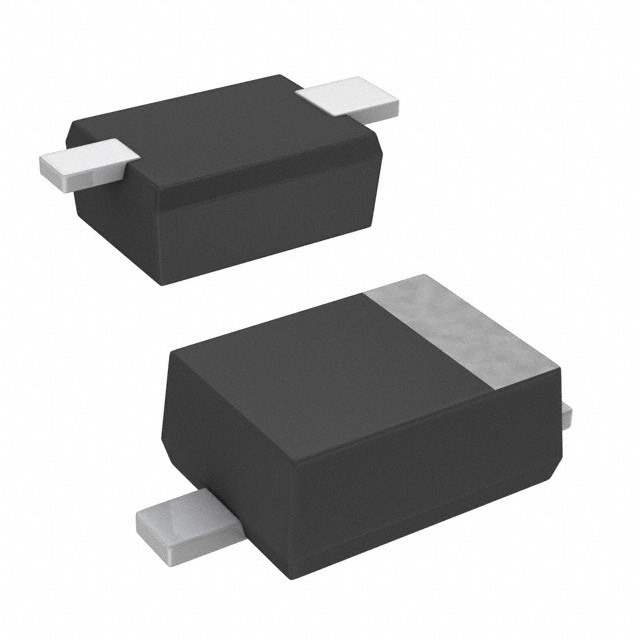
20V zener, 200mW ceiling, SMini2-F5-B package, ±2.5% tolerance; lifecycle conflict is the real decision point
Quick Engineering Summary
| Field | Value |
|---|---|
| Manufacturer | Panasonic |
| Category | Diodes - Zener - Single |
| Package | SMini2-F5-B |
| Core function | DIODE ZENER 20V 200MW SMINI2 |
| Key electrical range | Current - Reverse Leakage @ Vr: 50nA @ 15V; Maximum Power Dissipation: 200mW; Supply and Demand Status: Balance; Tolerance: ±2.5% |
| Reported stock | 21400 pcs reported — confirm on RFQ |
The weak point is lifecycle, not the silicon
The weak point comes first: the listing shows Active, yet it also carries a conflicting stop-supply signal. That alone keeps it out of a fresh platform until Panasonic gives a clear position, even though the electrical listing is straightforward.
For sustaining use, the facts are easier to work with. This is a 20V zener in SMini2-F5-B with a 200mW maximum dissipation ceiling, so it fits small board-level clamp or reference roles where the power budget is already modest. EU RoHS is compliant. For an existing production build, it is usable; for a new one, the lifecycle conflict is the first issue to settle.
200mW is the ceiling that decides the design
200mW is the decisive figure. It is the maximum power dissipation rating, and it sets a hard ceiling on whether the worst-case zener duty fits inside a very small thermal budget.
From there, the next number is 20V nominal zener voltage with ±2.5% tolerance. That is the clamp target, and the tolerance defines how much rail margin the protected node really has before leakage even enters the discussion. If that window is wrong, the circuit either clamps too early or leaves too much voltage on the line.
Then comes 80 Ohm maximum Zzt. For a zener, that is the sign that regulation stiffness is limited, so under changing current the clamp point will not behave like an ideal 20V wall. In a loose protection role, that may be acceptable; in a precision reference role, it can be the reason the node moves more than the rest of the design can tolerate.
The smaller figures still matter, just later in the stack. Reverse leakage is listed as 50nA @ 15V, which helps when the zener sits near its off state and bleed on a high-impedance node matters. Forward conduction is listed as 1V @ 10mA, and that pair gives you the forward-drop condition the part can see when it is driven the wrong way; it implies a dissipation check, not a normal operating point. None of that closes the thermal picture by itself, and that is why the missing thermal details still carry so much weight.
And the missing thermal data is the real blocker
And that is the real blocker. The part still needs a derating curve, thermal resistance, and surge or overload information before a serious clamp review can close. Pinout and package drawing are absent here too, so land pattern and orientation still come from the datasheet.
Use it on the board, not as a broad sourcing bet
Wrong job first: this is not the zener to choose when the design needs generous dissipation margin or a lifecycle story without caveats. The SMini2-F5-B body and 200mW ceiling point the other way.
It does fit dense SMT board work that needs a 20V zener in a very small package and can stay inside a modest power envelope. Reel packaging and 3k pcs per package suit production placement, and the listed 21400 stock is enough to support a running line while the lifecycle conflict is sorted out. Buy for existing production, not for a new platform commitment.
View the Win-Source product page for DZ2J200M0L.
Key Takeaways for Engineers & Buyers
- Treat 200mW as the dissipation ceiling; don’t close the thermal call without the derating curve.
- Use the 20V nominal zener value with ±2.5% tolerance to check clamp window before releasing DZ2J200M0L.
- If this stays on the AVL, buy in reel quantities around 3k pcs and cover the 21400 stock while lifecycle is clarified.