
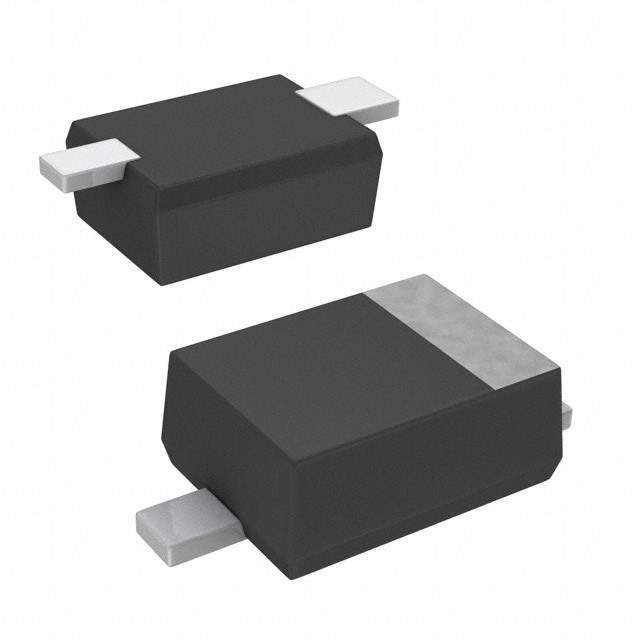
22V zener, 200mW ceiling, SOD-323F/SMini2-F5-B package, ±5% tolerance
Quick Engineering Summary
| Field | Value |
|---|---|
| Manufacturer | Panasonic |
| Category | Diodes - Zener - Single |
| Package | SMini2-F5-B |
| Core function | DIODE ZENER 22V 200MW SMINI2 |
| Key electrical range | Current - Reverse Leakage @ Vr: 50nA @ 17V; Power - Max: 200mW; Supply and Demand Status: Limited; Tolerance: ±5% |
| Reported stock | 6000 pcs reported — confirm on RFQ |
Sustaining part, not a fresh design choice
Don't start new here.
The lifecycle story is too conflicted for a clean design-in. One field says Active, yet the same record also shows 停止提供 and an Estimated EOL Date of Obsolete / End of life. That conflict matters more than the electrical line items because a routine clamp choice can become a line-stoppage problem later.
Use DZ2J22000L only where the board is already released and the footprint is fixed. EU RoHS is compliant, so compliance is not the blocker. Lifecycle is.
22V is the clamp target; 200mW is the real limit
22V sets the nominal zener point.
That answers only whether your rail or node belongs near a 22V clamp. The harder limit is the 200mW ceiling, because that decides whether DZ2J22000L survives a sustained fault or only a brief, low-energy event, and it matters far more than the nominal voltage when dissipation starts to stack up.
The ±5% tolerance leaves enough spread that you need real margin around the clamp threshold, especially when the protected node already runs close to its own absolute maximum. If the circuit needs a tighter knee, this listing does not offer one.
The 80 Ohm maximum impedance also says the zener voltage will not hold like an ideal brick wall as current changes, so any design that depends on a stiff reference or a sharply defined clamp point still needs more detail than appears here.
Forward conduction is listed too: 1V at 10mA. That is a forward-direction ceiling point for reverse-polarity cases, not a normal zener operating point. Get that wrong and the dissipation budget turns from a protection detail into a field return.
SOD-323F keeps it in small-signal protection work
200mW is small.
That ceiling, paired with the SOD-323F / SMini2-F5-B package, keeps it in board-level clamp and bias work where space is tight and energy is modest. It fits dense SMD layouts, not jobs dominated by surge energy, sustained shunt current, or thermal headroom.
What would close the open questions
Can you buy it and release it?
For an existing build, maybe; for a new one, no. There are 6000 pieces listed on reel, and supply is marked Limited, so the practical move is to cover the current build requirement in one buy if DZ2J22000L is already on the BOM.
The missing items are concrete ones that finish the engineering call: operating temperature range, derating curve, thermal resistance, surge or overload figure such as IFSM, and the pinout and package drawing. Those gaps decide ambient headroom, pulse survivability, and whether the land pattern is already safe.
View the Win-Source product page for DZ2J22000L.
Key Takeaways for Engineers & Buyers
- Treat 200mW as the dissipation ceiling; don't size DZ2J22000L from the 22V nominal alone.
- Lock the SOD-323F / SMini2-F5-B footprint before release; this part is not forgiving of package mismatch.
- Buy against the 6000 on hand if the line already uses DZ2J22000L; supply is marked Limited.