
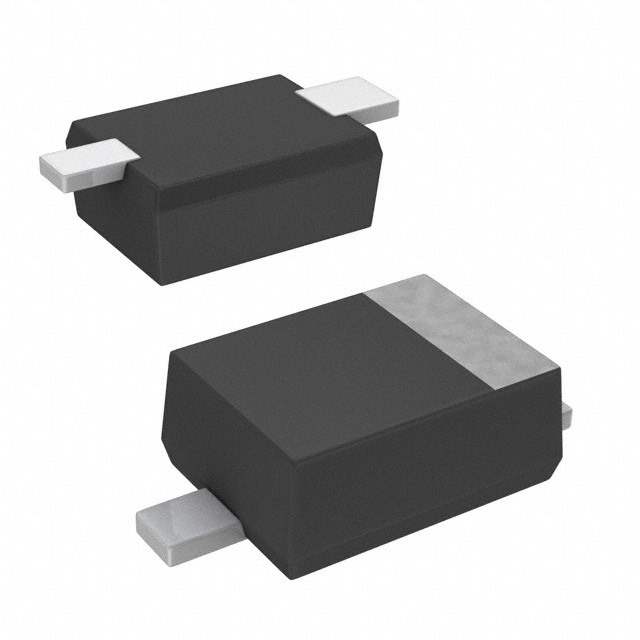
22 V nominal, 200 mW ceiling, SMini2-F5-B SMD package, ±2.5% tolerance
Quick Engineering Summary
| Field | Value |
|---|---|
| Manufacturer | Panasonic |
| Category | Diodes - Zener - Single |
| Package | SMini2-F5-B |
| Core function | DIODE ZENER 22V 200MW SMINI2 |
| Key electrical range | Current - Reverse Leakage @ Vr: 50nA @ 17V; Maximum Power Dissipation: 200mW; Supply and Demand Status: Sufficient; Tolerance: ±2.5% |
| Reported stock | 31900 pcs reported — confirm on RFQ |
Lifecycle is the problem, not the silicon
The weak point comes first: there is a real lifecycle conflict here. One field says Active, another says 停止提供, so this is not a clean choice for a fresh program even if stock is available today.
For existing production, the case is better. It is a 22 V zener in an SMini2-F5-B SMD body with EU RoHS compliance, and 31900 pieces are listed. That is enough to support a running line while you work through the status conflict. For new design-in, the conflict decides it.
The 200 mW ceiling sets the whole use case
The constraint is dissipation. A 200 mW maximum power dissipation rating puts this device in small-signal clamp and reference duty, not in anything that has to absorb heavy surge energy or carry loose thermal assumptions.
The 22 V nominal zener voltage settles the target clamp or reference point, while the ±2.5% tolerance sets the rail window your circuit has to absorb around that nominal value. What the listing does not give you is just as important: there is no zener test current and no curve, so you cannot read how the part moves across current from this page alone.
The 80 Ohm maximum Zzt deserves attention. In practice, that number tells you regulation stiffness is limited, and if the circuit expects a very hard 22 V knee, this is where the expectation starts to drift from behavior under load.
Leakage is listed at 50nA @ 17V, which is useful when the diode sits near but below breakdown for long periods. The forward figure matters too: 1V @ 10mA is a forward-conduction ceiling, so if the diode can be driven that way in normal operation or a fault, that path still has to stay inside the same dissipation budget.
Wrong for surge-heavy clamps, right for dense board work
Not for power dumping. With a 200 mW ceiling in a SMini2-F5-B package, it fits compact board-level protection, bias trimming, and light reference duty where the draw is a small footprint and a defined 22 V nominal point.
The SMD mounting and SC-90, SOD-323F package callout point to dense assembly, not leaded serviceability. That lines up with handheld, control, and general embedded boards better than anything that sees repeated high-energy events. Reel - TR packaging points the same way: line-loaded assembly, not bench builds or low-count service stock.
Buy it only against a real build
Buy narrowly.
31900 pieces and sufficient supply make it usable, but the lifecycle conflict is the real limit. Tie DZ2J220M0L purchases to existing production demand, not open-ended allocation.
The missing curves still matter
80 Ohm is only one useful number, and it is not enough to close the review. DZ2J220M0L still needs a derating curve, thermal resistance, and surge or overload information before you can judge ambient headroom or fault survival.
The listing also lacks a pinout or package drawing. On a tiny SOD-323F class body, that is not paperwork trivia; it determines land pattern, orientation risk, and whether the library footprint is even correct.
View the Win-Source product page for DZ2J220M0L.
Key Takeaways for Engineers & Buyers
- Hold DZ2J220M0L to 22 V clamp use; the 200 mW rating is the hard dissipation ceiling.
- Use the ±2.5% Vz tolerance in rail-window checks before releasing a board spin.
- Buy in reel multiples where possible; packaging is Reel - TR with 3k pcs per package.