
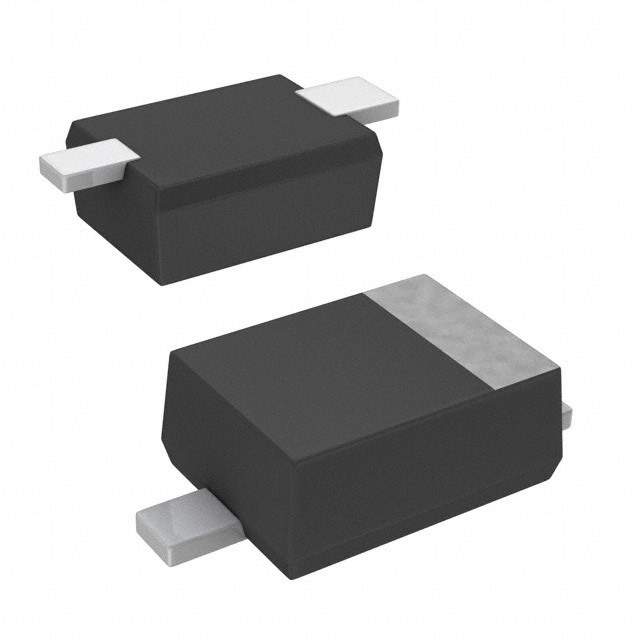
24 V zener, 200 mW ceiling, SMini2-F5-B package, ±5% tolerance, 1 V at 10 mA forward limit
Quick Engineering Summary
| Field | Value |
|---|---|
| Manufacturer | Panasonic |
| Category | Diodes - Zener - Single |
| Package | SMini2-F5-B |
| Core function | DIODE ZENER 24V 200MW SMINI2 |
| Key electrical range | Current - Reverse Leakage @ Vr: 50nA @ 19V; Maximum Power Dissipation: 200mW; Supply and Demand Status: Balance; Tolerance: ±5% |
| Reported stock | 7500 pcs reported — confirm on RFQ |
Can you start a new build on this part?
Only if you accept the lifecycle conflict first. DZ2J24000L shows Active, but it also carries a stop-supply signal, and that is enough to push it out of the comfortable new-design bucket and into sustaining use unless someone resolves the mismatch.
For an existing production line, the picture is better. 7500 pieces are listed, packaging is Reel - TR, and EU RoHS is compliant. That supports continuation work, not long-horizon availability.
The real limit here is the 200 mW ceiling
Power is the constraint the numbers create. DZ2J24000L is a 24 V zener with a 200 mW maximum power dissipation rating, and that ceiling decides whether the device survives the clamp duty you have in mind; by itself, it says nothing about how much surge energy, ambient rise, or pulse width the package can absorb, because those curves are not listed.
The 24 V nominal Vz with ±5% tolerance answers one question and leaves another open. It places the part on rails and nodes that genuinely want a 24 V-class clamp window. It does not show the exact knee shape, behavior across current, or how tightly voltage holds under load. The only impedance figure here is 100 Ohm maximum Zzt, which is enough to warn against assuming stiff regulation.
The forward side matters too. The listing gives 1 V maximum at 10 mA, and that matters if the diode can be driven forward by fault polarity or ringing. Those numbers still leave out the thermal data needed to turn a dissipation budget into board-level confidence, including RθJC and any derating curve. Short version: the 24 V nameplate gets it onto the shortlist, while the 200 mW ceiling can take it right back off.
So the fit is narrow and pretty ordinary
And that is not a criticism. In SMini2-F5-B and SMD form, DZ2J24000L fits compact board-level zener duty where the job is light clamping, reference duty, or protection on a 24 V-class node and where board area matters more than brute dissipation.
It is a poor bet for pulse stress, heavy shunt current, or thermal uncertainty, because the listing gives no derating curve, no thermal resistance, and no surge figure to show how close the package runs to the edge.
What the listing still does not answer
Wrong for final signoff on stress behavior. Fine for a shortlist entry.
The missing items are concrete: derating curve, thermal resistance, surge or overload capability, and the package drawing or pinout detail.
View the Win-Source product page for DZ2J24000L.
Key Takeaways for Engineers & Buyers
- Hold DZ2J24000L to 24 V nominal and ±5% tolerance when checking clamp window.
- Budget dissipation against the 200 mW ceiling before approving board placement.
- Use the 7500-piece reel stock for existing builds, then clear the lifecycle conflict before extending the BOM.