
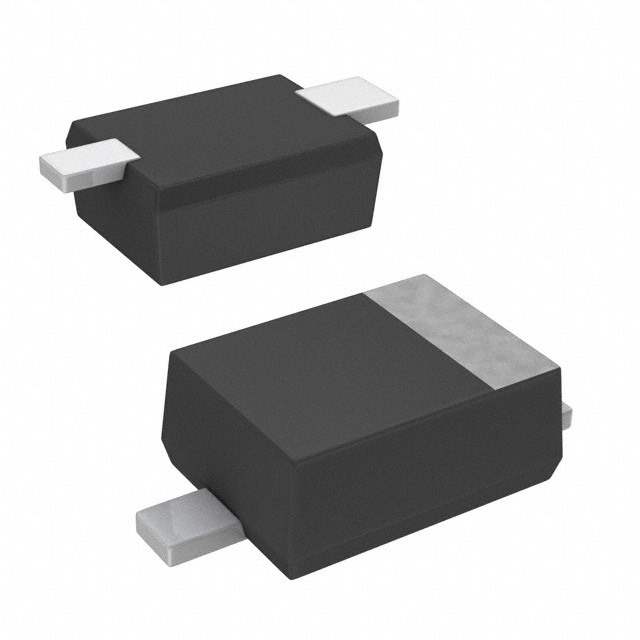
27V nominal, 200mW ceiling, SMini2-F5-B package, ±2.5% tolerance, with lifecycle conflict that changes the call
Quick Engineering Summary
| Field | Value |
|---|---|
| Manufacturer | Panasonic |
| Category | Diodes - Zener - Single |
| Package | SMini2-F5-B |
| Core function | DIODE ZENER 27V 200MW SMINI2 |
| Key electrical range | Current - Reverse Leakage @ Vr: 50nA @ 21V; Maximum Power Dissipation: 200mW; Supply and Demand Status: Sufficient; Tolerance: ±2.5% |
| Reported stock | 102000 pcs reported — confirm on RFQ |
Can you start a new design on DZ2J270M0L?
Would you put this into a fresh design today? Probably not.
The issue is not stock first. The lifecycle story is conflicted: Active is listed, yet the same record also carries 停止提供 and Obsolete / End of life. That makes the practical call sustaining only. If DZ2J270M0L is already in production, the 102000 stock figure and reel packaging support continuation. For a new design, you risk qualifying a 27V Zener in SMini2-F5-B and then reopening the BOM later. EU RoHS is fine, so compliance is not the blocker.
Not for heavy clamp duty; fine for light 27V reference work
Heavy clamp duty is the wrong job for this part. The 200mW maximum power dissipation is a ceiling, not a target, and in a package this small it rules out casual use where surge energy or steady dissipation drives the decision.
It fits better in low-power Zener duty around a 27V nominal point, especially when ±2.5% tolerance matters more than wattage. The 120 Ohm maximum impedance belongs in that same call, because it tells you the Zener voltage will not behave like an ideal stiff reference, so line regulation and bias current still need attention. Small and specific—that's the lane.
The listed numbers settle fit, but not the thermal argument
And that is where the useful numbers stop and the real screening starts.
The 27V nominal Zener voltage with ±2.5% tolerance is the first gate. It can serve a rail monitor, light clamp, or bias reference only if that window matches the threshold you actually need; if your trip point is tight, this number decides the stack-up before layout starts, and it does so long before package convenience or stock position matters.
The reverse leakage figure, 50nA @ 21V, helps from the other direction. It keeps leakage low at 21V, so high-impedance sensing nodes are plausible. What it does not tell you is how that behavior moves across temperature, because no operating temperature is listed.
Then there is the forward side. The listing gives 1V @ 10mA for forward voltage, useful as a dissipation hint when the device is accidentally or intentionally forward-biased, but not a reason to treat DZ2J270M0L as a general small-signal diode. Package naming also needs attention early: the part is listed as SMD in SMini2-F5-B, with SC-90 and SOD-323F also named.
The missing items are concrete ones. There is no thermal resistance, no derating curve, no operating temperature, and no surge or overload figure such as IFSM. Without those, you can judge nominal electrical fit and procurement posture, but not ambient headroom or fault survival.
102000 on hand helps, but only for planned continuation
102000 is enough to matter. DZ2J270M0L is packaged Reel - TR with 3k pcs per package, so if the part is already released in a build, buy to the reel and cover the line while you sort out whether the lifecycle conflict is noise or a real stop signal.
View the Win-Source product page for DZ2J270M0L.
Key Takeaways for Engineers & Buyers
- Treat 200mW as the dissipation ceiling; don’t size DZ2J270M0L around continuous clamp duty without thermal data.
- Use the 27V nominal and ±2.5% tolerance to check rail window before committing the clamp point.
- Buy reel planning around 3k pcs and current stock of 102000 if this is for an existing build.