
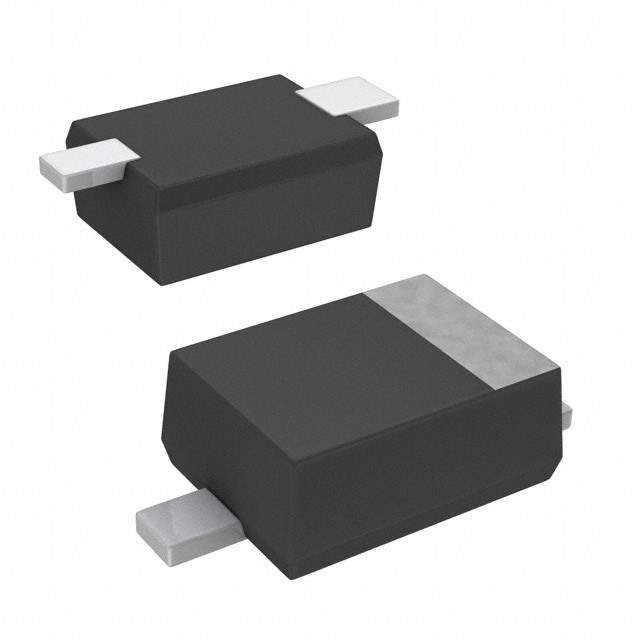
30V zener, 200mW ceiling, SMini2-F5-B package, ±5% tolerance, with lifecycle conflict to resolve first
Quick Engineering Summary
| Field | Value |
|---|---|
| Manufacturer | Panasonic |
| Category | Diodes - Zener - Single |
| Package | SMini2-F5-B |
| Core function | DIODE ZENER 30V 200MW SMINI2 |
| Key electrical range | Current - Reverse Leakage @ Vr: 50nA @ 23V; Maximum Power Dissipation: 200mW; Supply and Demand Status: Balance; Tolerance: ±5% |
| Reported stock | 3000 pcs reported — confirm on RFQ |
The real limit here is power, not the 30V label
The constraint is dissipation. At 200mW maximum, the number to respect on DZ2J30000L is power first, because that ceiling quickly narrows how much continuous clamp or bias duty the device can carry before thermal unknowns start to matter more than the nominal zener value.
The 30V rating comes next, but only as a nominal zener target with ±5% tolerance. If the rail window is tight, that spread can move a protection threshold or bias point out of bounds before anything else does. The 160 Ohm maximum impedance points the same way: this is not a stiff clamp under changing current, since the zener voltage will shift more as current shifts.
Leakage is the cleaner part of the picture. The 50nA figure at 23V helps where off-state loss or bias error matters below breakdown. It doesn't change the central limitation, though. A design that is already boxed in by a 200mW ceiling stays boxed in, and the listing still leaves out the thermal detail needed to judge ambient headroom, pulse survivability, or how much board copper helps the junction.
Wrong for heavy clamp duty, fine for light board-level protection
Wrong for energy-heavy suppression.
DZ2J30000L fits small SMD rail clamps, bias protection, and light reference duty where a 30V nominal zener in SMini2-F5-B is enough and dissipation stays modest.
Verdict: sustain only
Sustain only.
DZ2J30000L shows Active status, but it also carries a stop-supply signal, and that conflict drives the sourcing call. For an existing production build, the listed 3000 pieces and reel packaging are usable if your line already knows this footprint and electrical behavior. For a new program, the lifecycle conflict adds avoidable risk before the circuit work is even the hard part.
RoHS is straightforward: EU RoHS compliant.
The missing datasheet items are the ones that close the review
The weak point is documentation depth. The basic zener numbers are usable, but they do not close thermal or transient questions.
The gaps are concrete. There is no derating curve, so the 200mW ceiling cannot be tied to ambient. There is no thermal resistance, so board and junction headroom remain unknown. There is no surge or overload figure such as IFSM, leaving pulse tolerance open. The listing also does not give a pinout or package drawing, even though the package names SMini2-F5-B and SC-90, SOD-323F appear; that is enough to suggest the footprint class, not enough to lock land pattern or orientation.
View the Win-Source product page for DZ2J30000L.
Key Takeaways for Engineers & Buyers
- Treat 200mW as the dissipation ceiling; don't size DZ2J30000L around continuous clamp duty without thermal data.
- Hold the rail target against the 30V nominal zener and ±5% tolerance before releasing a threshold clamp.
- Buy reel quantity against the listed 3000 on hand and clear the Active versus 停止提供 lifecycle conflict first.