
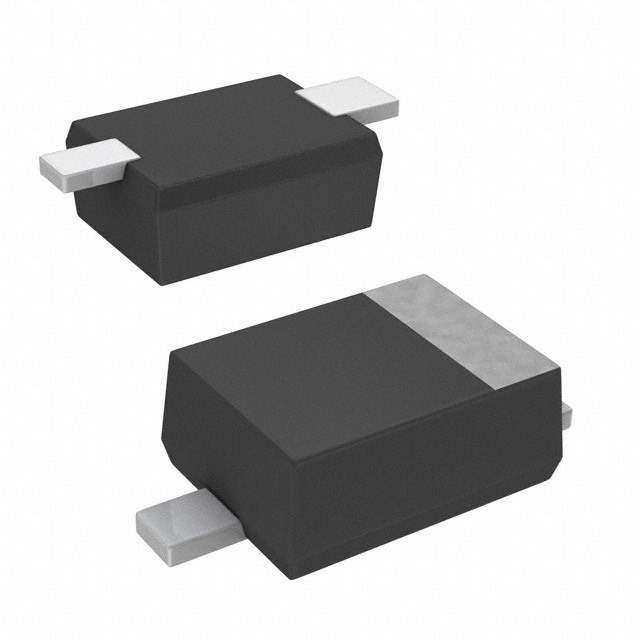
30 V nominal zener, 200 mW ceiling, SMini2-F5-B SMD package, 160 Ohm max impedance
Quick Engineering Summary
| Field | Value |
|---|---|
| Manufacturer | Panasonic |
| Category | Diodes - Zener - Single |
| Package | SMini2-F5-B |
| Core function | DIODE ZENER 30V 200MW SMINI2 |
| Key electrical range | Current - Reverse Leakage @ Vr: 50nA @ 23V; Maximum Power Dissipation: 200mW; Supply and Demand Status: Balance; Tolerance: ±2.5% |
| Reported stock | 3560 pcs reported — confirm on RFQ |
200 mW is the ceiling that decides this part
200 mW sets the boundary. It tells you quickly whether DZ2J300M0L is a neat fit for a small-signal clamp around a 30 V node or the wrong device for anything expected to absorb meaningful fault energy or sit hot for long stretches, because the nominal zener value only tells you where regulation begins while the power ceiling decides how much stress the part can actually take.
The rest of the listing fills in that picture. The zener value is 30 V, impedance is 160 Ohm maximum, and tolerance is ±2.5%. That combination works when some clamp movement with current change is acceptable; it is not the profile for a rail that has to hold tightly as current swings. The tolerance narrows nominal setpoint spread, but it does not tighten dynamic behavior.
Leakage is listed at 50 nA at 23 V reverse, which is useful for bias networks near that reverse condition. What it does not answer is temperature behavior, because no operating temperature field appears here. That missing context matters as much as the headline voltage when the design margin is thin.
Use DZ2J300M0L for light-duty regulation or protection. Keep it out of jobs where surge handling, thermal headroom, or tight dynamic regulation lead the requirement.
Can you buy it for a new build with confidence?
Can you release it into a new build? Not cleanly.
The listing shows Active, but it also shows a stop-supply signal. That conflict is enough to block a confident new design-in call.
For an existing line, the picture is more workable. Stock is listed at 3560, packaging is Reel - TR, and the package quantity is 3k pcs, so normal SMT flow is covered. EU RoHS compliance also keeps materials compliance straightforward. Use DZ2J300M0L for sustaining demand, and clear the lifecycle contradiction before it goes into a new BOM.
The package is small, and the missing thermal data matters
The constraint is thermal visibility. SMini2-F5-B and SMD mounting point to dense-board use, but the listing gives no thermal resistance, no derating curve, and no operating temperature, so ambient headroom is still unknown.
What the listing still doesn't tell you
30 V is the decisive figure, but it does not close the review for protection duty.
There is no thermal resistance, no derating curve, no operating temperature field, and no pinout or package drawing here. For a zener, surge or overload handling data also matters before you trust it beyond light clamp duty. Without those details, DZ2J300M0L stays a plausible small-signal 30 V zener rather than a closed answer for harsher protection work.
View the Win-Source product page for DZ2J300M0L.
Key Takeaways for Engineers & Buyers
- Hold DZ2J300M0L for existing production; resolve the stop-supply versus Active conflict before any new release.
- Budget around the 200 mW ceiling and the 1 V @ 10 mA forward-drop limit; neither is a normal operating target.
- Match feeder setup to Reel - TR and 3k pcs packaging before loading DZ2J300M0L to the line.