
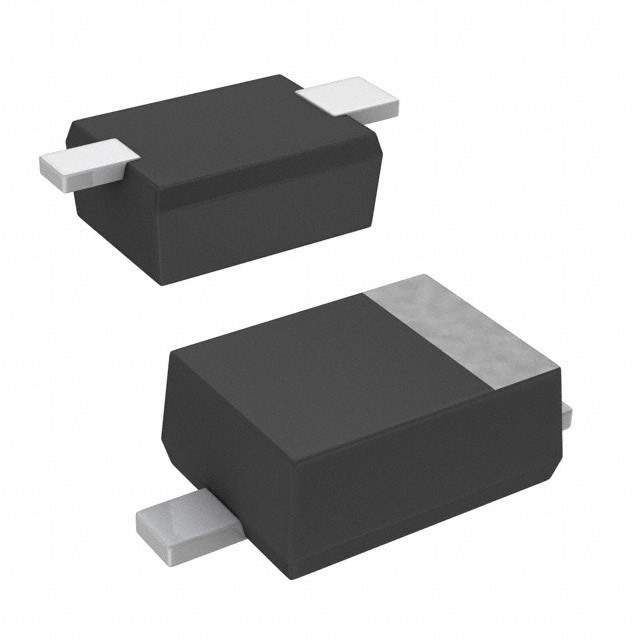
33V zener, 200mW ceiling, SMini2-F5-B package, ±5% tolerance, with a lifecycle conflict in play
Quick Engineering Summary
| Field | Value |
|---|---|
| Manufacturer | Panasonic |
| Category | Diodes - Zener - Single |
| Package | SMini2-F5-B |
| Core function | DIODE ZENER 33V 200MW SMINI2 |
| Key electrical range | Current - Reverse Leakage @ Vr: 50nA @ 25V; Maximum Power Dissipation: 200mW; Supply and Demand Status: Balance; Tolerance: ±5% |
| Reported stock | 3000 pcs reported — confirm on RFQ |
200mW is the number that decides this part
200mW is the ceiling that decides whether DZ2J33000L fits at all. Before the 33V nominal value enters the discussion, that limit sets the boundary: this is a small zener in an SMini2-F5-B package, suited to light clamp or reference duty on a dense board, not a part to lean on for much fault energy or long stretches of conduction in a hot corner.
The rest of the electrical picture narrows the fit instead of expanding it. The 33V nominal Vz with ±5% tolerance works for a coarse rail clamp or a simple reference point, not a tight threshold. The 200 Ohm maximum Zzt points to limited regulation stiffness, so movement around breakdown under line or load change will matter. Reverse leakage is low at 50nA, but that figure is stated at 25V, below the 33V zener point, so it helps with off-state leakage budgeting and says little about behavior near breakdown.
That leaves a pretty specific lane. DZ2J33000L belongs in low-power SMD protection or bias networks where board area matters and clamp current stays modest. If the design expects the zener to do real work, the power limit is the first reason to move on.
New design-in: no
No.
Use DZ2J33000L for sustaining designs. Active appears in the status fields, while another lifecycle field says stop supply. That conflict keeps it out of a fresh BOM. EU RoHS is compliant.
And the forward spec does not make it a general diode
And it still does not turn into a general diode. The listing gives 1V at 10mA as a maximum forward drop, a ceiling at one current point rather than a promise of efficient forward conduction across a range. It shows the part can tolerate ordinary forward bias in a small-signal path, but it does not settle repetitive forward-current duty.
Package and packing complete the picture. SMD mounting and SMini2-F5-B point to compact board-level use, not leaded serviceability or high-energy suppression. Reel - TR packaging suits line loading, and the listed 3000 pieces can cover a controlled build if you are already committed to DZ2J33000L. Don’t read more into that quantity than that.
What is still missing before you trust the clamp
What would stop a buyer first? Missing clamp detail.
The listing does not include a derating curve, thermal resistance, a surge or overload figure such as IFSM, or a package drawing and pinout. For a zener, those are not side issues. The derating curve sets ambient headroom, thermal resistance shows how fast the 200mW ceiling collapses on a real board, and surge capability decides whether DZ2J33000L survives the event it is meant to catch. ECAD is also absent here beyond a contact note, so footprint flow is not closed from this page alone.
View the Win-Source product page for DZ2J33000L.
Key Takeaways for Engineers & Buyers
- Hold DZ2J33000L to rails that truly need a 33V zener with ±5% tolerance.
- Budget dissipation against the 200mW ceiling before approving DZ2J33000L on any clamp path.
- Cover the running line now if 3000 pieces fits demand; the lifecycle conflict is the real risk.