
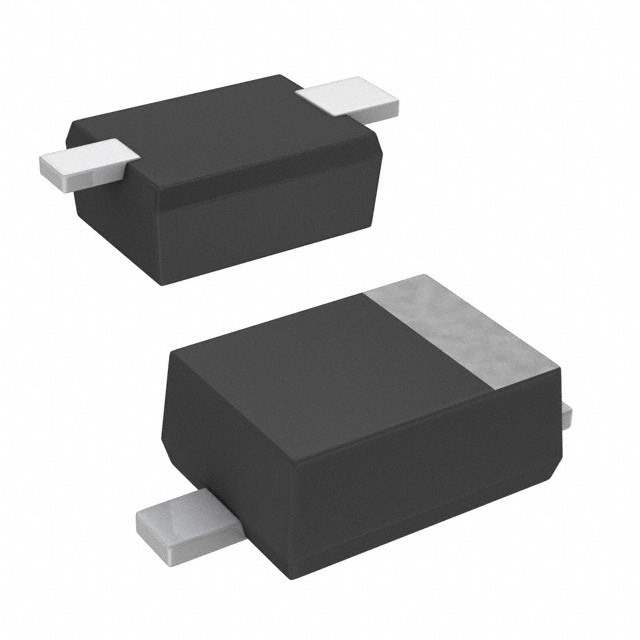
36V zener, 200mW ceiling, SMini2-F5-B package, ±2.5% tolerance; lifecycle conflict is the real decision point.
Quick Engineering Summary
| Field | Value |
|---|---|
| Manufacturer | Panasonic |
| Category | Diodes - Zener - Single |
| Package | SMini2-F5-B |
| Core function | DIODE ZENER 36V 200MW SMINI2 |
| Key electrical range | Current - Reverse Leakage @ Vr: 50nA @ 27V; Maximum Power Dissipation: 200mW; Supply and Demand Status: Balance; Tolerance: ±2.5% |
| Reported stock | 57000 pcs reported — confirm on RFQ |
Still usable, but I would not start a new program here
And that lifecycle conflict is the first thing to respect. DZ2J360M0L shows Active, but it also carries a 停止提供 signal, so the conservative call is sustaining only. If the diode is already qualified into an existing production build, the current 57000 stock and reel packaging keep it workable. For a fresh design, the mixed status leaves too much unresolved before the electrical limits even come into play.
The compliance story is straightforward. EU RoHS is listed, and nothing here points to a conflict. Continuity is the harder issue, because current shelf stock does not cancel out a status mismatch when you are deciding whether a new BOM should depend on it.
200mW is the ceiling that keeps this in signal-level protection
200mW is the number that decides whether this part belongs in your circuit at all. That figure is a maximum power dissipation rating, not a place to operate, and it keeps the device in low-energy clamping, reference, and bias work rather than anything exposed to sustained fault energy. If the event profile is heavy, this listing offers no surge data to close the case.
The 36V zener value is the next filter. It sets the clamp family, while the ±2.5% tolerance tells you how tightly that point is held. Neither number says the rail can sit there continuously. Get that wrong, and the dissipation budget burns through margin before the nominal zener voltage becomes the real problem.
A few smaller figures still shape the decision. Reverse leakage is listed as 50nA @ 27V, low enough to avoid much loading on high-impedance sensing nodes at that test point, but it says nothing about leakage elsewhere on the curve. Forward conduction is capped at 1V @ 10mA, which matters only when the diode is driven the wrong way in a protection path; useful, but not enough to judge heating across conditions. The 250 Ohm maximum impedance matters too, because a soft zener under load will not hold 36V like an ideal reference, so regulation quality stays open until the full datasheet shows the voltage-versus-current behavior around operating current.
The missing data is mostly thermal and transient
The constraint is visibility. IFSM, thermal resistance, derating curve, and zener voltage-versus-current behavior are missing, so the listing can screen the part in but not close the stress case.
Can you keep a line running on it?
Can you buy enough to keep production moving? Yes, if the need is immediate and the build already exists. The practical constraint is not package or pack size; it is the mismatch between Active and 停止提供. With 57000 in stock, reel - TR packaging, and 3k pcs per package, DZ2J360M0L can support a running line without awkward handling.
Ring-fence the quantity you need for the sustaining window you control. That fits the evidence better than treating DZ2J360M0L as a comfortable long-horizon choice, and it avoids turning a small zener into a line-stop problem later.
View the Win-Source product page for DZ2J360M0L.
Key Takeaways for Engineers & Buyers
- Treat 200mW as the dissipation ceiling and check whether your clamp duty stays comfortably below it.
- Use the 36V nominal zener value with ±2.5% tolerance to decide if the protected rail still has enough margin.
- Buy reel quantities that match 3k pcs packaging if DZ2J360M0L is for an existing line.