
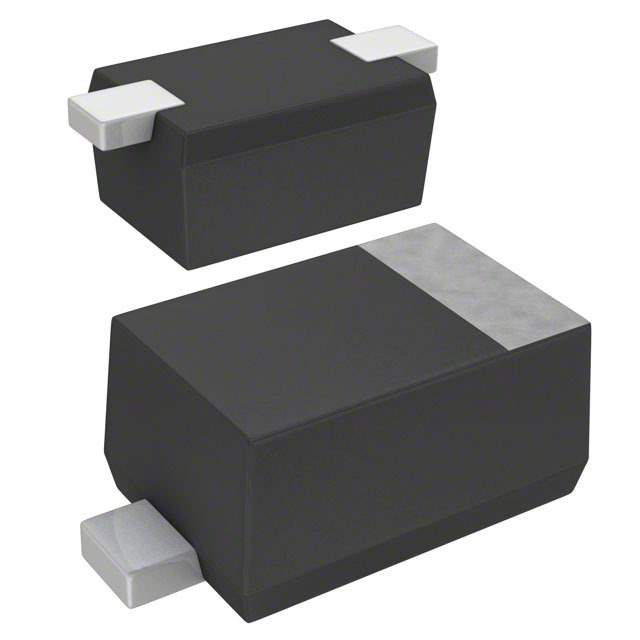
2.4V zener, 150mW ceiling, 1V at 10mA, SSMini2-F5-B package
Quick Engineering Summary
| Field | Value |
|---|---|
| Manufacturer | Panasonic |
| Category | Diodes - Zener - Single |
| Package | SSMini2-F5-B |
| Core function | DIODE ZENER 2. |
| Key electrical range | Current - Reverse Leakage @ Vr: 120μA @ 1V; Maximum Power Dissipation: 150mW; Supply and Demand Status: Balance; Tolerance: ±5% |
| Reported stock | 5800 pcs reported — confirm on RFQ |
Lifecycle is the weak point; the electrical fit is narrow but real
The weak point comes first: lifecycle clarity is not there. One field says Unknown with medium risk, while another status line says Active. That conflict puts DZ2S02400L in the category of parts you can use for sustaining builds or short-cycle work, but not in a long program until the status is resolved directly.
The electrical fit is easier to read. A 2.4V zener nominal value places DZ2S02400L in low-voltage clamp and reference territory, and the 150mW maximum power dissipation keeps it firmly in signal-level protection and bias work rather than anything expected to burn steady power over time. Small package, small job.
The package details support the same conclusion. SSMini2-F5-B and SMD mounting point to dense board use, where footprint pressure matters and the device is there to do a specific low-power job rather than absorb abuse. EU RoHS is listed as compliant, with no exemption detail stated. If the real need is a compact zener for an existing production board or a new design with a short approval path, the fit is credible; if lifecycle certainty is the gating issue, the status conflict is the first thing to close.
150mW is the number that closes most bad ideas
150mW is the limit that shapes the whole decision. It is a dissipation ceiling, not an operating point, and it rules out treating DZ2S02400L as a casual shunt simply because the nominal zener voltage is 2.4V.
Two other numbers matter quickly: 1V forward drop maximum at 10mA and 100 Ohm maximum impedance. The forward figure tells you the junction will conduct in the forward direction like any small silicon diode, so polarity mistakes or bidirectional assumptions will turn into current flow. The 100 Ohm maximum zener impedance means regulation is not especially stiff, and on a noisy or load-varying node that ceiling leaves more voltage movement than some reference uses will tolerate.
Then there is 120μCA reverse leakage at 1V. On a high-impedance sense point, that is enough to shift a threshold or bleed a stored-charge node even when the device is still below nominal breakdown.
Can you buy it for a running line?
Can you buy it for a running line? Yes, with one obvious constraint. Stock quantity is 5800, packaging is Reel - TR, and quantity per package is 3k pcs, so DZ2S02400L fits reel-fed assembly better than tiny replenishment buys.
Take the reel count seriously. If your build handles partial reels cleanly, the current stock can support a modest run; if it does not, plan around the 3k pcs package quantity instead of assuming loose-piece flexibility. The open-market fake threat is listed at 90 pct., so authorized-channel discipline belongs in the buy decision.
The missing data is exactly what would finish the call
And that is where the call still stalls. For DZ2S02400L, the missing items that matter are thermal resistance, derating curve, package drawing, and pinout. Those are the details that determine how much ambient headroom the 150mW ceiling really leaves and whether the SSMini2-F5-B land pattern drops into your board without rework.
Reverse-recovery time and junction capacitance are also absent. If the zener sits on a fast edge or RF-adjacent node, those omissions keep the transient picture open.
View the Win-Source product page for DZ2S02400L.
Key Takeaways for Engineers & Buyers
- Budget around the 150mW ceiling, not the nominal 2.4V value.
- Check leakage against 120μCA @ 1V if the clamp sits on a high-impedance node.
- Buy to reel usage: packaging is TR with 3k pcs per package.