
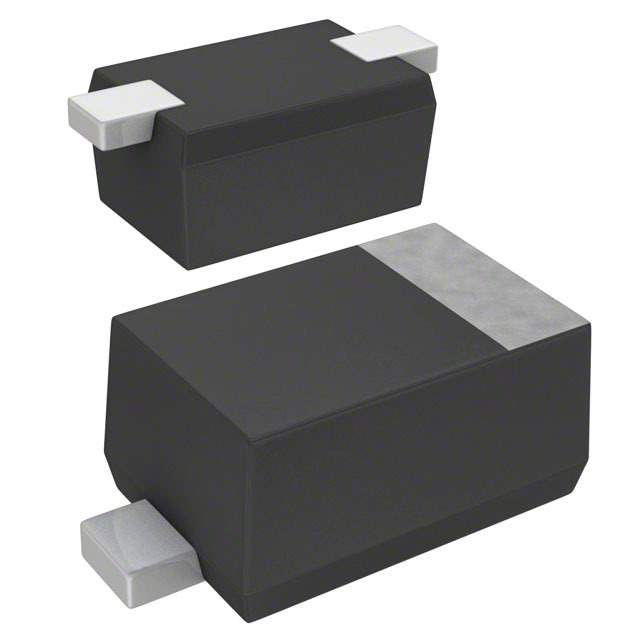
4.7V zener, 150mW ceiling, 1V at 10mA forward limit, SSMini2-F5-B package
Quick Engineering Summary
| Field | Value |
|---|---|
| Manufacturer | Panasonic |
| Category | Diodes - Zener - Single |
| Package | SSMini2-F5-B |
| Core function | DIODE ZENER 4. |
| Key electrical range | Current - Reverse Leakage @ Vr: 2μA @ 1V; Maximum Power Dissipation: 150mW; Supply and Demand Status: Balance; Tolerance: ±5% |
| Reported stock | 3000 pcs reported — confirm on RFQ |
Not for power shunt duty; fine for small 4.7V clamps
Don’t use it as a rail shunt that lives on dissipation. The 150mW maximum power dissipation is a hard ceiling, so steady burn or repeated abuse is out, especially with no added thermal detail.
It fits the small end of 4.7V regulation, clamp, and bias work in an SMD layout. The 4.7V nominal zener value and ±5% tolerance suit housekeeping rails and signal protection paths, but they do not make this a precision choice by themselves. The SSMini2-F5-B body points the same way: dense board work, not thermal slack.
The real constraint is dissipation, not the zener voltage
Heat is the constraint these numbers create. A 4.7V zener sounds routine, but the figure that decides the job is the 150mW maximum power dissipation, because that ceiling determines whether DZ2S04700L can sit across a node continuously or only catch occasional excursions.
The forward-conduction limit matters too. The listing gives 1V at 10mA as the maximum forward drop at the stated forward current, not as a zener operating point, so it tells you what the diode costs when polarity flips and it conducts like an ordinary diode. In protection paths, that forward case can set dissipation before the nominal 4.7V zener value does.
Then there is the 80 Ohm maximum impedance at Zzt. That ceiling says the clamp is not especially stiff, so a node that needs a tightly held reference under changing current is already pushing past what this listing supports. The 2μA at 1V reverse leakage is modest, but the test point matters: it describes low reverse-bias behavior, not leakage near the zener region where standby budgets are often won or lost.
Lifecycle is the buy decision, not stock on hand
3000 keeps the line worth watching, but it does not settle a long program. The harder issue is the status conflict: DZ2S04700L shows Unknown lifecycle in one field and Active in another.
Buy it for current builds if the footprint and 4.7V function are already fixed. For a fresh BOM, clear that lifecycle conflict first. EU RoHS is straightforward, and reel packaging fits SMT flow.
The missing curves still matter
150mW is not enough by itself. The listing still lacks trr, junction capacitance, thermal resistance, and a package drawing or pinout for DZ2S04700L.
View the Win-Source product page for DZ2S04700L.
Key Takeaways for Engineers & Buyers
- Keep DZ2S04700L in low-power clamp or reference roles; 150mW is the hard dissipation ceiling.
- Budget tolerance around the 4.7V nominal zener value; the listing gives ±5%, not a tighter bin.
- Resolve the Unknown lifecycle versus Active status before locking DZ2S04700L onto a long-life BOM.