
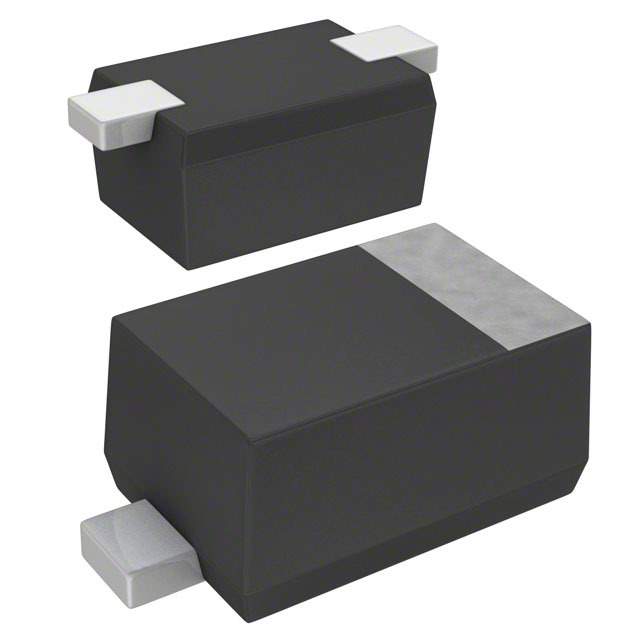
5.1V nominal Zener, 150mW ceiling, SSMini2-F5-B package, 1µA at 2V leakage
Quick Engineering Summary
| Field | Value |
|---|---|
| Manufacturer | Panasonic |
| Category | Diodes - Zener - Single |
| Package | SSMini2-F5-B |
| Core function | DIODE ZENER 5. |
| Key electrical range | Current - Reverse Leakage @ Vr: 1μA @ 2V; Maximum Power Dissipation: 150mW; Supply and Demand Status: Sufficient; Tolerance: ±2.5% |
| Reported stock | 27900 pcs reported — confirm on RFQ |
Not for fresh platforms; acceptable for a running line
Wrong for a fresh platform first: the lifecycle story conflicts with itself, with Active in the status fields and 停止提供 in the lifecycle parameter. That alone blocks a clean new-design recommendation, even with DZ2S051M0L still listed at 27900 in stock and marked as sufficient supply.
It fits existing production more comfortably when the design already uses a 5.1V single Zener in SSMini2-F5-B and buys on reel. The category, package, and 150mW maximum power dissipation point to small board-level clamp or reference duties, not a choice for programs that need broad second-source comfort. EU RoHS is clear. Lifecycle is not.
The 150mW ceiling is the real design gate
Start conservative.
The number that matters most is 150mW maximum power dissipation. Treat it as a ceiling, not an operating point, because it decides whether this device belongs in a light clamp or reference role versus any location where steady dissipation or fault energy can build in a very small SSMini2-F5-B body; if the abuse case leans on the Zener for long, the listing has already narrowed the answer.
The 5.1V nominal Zener voltage settles a different question: clamp family. It does not tell you how tightly the node holds across current, because the listing gives no Zener test current with that nominal value. The ±2.5% tolerance only becomes useful once that operating condition is known, and it is missing here.
Forward behavior is framed the same way. The listed 1V at 10mA is a limit pair that helps with dissipation budgeting when the diode is driven forward, but it does not map behavior across the rest of the current range. Reverse leakage at 1µA and 2V is low, yet that condition sits below the 5.1V Zener region, so it says more about low-bias leakage than breakdown behavior. Then 60 Ohm maximum Zzt sets the stiffness of the breakdown region; if the circuit needs a hard reference under changing current, that number will move the output.
27900 pieces help, but they don't settle the risk
27900 pieces help.
That supports a near-term buy for DZ2S051M0L on a running line, especially with Reel - TR packaging and a sufficient supply field. It doesn't erase the lifecycle conflict, so the safer move is covering known demand rather than opening a new platform around it.
The missing curves are what would close the call
The constraint is missing context around a small-power Zener. A derating curve, thermal resistance, and the Zener test condition tied to the 5.1V nominal value would close most of the open questions, because those details set ambient headroom, board heat flow, and how much the ±2.5% figure means in circuit.
Pinout and package drawing are also absent from this page, and that matters because SSMini2-F5-B is small enough that land pattern and orientation mistakes can turn into assembly escapes quickly. ECAD is listed only as contact-to-download, so footprint closure does not happen here.
View the Win-Source product page for DZ2S051M0L.
Key Takeaways for Engineers & Buyers
- Hold DZ2S051M0L to sustaining BOMs until the Active versus 停止提供 conflict is resolved.
- Budget around the 150mW ceiling first; that limit closes the thermal margin before anything else here does.
- Match feeders to Reel - TR and SSMini2-F5-B before releasing a build.