
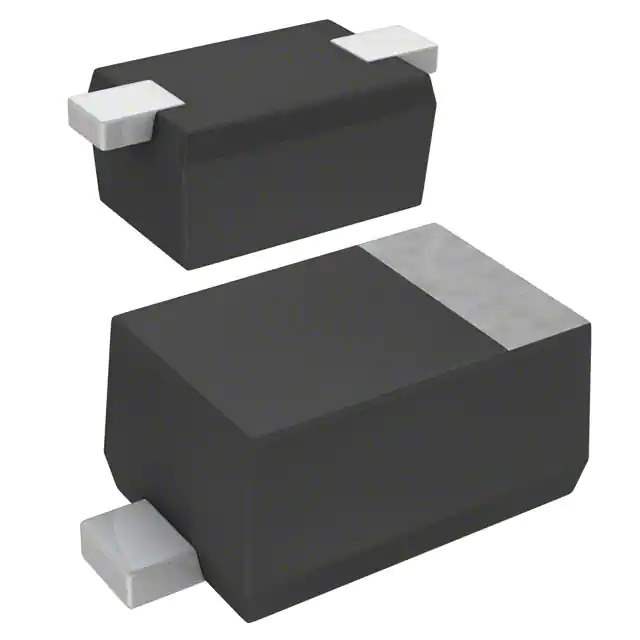
8.2 V zener, 150 mW ceiling, SC-79/SOD-523 package, -40°C to 85°C operating range
Quick Engineering Summary
| Field | Value |
|---|---|
| Manufacturer | Panasonic |
| Category | Diodes - Zener - Single |
| Package | Tape & Reel |
| Core function | DIODE ZENER 8. |
| Key electrical range | Current - Reverse Leakage @ Vr: 100 nA @ 5 V; Power - Max: 150 mW; Temperature Range - Operating: -40°C ~ 85°C; Tolerance: ±2.5% |
| Reported stock | 2370 pcs reported — confirm on RFQ |
2370 pieces does not make this a live design-in
2370 pieces can cover a shortage. It does not reopen a discontinued part for new work.
Lifecycle and product status both mark DZ2S082M0L as Discontinued, and the wording conflict changes only how the stop is phrased, not the decision. Sustaining designs only. EU RoHS compliance is fine, and MSL 1 (Unlimited) removes one handling issue, but neither changes the supply outlook. If this device is already on a released assembly, buy to a known build plan. If it is not, stop here.
Can you still buy it in a way that helps production?
What does the remaining stock actually do for the line? That is the first buyer question.
Here the constraint is packaging, not compliance. The part is listed in Tape & Reel with a standard package of 3,000 pcs, while stock quantity is 2370. That mismatch matters because a feeder plan built around full standard packs will not line up neatly with what is on hand, and a discontinued part offers no reason to expect replenishment later. Reserve it for assemblies already qualified to it, and tie the buy to actual placement demand rather than broad buffer stock.
The 8.2 V mark is useful, but the 150 mW limit decides fit
So the electrical headline is not enough by itself.
The 8.2 V zener value places this device in low-power shunt regulation, reference trimming, or light clamp duty around an 8.2 V node. The ±2.5% tolerance is tight enough to matter when that node feeds a real threshold, but it does not answer how much stress the part can absorb. The 150 mW rating does. It is a ceiling, and it rules out designs that expect repeated surge energy or much thermal headroom from a tiny SC-79, SOD-523 body.
The 1 V @ 10 mA forward figure also belongs in the limit column. If the circuit can drive the device forward, that drop and current add directly to dissipation instead of serving as a normal operating target. Then there is the 20 Ohms maximum Zzt. Regulation stiffness is finite, so a very hard clamp cannot be assumed from this listing alone.
Use it where board area is tight and zener current is modest. Don’t treat it as a general-purpose protector just because the nominal voltage is convenient.
150 mW is the number that leaves the biggest unanswered questions
150 mW is the decisive figure, and it is only useful once the missing thermal and dynamic details are known.
The listing does not give thermal resistance, a derating curve, surge current, or a package drawing. Each missing item changes the answer to the real question: whether the part survives a clamp event in hardware or only looks acceptable under static bench conditions. In a small package, that distinction is not academic, because the same nominal zener voltage can behave very differently once pulse energy and heat flow start to dominate.
Other gaps are concrete too. Reverse-recovery time is absent. Junction capacitance is absent. Pinout detail is absent. For a simple zener in a quiet bias network, some of that may be tolerable. Once the job shifts toward protection duty, those omissions become the places where assumptions fail first.
View the Win-Source product page for DZ2S082M0L.
Key Takeaways for Engineers & Buyers
- Block DZ2S082M0L from new BOM releases; lifecycle is Discontinued.
- Check clamp budget against the 150 mW ceiling before using the 8.2 V node.
- Match land pattern to SC-79, SOD-523 and SSMini2-F5-B before committing layout.