
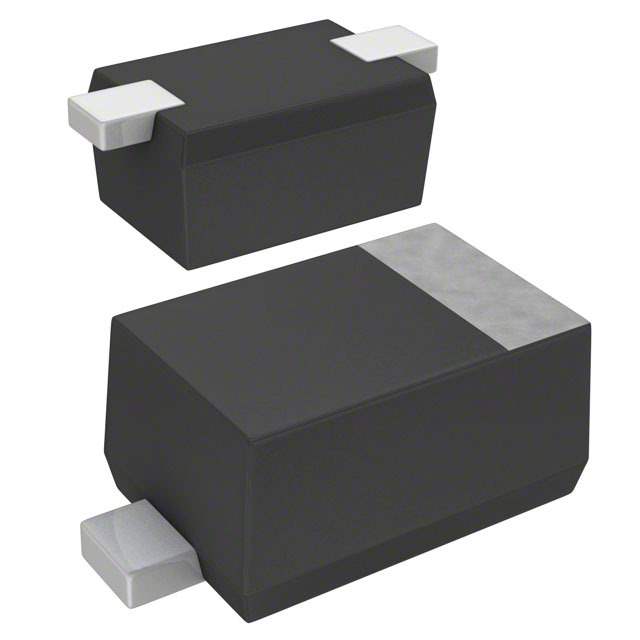
10V zener, 150mW ceiling, SSMini2-F5-B package, 1V at 10mA forward-drop limit
Quick Engineering Summary
| Field | Value |
|---|---|
| Manufacturer | Panasonic |
| Category | Diodes - Zener - Single |
| Package | SSMini2-F5-B |
| Core function | DIODE ZENER 10V 150MW SSMINI2 |
| Key electrical range | Current - Reverse Leakage @ Vr: 50nA @ 7V; Maximum Power Dissipation: 150mW; Supply and Demand Status: Balance; Tolerance: ±5% |
| Reported stock | 7800 pcs reported — confirm on RFQ |
150mW is the real limit here
The constraint is power, not voltage. DZ2S10000L is a 10V zener, but the listed 150mW maximum power dissipation is the ceiling that decides whether it belongs in a light clamp or reference role, and by itself it does not answer surge handling or ambient headroom.
The other number that matters is the ±5% tolerance on the 10V zener value. That is enough to rule it out as a precision reference by default, and it keeps the nominal 10V from reading like a guaranteed tight clamp point. Small part. Small budget.
10V sets the rail, not the abuse case
10V is the decisive figure. It tells you where DZ2S10000L can sit in a rail-protection or bias network, but it does not tell you how hard you can drive it because the listing gives no derating curve and no surge current figure.
The 1V maximum forward drop at 10mA matters when the zener is driven forward instead of in breakdown. That number is a ceiling at 10mA, not a normal operating point, and it affects dissipation without saying how the package sheds heat. Reverse leakage is listed as 50nA at 7V, which helps if the circuit spends time below the 10V zener region and standby loss or bias error matters. The 30 Ohm maximum impedance is the other practical filter: if you need a very stiff clamp, that ceiling may be the first reason to move on.
The package fits dense boards, but the datasheet gaps are real
The weak point comes first: the listing is thin where a zener usually earns or loses its place. There is no pinout, no package drawing, no thermal resistance, and no surge or overload figure, so DZ2S10000L cannot be cleared here for anything that depends on pulse survival or a quantified thermal path.
Still, there is enough to place it sensibly. SSMini2-F5-B and SMD mounting put DZ2S10000L in compact board-level protection, bias, and simple shunt duties where 150mW is acceptable and reel packaging matters to assembly flow. The 50nA leakage at 7V helps on low-leakage nodes below breakdown, while the ±5% tolerance keeps it out of jobs that need a tighter reference window without trimming.
The missing items are concrete. You need the package drawing and pinout to lock the land pattern, thermal resistance or a derating curve to understand ambient headroom, and a surge-current or overload rating to judge whether a transient event becomes a field return.
Buy it for builds you can bound tightly
So the immediate constraint is not stock but certainty. There are 7800 pieces listed, packaged on reel in 3k pcs, so DZ2S10000L is workable for a near-term SMT build, but the lifecycle picture is mixed because one field says Unknown while another says Active.
Use it where that ambiguity is acceptable, and keep EU RoHS as a checked box rather than a reason to choose it.
View the Win-Source product page for DZ2S10000L.
Key Takeaways for Engineers & Buyers
- Budget DZ2S10000L around the 150mW dissipation ceiling, not the 10V nominal zener value.
- Match the footprint to SSMini2-F5-B before releasing the PCB; the listing gives no drawing or pinout.
- Buy on reel in 3k pcs lots and cover the immediate build from the listed 7800 stock.