
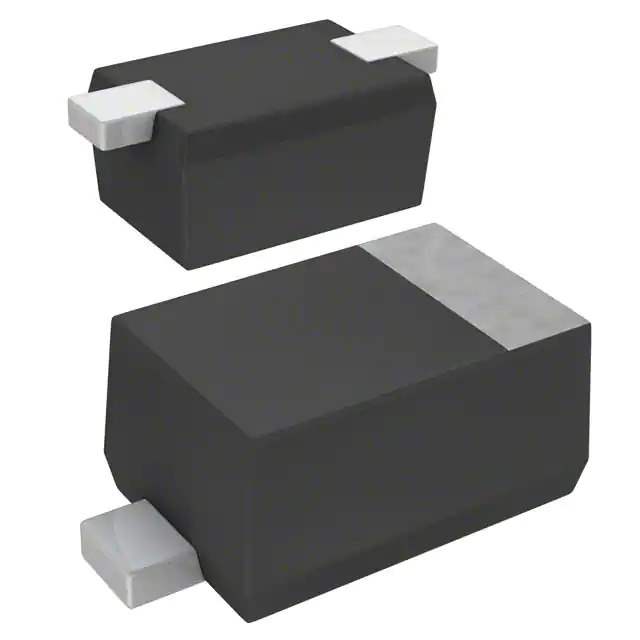
10 V zener, 150 mW ceiling, SC-79/SOD-523 package, ±2.5% tolerance; lifecycle is closed.
Quick Engineering Summary
| Field | Value |
|---|---|
| Manufacturer | Panasonic |
| Category | Diodes - Zener - Single |
| Package | Tape & Reel |
| Core function | DIODE ZENER 10V 150MW SSMINI2 |
| Key electrical range | Current - Reverse Leakage @ Vr: 50 nA @ 7 V; Power - Max: 150 mW; Tolerance: ±2.5%; Voltage - Forward (Vf) (Max) @ If: 1 V @ 10 mA |
| Reported stock | 1 pcs reported — confirm on RFQ |
Sustaining only, not a fresh design choice
Don't use it new. DZ2S100M0L is discontinued, and the wording conflict in the lifecycle signals does not change the outcome: both listed status fields say Discontinued, while another signal says stopped supply.
For existing production, the window is narrow. Stock is 1, so this is not a part to count on for a running line without an immediate material decision. EU RoHS is compliant, and MSL 1 (Unlimited) removes one handling concern, but neither changes the lifecycle call.
Not for power dumping; fine for a small 10 V clamp
This is the wrong zener for anything that has to absorb real power or live with generous thermal uncertainty. The 150 mW rating is a ceiling, not a working point, and in SC-79, SOD-523 that ceiling leaves little room for a casual clamp design to survive mistakes.
DZ2S100M0L fits low-power 10 V zener duty on a surface-mount board where the ±2.5% tolerance matters. The 10 V nominal zener value helps only when the rail or node actually wants that clamp point; it does not answer transient energy, pulse survival, or ambient headroom, because those numbers are not here.
The listed electrical numbers are useful, but only up to a point
And the rest of the numbers carry the same warning. The 1 V maximum forward drop at 10 mA is a ceiling for forward conduction, so if DZ2S100M0L can be driven the wrong way in normal service, that drop belongs in the dissipation budget. Get that wrong and the package, not the schematic, becomes the failure site.
The 50 nA reverse leakage at 7 V supports precision bias or light-load sensing, because it keeps leakage very low below the 10 V zener point. The 30 Ohms maximum impedance matters too: regulation will move with current, so this is not the part for a stiff reference on a sparse current budget.
1 piece on hand is the real buying constraint
1 piece on hand changes the conversation from engineering preference to line risk. DZ2S100M0L comes in Tape & Reel with a standard package of 3,000 pcs, so the pack format points to volume assembly, but the available quantity shown here does not support even a modest sustaining build without a shortage plan.
The package picture is at least clear. The listing ties the device to SC-79, SOD-523 and supplier package SSMini2-F5-B, which makes it a board-level small-signal zener rather than a leaded service part. That matters if hand rework or field replacement sits near the center of the maintenance model, because the mechanical fit, handling approach, and replacement path all tighten at once when the package is this small and the lifecycle is already closed.
If this part is already on your BOM, freeze demand, pull remaining stock against named builds, and move the footprint review to the front of the migration work. One more practical note: the open-market fake threat is listed at 33pct. That does not say anything about electrical behavior, but it does raise the risk around loose residual stock after the authorized channel dries up.
What the listing still doesn’t answer
What would a buyer ask first? Whether the missing stress details are here. They aren't: no derating curve, no thermal resistance, no surge or overload figure, no package drawing or pinout detail, and no operating temperature field.
View the Win-Source product page for DZ2S100M0L.
Key Takeaways for Engineers & Buyers
- Treat 150 mW as the dissipation ceiling; keep DZ2S100M0L in low-power shunt or reference duty only.
- Lock the footprint to SC-79, SOD-523 / SSMini2-F5-B before touching the PCB.
- Buy only against an existing build need; stock shown is 1 and lifecycle is Discontinued.