
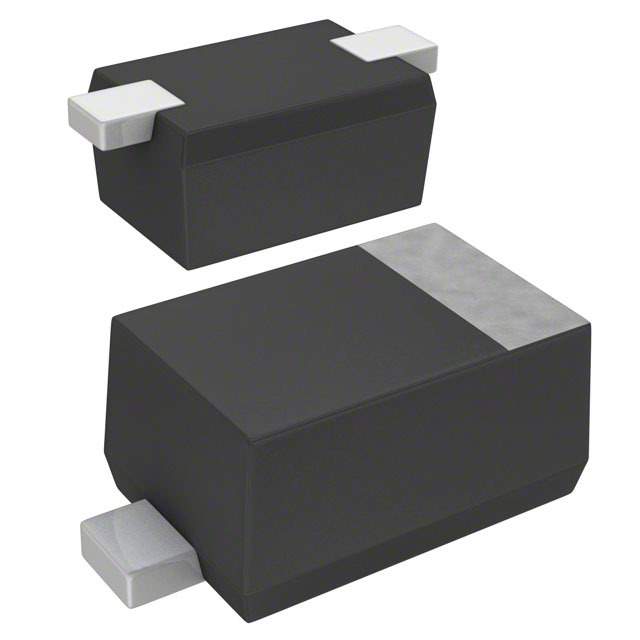
15V nominal, 150mW ceiling, SC-79/SOD-523 package, 1V at 10mA forward limit
Quick Engineering Summary
| Field | Value |
|---|---|
| Manufacturer | Panasonic |
| Category | Diodes - Zener - Single |
| Package | SC-79, SOD-523 |
| Core function | DIODE ZENER 15V 150MW SSMINI2 |
| Key electrical range | Current - Reverse Leakage at Vr: 50nA at 11V; Power - Max: 150mW; Supply and Demand Status: Balance; Tolerance: ±5% |
| Reported stock | 2100 pcs reported — confirm on RFQ |
Not for power dumping; fine for light 15V rail limiting
This is the wrong zener for any node that has to absorb much energy. The 150mW rating is a ceiling, and in an SC-79, SOD-523 body that shuts down the usual “just let the clamp eat it” idea quickly.
It fits better in small 15V zener jobs: reference trimming, light overvoltage limiting, or protection for a high-impedance sense node where leakage matters. The 15V nominal Vz sets the rail neighborhood. The ±5% tolerance also means it is not tight enough for a precision reference unless the allowed spread has already been checked.
Can you actually keep a line running on it?
The first buying question is simple: can you get enough of it in the right pack form? Here the answer is mixed. Stock is 2100, packaging is Reel, and manufacturer pack quantity is 3,000.
That makes DZ2S15000L easy to place into an SMT flow, but the listed stock does not match a full manufacturer pack. Lifecycle is Unknown, with no conflict and no signal either, so treat it as unverified rather than endangered. For a running line, reserve the available reels against real build demand instead of assuming continuity. EU RoHS is clean, and MSL 1 (Unlimited) helps if reels will sit in stores before use.
The numbers point to leakage-sensitive, not surge-heavy, use
The constraint is dissipation. A 150mW maximum rating and a 15V nominal zener value put DZ2S15000L on small clamp and bias duties, not on rails where repeated fault energy lands in the diode.
Two other numbers sharpen that fit. Reverse leakage is 50nA at 11V, low enough to matter in high-impedance monitoring paths and battery-fed sensing where leakage can move the error budget before the clamp conducts hard. Impedance is 40 Ohms maximum, so do not expect a stiff 15V knee under changing current; the clamp voltage will move, and that matters more here than the nominal zener number alone.
The 1V forward-drop maximum at 10mA is also a ceiling, not a normal operating point. It shows what the diode may cost in the forward direction if polarity flips, but it does not settle thermal behavior under fault because the forward I-V curve is not here.
The weak point is what the listing leaves out
What is missing matters most. There is no surge or non-repetitive forward current figure, so you cannot judge how DZ2S15000L handles short fault pulses or line transients from this page alone.
Thermal detail is missing too, and that is a bigger gap than it sounds. There is no thermal resistance or derating curve, so the 150mW ceiling stays abstract when ambient rises, copper area changes, or nearby parts heat the board, which is exactly when a small package stops looking forgiving and starts acting like a limit you can hit faster than expected.
Pin-level package detail is also absent. You get SC-79, SOD-523, and SSMini2-F5-B naming, but not the drawing or pad geometry that closes footprint review. For a zener, the full zener test conditions and the voltage curve around breakdown also matter, because 40 Ohms maximum only hints at regulation stiffness; it does not show how DZ2S15000L behaves across the current range your clamp will actually see.
One more buying risk sits outside the electrical data: the open-market fake threat is listed at 74 pct. Keep DZ2S15000L on authorized flow only.
View the Win-Source product page for DZ2S15000L.
Key Takeaways for Engineers & Buyers
- Keep DZ2S15000L on low-dissipation clamp rails; 150mW is the hard ceiling.
- Match feeder setup to reel buying; stock is 2100 while pack quantity is 3,000.
- Use the ±5% zener tolerance in the rail window check before releasing DZ2S15000L.