
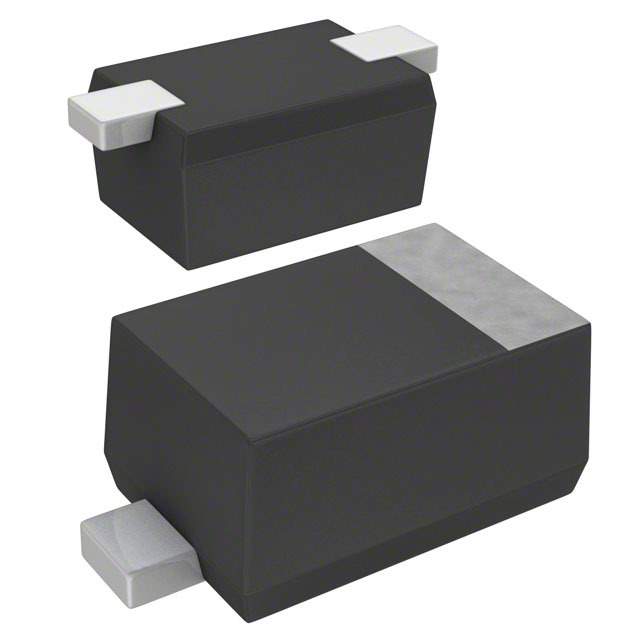
20 V zener, 150 mW ceiling, SSMini2-F5-B package, 50 nA at 15 V, with lifecycle conflict
Quick Engineering Summary
| Field | Value |
|---|---|
| Manufacturer | Panasonic |
| Category | Diodes - Zener - Single |
| Package | SSMini2-F5-B |
| Core function | DIODE ZENER 20V 150MW SSMINI2 |
| Key electrical range | Supply and Demand Status: Balance |
| Reported stock | 2290 pcs reported — confirm on RFQ |
Can you start a new build on this part?
Can I put this into a new build? Probably not. The electrical headline is workable, but the lifecycle conflict is harder to ignore: one field says Active and another says 停止提供. That makes DZ2S200M0L a sustaining choice, not a fresh release. EU RoHS is listed.
The electrical limits are usable, but only as ceilings
Fit is narrow.
A 20 V zener value with ±2.5% tolerance points to a defined clamp or reference point, not a loose protection role where spread is easy to absorb. The 150 mW rating is a ceiling, and by itself it does not settle the thermal question because the listing gives no derating curve or thermal resistance. If the node can remain in breakdown for any meaningful duration, that missing thermal detail decides whether the package survives.
The 80 Ohms maximum Zzt also matters. It is high enough that regulation stiffness should not be assumed from the 20 V label alone, and line or load movement around the test point can shift the clamp more than a precision rail-trim job may tolerate. Leakage is listed at 50 nA at 15 V, a useful low-current ceiling for high-impedance sensing nodes. Forward conduction is listed as 1 V at 10 mA; that's a budget marker for accidental forward bias, not a normal operating point.
Small package, small margin
The constraint is package size tied to power. SSMini2-F5-B, with SC-79 and SOD-523 called out, places this device in the class of board-level clamps and references where board area is tight and dissipation is modest. It fits near signal rails, bias networks, and light transient limiting on dense surface-mount boards.
It does not fit where the zener must absorb repeated energy with much ambient rise, because the only power number here is 150 mW and the listing includes no surge current, thermal resistance, or derating curve. In a body this small, that missing detail is the line between a harmless clamp and a field return that shows up only after the board has spent time hot.
The buying constraint is lifecycle first, packaging second
The weak point comes first: lifecycle confidence is mixed. The stronger news is that the part is not impossible to place on a running line today, because stock is listed at 2290, supply and demand is Balance, and the package format is Reel - TR with quantity per package at 3000.
That leads to a practical move for existing production. Secure what you need for the near build window and avoid spreading DZ2S200M0L into new assemblies. The reel quantity matters because the listed stock does not cover a full 3000-piece package, so line planning may need a partial-lot decision rather than assuming standard reel intake.
The open-market fake threat is listed at 30 pct. I'd read that as a reason to stay on authorized stock for DZ2S200M0L, not as a reason to inflate the risk beyond what the listing says.
And the technical call still stops short for concrete reasons: no reverse-recovery time, no junction capacitance, no thermal resistance, and no pinout or package drawing in this listing. For a tiny zener with a 150 mW ceiling already doing most of the talking, those are the details that close the decision.
View the Win-Source product page for DZ2S200M0L.
Key Takeaways for Engineers & Buyers
- Treat the 150 mW rating as the dissipation ceiling; don't size DZ2S200M0L from nominal 20 V alone.
- Check leakage against the listed 50 nA at 15 V if the clamp sits on a high-impedance node.
- Buy to reel planning: package quantity is 3000 while listed stock is 2290.