
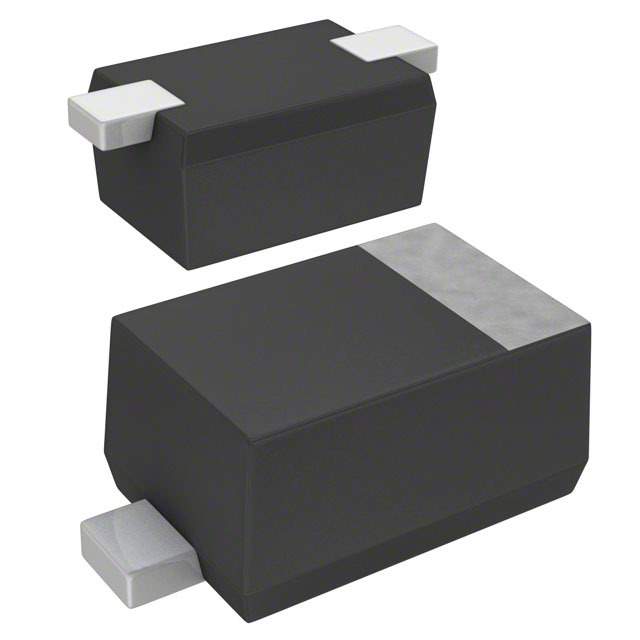
22 V zener, 150 mW ceiling, SSMini2-F5-B package, ±2.5% tolerance, SMD reel part
Quick Engineering Summary
| Field | Value |
|---|---|
| Manufacturer | Panasonic |
| Category | Diodes - Zener - Single |
| Package | SSMini2-F5-B |
| Core function | DIODE ZENER 22V 150MW SSMINI2 |
| Key electrical range | Current - Reverse Leakage @ Vr: 50nA @ 17V; Maximum Power Dissipation: 150mW; Supply and Demand Status: Balance; Tolerance: ±2.5% |
| Reported stock | 2397 pcs reported — confirm on RFQ |
So the lifecycle conflict decides the verdict
And that conflict comes first. DZ2S220M0L shows Active in multiple fields, but it also carries a 停止提供 signal in the lifecycle notes, so the safe call is sustaining only, not a fresh design-in.
The rest of the listing is straightforward: EU RoHS compliant, SMD, reel packed. What blocks an easy approval is not the 22 V nominal zener point but the mixed lifecycle story, because that turns a routine clamp diode into a supply-risk question if continuity matters beyond the current build plan.
The package is tiny, and the power ceiling is tiny too
Use it carefully. DZ2S220M0L has a 150 mW ceiling in SSMini2-F5-B, so it fits low-power zener duty, not positions where the clamp must absorb repeated abuse.
The weak point is missing thermal detail
Missing thermal detail is the weak point, but the electrical limits still place DZ2S220M0L clearly enough. The 22 V zener value with ±2.5% tolerance suits rail limiting, bias protection, or simple reference duty where that nominal voltage matters, while the 150 mW maximum power dissipation rules out any use that leans on the diode as an energy sink rather than a light clamp.
The 80 Ohm maximum Zzt matters more than it first appears. It does not tell you transient behavior, but it does say this is not the part to pick when you need a stiff 22 V reference under changing current, because dynamic impedance already takes a meaningful share of the voltage budget. The 50 nA reverse leakage at 17 V is low enough for high-impedance sensing or standby-biased nodes, yet that number only closes leakage concerns at 17 V; it does not answer surge handling or hot leakage because no operating temperature field is listed.
Forward conduction is bounded, not invited. The 1 V maximum at 10 mA is a ceiling for accidental forward bias or polarity mistakes, but it does not make DZ2S220M0L a general small-signal forward diode choice.
150 mW is the number that forces the datasheet chase
150 mW is the hard ceiling, and the missing support data around that ceiling is what keeps this page from being enough to release DZ2S220M0L into a new schematic. No operating temperature field is listed, no thermal resistance is listed, and no derating curve is listed, so ambient headroom in this package stays unresolved until the full datasheet is in hand.
The package details need the same treatment. There is no pinout or package drawing here, even though the listing also mentions SC-79 and SOD-523 alongside SSMini2-F5-B, and that ambiguity matters when land pattern and orientation are tight. There is no junction capacitance, so high-impedance or fast-edge nodes remain an open question. There is also no surge or overload figure such as IFSM, which is the number that separates a quiet bias clamp from a part that survives real fault energy.
Keep it for a running line if the footprint is already proven and the 2397 pieces cover near-term demand. For anything new, clear the lifecycle conflict and pull the full datasheet first.
View the Win-Source product page for DZ2S220M0L.
Key Takeaways for Engineers & Buyers
- Hold DZ2S220M0L for 22 V clamp positions that stay inside the 150 mW ceiling.
- Check line regulation against the 80 Ohm Zzt limit before using DZ2S220M0L as a reference.
- Book reel demand early if 2397 pieces is not enough for the next build.