
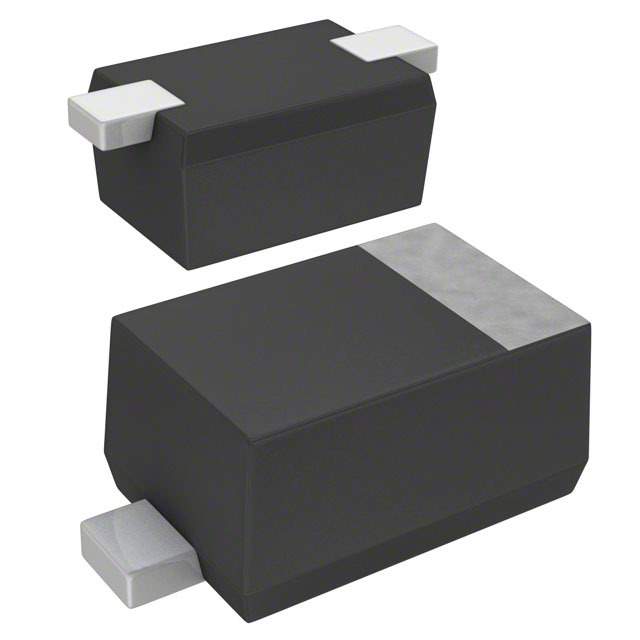
24 V zener, 150 mW ceiling, SOD-523 package, -40°C to 85°C operating range
Quick Engineering Summary
| Field | Value |
|---|---|
| Manufacturer | Panasonic |
| Category | Diodes - Zener - Single |
| Package | Tape & Reel |
| Core function | DIODE ZENER 24V 150MW SSMINI2 |
| Key electrical range | Current - Reverse Leakage @ Vr: 50 nA @ 19 V; Power - Max: 150 mW; Temperature Range - Operating: -40°C ~ 85°C; Tolerance: ±2.5% |
| Reported stock | 167590 pcs reported — confirm on RFQ |
Use it to hold a running line, not to start one
Sustaining only.
The basic fit is clear enough for a small 24 V zener clamp, and stock is deep enough to support existing production. The problem is lifecycle confidence: one field says Active, another says 停止提供. That conflict matters more than the diode itself, because it changes whether you spend layout and qualification effort here or keep the part confined to a BOM that already ships. RoHS is listed as EU RoHS compliant, and MSL 1 helps on handling, but neither resolves the lifecycle split.
The real ceiling is power, not nominal zener voltage
The constraint is dissipation in a very small body.
A 24 V nominal zener voltage tells you where DZ2S240M0L sits in the rail map, but it does not settle the thermal question. The listed 150 mW maximum power is the hard ceiling, and in SC-79, SOD-523 that ceiling decides whether a clamp event is routine or turns into a field return.
The other number that shapes the call is 100 Ohms maximum impedance. For a zener, that warns that clamp stiffness is limited; if the circuit needs a tight knee under changing current, this listing does not promise it. The 50 nA reverse leakage at 19 V is low enough to keep standby bias clean around that test point, but it is still only a leakage condition, not proof of behavior at the full 24 V nominal point. Forward conduction is bounded too: 1 V maximum at 10 mA is a ceiling for accidental forward bias, not a normal operating target.
Wrong for surge-heavy clamps, fine for light board protection
Not for pulse abuse.
DZ2S240M0L fits compact board-level voltage limiting where event energy stays modest and the package has to stay tiny. SMD mounting and the SSMini2-F5-B / SOD-523 footprint point straight at that use.
It does not belong on any rail or input that sees repetitive surge current, hot-plug stress, or fault energy the diode must absorb routinely. The listing gives 150 mW maximum power and a -40°C to 85°C operating range, but no surge current rating, no derating curve, and no thermal resistance. Without those, you cannot tell whether DZ2S240M0L survives the transient you care about or only the quiet steady-state case.
The buy call is simple: secure stock, then close the missing data
Yes, the weak point is lifecycle ambiguity.
The strong point is availability: 167590 in stock, tape and reel packaging, and a standard package of 3,000 make DZ2S240M0L practical for a running SMT line right now.
That still doesn't make it a carefree buy. If the part is already on your AVL, secure the quantity you need while the line is active and keep the reel format aligned with your feeder setup. If it is not already qualified, stop before release and get the missing electrical and mechanical detail that decides fit. The listing does not carry reverse-recovery time, junction capacitance, thermal resistance, surge current, pinout, or a package drawing. For a zener in this size, those gaps are not housekeeping; they are the difference between a harmless reference clamp and a part that drifts into overstress because the transient, thermal path, or land pattern was assumed instead of specified.
View the Win-Source product page for DZ2S240M0L.
Key Takeaways for Engineers & Buyers
- Hold DZ2S240M0L to 24 V clamp use; the 150 mW rating is the dissipation ceiling.
- Keep assembly on tape-and-reel flow; standard package is 3,000 and stock is 167590.
- Request surge and thermal data before using DZ2S240M0L on lines that see startup or fault pulses.