
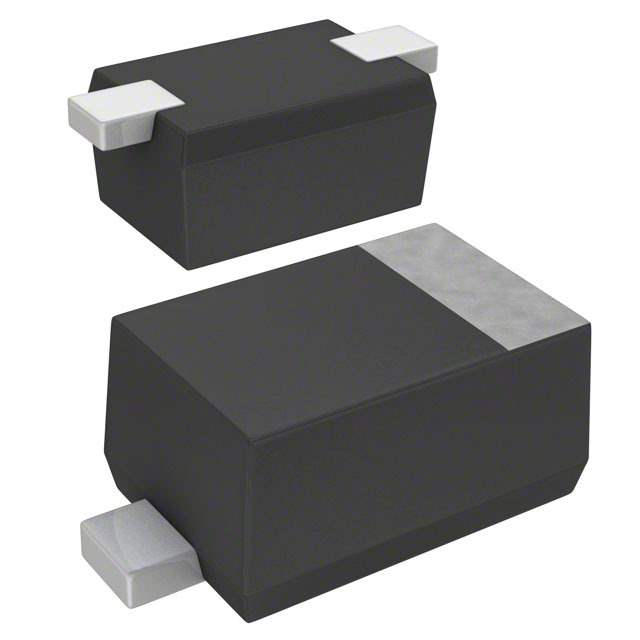
30V zener, 150mW ceiling, SSMini2-F5-B package, ±2.5% tolerance; lifecycle conflict is the real decision point
Quick Engineering Summary
| Field | Value |
|---|---|
| Manufacturer | Panasonic |
| Category | Diodes - Zener - Single |
| Package | SSMini2-F5-B |
| Core function | DIODE ZENER 30V 150MW SSMINI2 |
| Key electrical range | Current - Reverse Leakage @ Vr: 50nA @ 23V; Maximum Power Dissipation: 150mW; Supply and Demand Status: Balance; Tolerance: ±2.5% |
| Reported stock | 8700 pcs reported — confirm on RFQ |
Not for a carefree new build
This is not the part for a clean new platform that needs an unambiguous lifecycle. One field says Active, another says 停止提供, and that conflict alone is enough to keep it out of a fresh design unless the program already accepts a second-source or migration path.
It fits better in sustaining work that already wants a 30V zener in an SSMini2-F5-B body and can stay within a 150mW dissipation ceiling. EU RoHS is straightforward. The electrical listing is usable; the lifecycle story isn't.
The package is tiny; the power limit is smaller
The weak point comes first: 150mW maximum power dissipation is a hard ceiling. The upside is the SSMini2-F5-B SMD package, which suits dense board-level clamp or reference duties rather than repeated energy absorption.
150mW decides whether the 30V number is useful
150mW is the decisive figure. A 30V zener marking sounds comfortable until the dissipation limit pulls the discussion back to reality, because the real question is not whether a rail can reach 30V but whether clamp duty stays light enough that the diode does not spend its life pressed against that ceiling.
The next number that matters is the ±2.5% tolerance on the 30V zener value. That is tight enough for straightforward overvoltage limiting and bias reference work where threshold matters. What it does not settle is dynamic behavior, because the listing gives only 160 Ohm maximum Zzt and no curve showing how voltage shifts across current, so any circuit that depends on clamp stiffness still has an open question.
Forward conduction is bounded, not broadly characterized: 1V at 10mA is a listed forward-drop point, and it says only what happens at that test condition. It does not make DZ2S300M0L a general-purpose forward diode. Reverse leakage is low at 50nA at 23V, which helps on high-impedance nodes, but that figure still leaves surge handling and thermal headroom unanswered.
The buy call is about continuity, not quantity
The constraint is lifecycle ambiguity. Stock is listed at 8700, packaging is Reel - TR, and quantity per package is 3k pcs, so the practical move is to cover known production demand in reel multiples when this exact device is already on the board.
The listing still leaves out the details needed for a tougher review: no derating curve, no thermal resistance, no pinout or package drawing, and no surge figure such as IFSM. Those gaps decide whether the device can survive real clamp events and whether the land pattern is already safe.
View the Win-Source product page for DZ2S300M0L.
Key Takeaways for Engineers & Buyers
- Hold DZ2S300M0L to 30V nominal zener use; the 150mW rating is a ceiling, not load headroom.
- Match the footprint to SSMini2-F5-B before release; the listing also names SC-79, SOD-523.
- If the line depends on DZ2S300M0L, cover the 8700 stock with a reel-based buy plan at 3k pcs.