
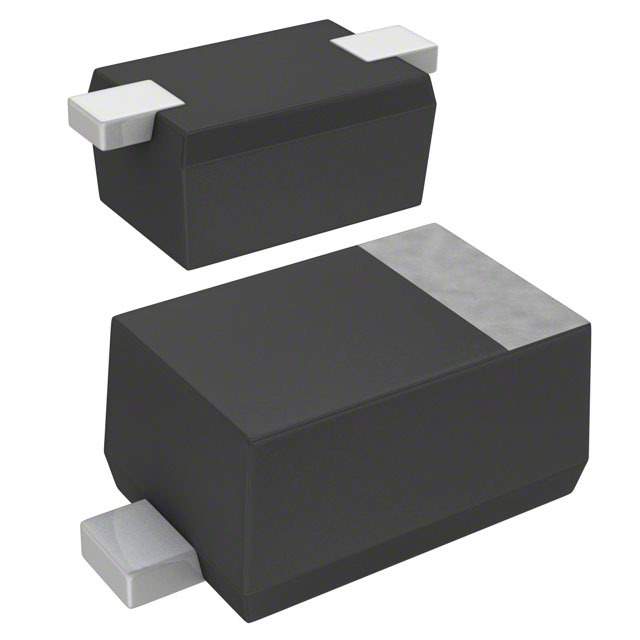
33V zener, 150mW max, SC-79/SOD-523, SSMini2-F5-B, ±2.5% tolerance
Quick Engineering Summary
| Field | Value |
|---|---|
| Manufacturer | Panasonic |
| Category | Diodes - Zener - Single |
| Package | SC-79, SOD-523 |
| Core function | DIODE ZENER 33V 150MW SSMINI2 |
| Key electrical range | Current - Reverse Leakage at Vr: 50nA at 25V; Power - Max: 150mW; Supply and Demand Status: Balance; Tolerance: ±2.5% |
| Reported stock | 3000 pcs reported — confirm on RFQ |
Can you start a new build on it?
Would you start a new build with it? Not comfortably. One lifecycle field says Active and another says 停止提供, so keep it in sustaining designs until Panasonic status is unambiguous.
The package is tiny, and the power ceiling is too
The weak point comes first: 150mW is a hard ceiling. In a 33V zener, that rules out casual use as a catch-all clamp.
The small SC-79, SOD-523 body and SSMini2-F5-B package fit light-duty reference or protection work on dense SMD boards, not jobs where the zener has to burn off repeated fault energy. The ±2.5% tolerance is useful for rail supervision and threshold setting, but the 200 Ohms maximum Zzt says the knee is not especially stiff, so line and load behavior still depend on the missing curves.
3000 pieces helps the line, not the design decision
3000 pieces helps if this device is already on a running BOM and you need reel-fed continuity without a packaging change. Manufacturer pack quantity is also 3,000, packaging is Reel, and supply-demand status is Balance, so the commercial setup fits normal SMT consumption.
It still doesn't settle the real issue. Stock shape does not cancel a lifecycle conflict, so use it for existing production if the footprint is already qualified and leave new releases alone.
1V at 10mA only answers the wrong question
1V at 10mA is the forward-drop ceiling, and it matters mainly if the part can be driven forward in your fault cases. Useful, but incomplete.
It sets a limit for forward conduction, yet it does not answer the thermal question because the listing gives no thermal resistance and no derating curve. If your abuse case includes repeated forward events, that missing thermal data is what determines whether the package survives or turns into a field return.
The reverse picture is only partly filled in. Reverse leakage is listed as 50nA at 25V, a helpful ceiling for high-impedance nodes below the 33V nominal zener point, but it says nothing about behavior near breakdown across temperature because operating temperature is blank. The listing also leaves out the details that close a real component decision: no pinout or package drawing to lock land pattern orientation, no impedance conditions beyond the single 200 Ohms maximum figure, and no transient or surge rating to show whether it is a quiet reference part, a light clamp, or both only inside a narrow window.
View the Win-Source product page for DZ2S330M0L.
Key Takeaways for Engineers & Buyers
- Hold DZ2S330M0L to existing production until the Active versus 停止提供 conflict is cleared.
- Check the 150mW ceiling against your clamp duty before releasing DZ2S330M0L on a new board.
- Match the footprint to SC-79, SOD-523 and SSMini2-F5-B before committing reel quantity 3,000.