
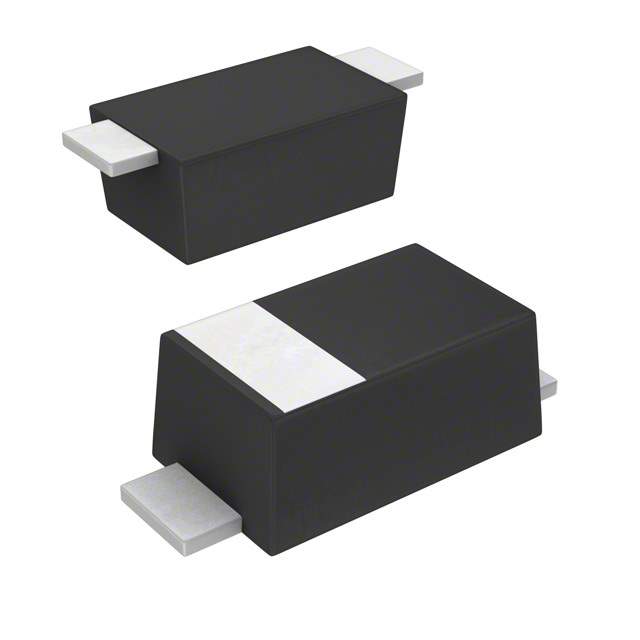
3 V nominal, 1 W max, SOD-123F, -40°C to 85°C: usable limits, but lifecycle is not clean
Quick Engineering Summary
| Field | Value |
|---|---|
| Manufacturer | Panasonic |
| Category | Diodes - Zener - Single |
| Package | Tape & Reel |
| Core function | DIODE ZENER 3V 1W MINI2 |
| Key electrical range | Current - Reverse Leakage @ Vr: 150 µA @ 1 V; Power - Max: 1 W; Temperature Range - Operating: -40°C ~ 85°C; Tolerance: ±5% |
| Reported stock | 3388 pcs reported — confirm on RFQ |
3 V is useful, but the lifecycle call is the real blocker
3 V is what puts DZ2W03000L in play at all. It sits in low-voltage zener duty rather than higher-rail suppression, and the listed ±15% tolerance fits straightforward reference or protection work where the clamp window does not need to be especially tight.
The bigger issue is lifecycle. DZ2W03000L is marked Active, yet it also carries a stop-supply signal, and that conflict is enough to keep it out of new design-ins until Panasonic clears it up. For existing production, the picture is better: 3388 pieces are listed, and the part is EU RoHS compliant with MSL 1 (Unlimited).
The ceiling is thermal first, then dynamic behavior
The real constraint is missing context around the limits.
The 1 W rating is a ceiling, not an operating point, and by itself it does not settle the thermal question because no thermal resistance or derating curve is given. In a SOD-123F package, that omission matters more than the headline wattage, because board conditions decide whether the junction stays comfortable or becomes the limiting factor long before the schematic says it should.
Dynamic behavior also needs attention. The 120 Ohms maximum Zzt says the zener is not especially stiff, so circuits that expect a hard clamp or a quiet reference have to carry that impedance in the error budget; otherwise the rail can move more than the nominal 3 V line suggests when current shifts.
The forward condition is bounded too. The listing gives 1.2 V at 200 mA as a maximum forward-drop condition, and both numbers read as limits, not a recommended place to run. Reverse leakage is 150 µA at 1 V, which is a useful checkpoint, but only at that stated reverse condition. It is not a full leakage picture across the zener region.
3388 pieces help, but only for a running line
3388 pieces can cover sustaining demand. With Tape & Reel packing and a 3,000 standard package, DZ2W03000L is workable for line continuity, but the lifecycle conflict still keeps it from being a clean choice for a new program.
The missing datasheet items are the ones that decide confidence
The weak point is the missing detail, not the part identity.
There is no derating curve, no thermal resistance, no surge or overload figure such as IFSM, and no package drawing or pinout detail here. Those omissions decide how credible the 1 W ceiling is on a real board, whether a transient event is survivable, and whether land pattern and orientation are already fixed. The listing also leaves out capacitance, so any fast or noise-sensitive node still carries an open question.
View the Win-Source product page for DZ2W03000L.
Key Takeaways for Engineers & Buyers
- Hold DZ2W03000L to 3 V nominal with ±15% tolerance when checking clamp window.
- Budget around the 1 W ceiling and the 1.2 V @ 200 mA forward-drop limit; both are maxima, not targets.
- Buy in reel multiples near the 3,000 standard package if the 3388 on hand is meant to cover a running line.