
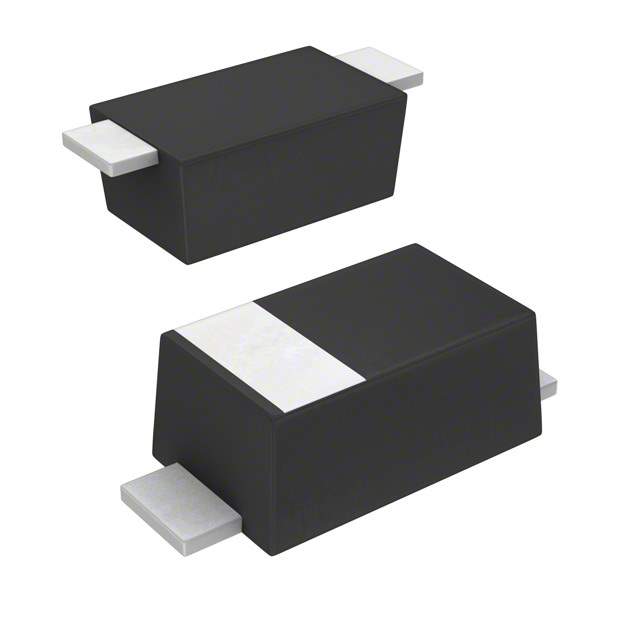
18V zener, 1W ceiling, Mini2-F3-B SMD package, 1.2V at 200mA forward limit
Quick Engineering Summary
| Field | Value |
|---|---|
| Manufacturer | Panasonic |
| Category | Diodes - Zener - Single |
| Package | Mini2-F3-B |
| Core function | DIODE ZENER 18V 1W SMD |
| Key electrical range | Current - Reverse Leakage @ Vr: 10μA @ 13V; Maximum Power Dissipation: 1W; Supply and Demand Status: Limited; Tolerance: ±5% |
| Reported stock | 15000 pcs reported — confirm on RFQ |
Not for precision clamps; fine for basic 18V protection
Wrong for tight clamps. The listed ±15% tolerance on an 18V zener leaves too much spread for a precision reference or a narrow overvoltage window.
It fits ordinary board-level rail protection and simple shunt limiting in an SMD build. The 18V Vz sets the nominal clamp class, and the Mini2-F3-B package suits compact discrete layouts. For new design-in, the electrical case is workable, but the lifecycle case is still unsettled. RoHS is listed as compliant.
The weak point is status, not silicon
The weak point is the status conflict: lifecycle is Unknown, while the specifications say Active.
For a running line, treat it as a sustaining buy and cover demand from the listed 15000 on hand before you clear the lifecycle question.
And the 1W line is a ceiling, not free headroom
And that matters because the 1W maximum power dissipation is a hard ceiling, not spare margin. It puts this part in low-power clamp duty unless the thermal path is proven elsewhere, and this page does not include thermal resistance or a derating curve to turn that number into ambient headroom.
The other ceiling is the 1.2V maximum forward drop at 200mA. If the zener conducts forward during a transient or polarity mistake, dissipation comes from that forward condition, not only from the 18V zener rating. Don't treat the forward path as incidental.
Limited supply is the buying constraint
Limited supply is the constraint the numbers create, even with 15000 pieces listed.
That supports a reel-based replenishment move for existing production, but it does not support assuming an easy long run while lifecycle remains conflicted. The package and mounting style fit SMD boards and compact protection networks. It does not belong in a design that needs a documented surge current limit, a tighter zener window, or a fully cleared lifecycle trail before release.
What the listing still does not tell you
30 Ohm maximum Zzt is useful, but it is not the whole clamp story. It tells you the dynamic impedance is not especially low, so actual clamp behavior under changing current still depends on the full zener curve before you decide how far the protected rail can move during a fault.
Several concrete items are still missing: junction capacitance, thermal resistance, and a pinout or package drawing. Those are not paperwork details. They determine whether the part can sit on a fast node, how much heat the Mini2-F3-B body can really shed, and whether the land pattern already in your board library is the right one.
One more mismatch needs to be cleared before release. The main fields name Panasonic, while another row names Rohm Semiconductor. Clear that identity conflict before you lock DZ2W18000L into a controlled BOM.
View the Win-Source product page for DZ2W18000L.
Key Takeaways for Engineers & Buyers
- Hold DZ2W18000L to rails that need an 18V zener ceiling, not a tighter clamp than ±15%.
- Budget dissipation from the 1W maximum and the 1.2V at 200mA forward condition before using DZ2W18000L as a catch diode.
- Buy reel quantity against the 15000 stock and limited supply status if this part is for an existing line.