
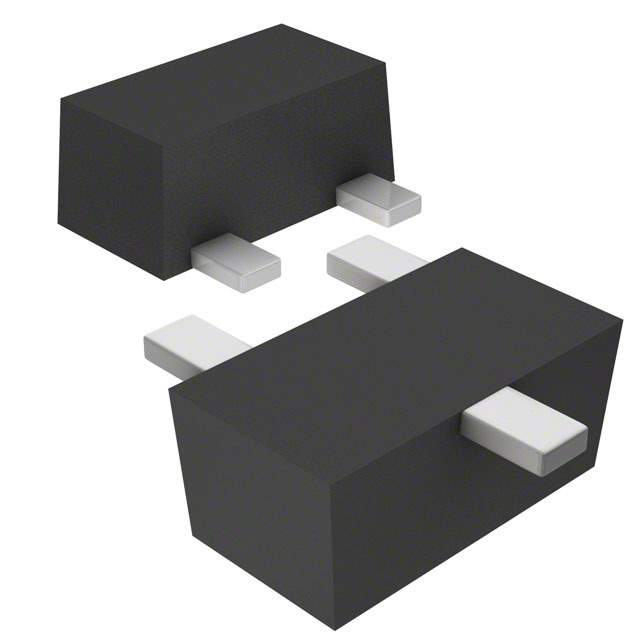
6.8 V zener, 150 mW ceiling, SC-89/SOT-490, common-anode pair; lifecycle conflict is the real decision point.
Quick Engineering Summary
| Field | Value |
|---|---|
| Manufacturer | Panasonic |
| Category | Diodes - Zener - Arrays |
| Package | Tape & Reel |
| Core function | DIODE ZENER ARRAY 6. |
| Key electrical range | Current - Reverse Leakage @ Vr: 100 nA @ 4 V; Power - Max: 150 mW; Voltage - Forward (Vf) (Max) @ If: 1 V @ 10 mA; Voltage - Zener (Nom) (Vz): 6.8 V |
| Reported stock | 9000 pcs reported — confirm on RFQ |
Can you still design DZ3S068D0L in?
Can you still put this into a new design? No—not with one lifecycle field saying Active and another saying 停止提供.
That conflict outweighs the electrical summary because it changes the sourcing decision before layout starts. For an existing product, a controlled buy can be justified against known usage and an already qualified footprint. For a fresh design, you would be accepting supply uncertainty up front, even though the basic fit is straightforward: DZ3S068D0L is a 1 Pair Common Anode zener array at 6.8 V in SC-89, SOT-490 with an SSMini3-F3-B supplier package.
The compliance side is clean enough. RoHS is compliant, and MSL is 1 (Unlimited), so routine moisture handling is not the blocker. Lifecycle clarity is.
Use DZ3S068D0L for sustaining work or existing production that already depends on this exact common-anode arrangement and package. Keep it out of new design-in until the supply status is consistent.
The 150 mW ceiling is the first hard stop
Power is the constraint. The 150 mW maximum is a ceiling, and without a thermal path or derating curve, it gives no ambient headroom.
A 1 V maximum forward drop at 10 mA and 30 Ohms maximum Zzt tighten that same budget.
This fits rail clamping, not precision reference work
The weak point comes first: 30 Ohms maximum impedance is not what you choose for a stiff zener node. The better case is protection and simple rail limiting in dense SMT layouts, where the 6.8 V nominal zener value and the common-anode pair solve a topology problem in SC-89, SOT-490.
That small package helps board density, but it also makes the 150 mW maximum a real thermal question quickly, especially since this listing does not include thermal resistance or a derating curve. In low-power clamp positions and signal-line protection arrangements, the part is easier to justify; the 100 nA at 4 V reverse-leakage figure is low enough to stay out of the way before breakdown.
It is the wrong part for anything that needs a published tolerance, precision reference behavior, or comfortable surge margin.
Buy the reel only if the footprint is already frozen
And that is why the buy call stays narrow. There are 9000 pieces listed in Tape & Reel with a standard package of 3,000, so the sensible move is to buy only against an existing SC-89/SOT-490 build where DZ3S068D0L is already approved.
The missing details are concrete: no zener tolerance, no operating temperature, no thermal resistance, and no pinout in this listing.
View the Win-Source product page for DZ3S068D0L.
Key Takeaways for Engineers & Buyers
- Hold new BOM releases on DZ3S068D0L until the stop-supply versus Active conflict is resolved.
- Buy in 3,000-piece reel multiples if this common-anode SC-89 footprint is already qualified.
- Budget around the 150 mW ceiling and the 1 V at 10 mA forward-drop limit, not the nominal 6.8 V alone.