
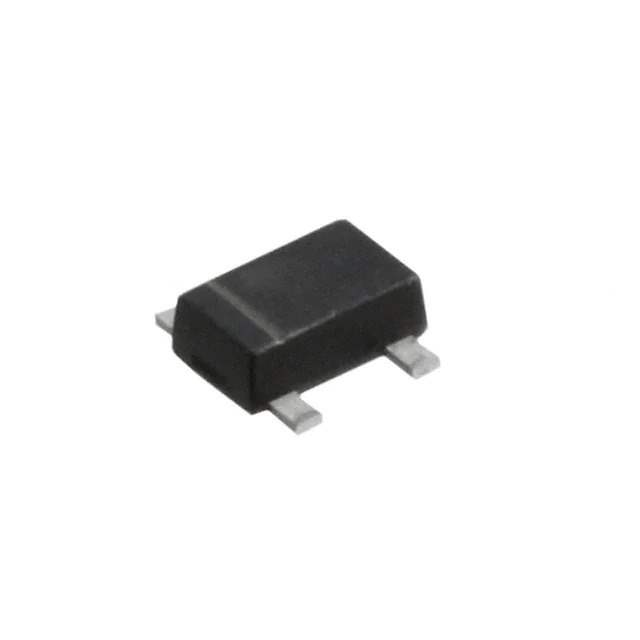
3.31 V nominal, 200 mW ceiling, SMini4-F3-B, -40°C to 82°C operating range
Quick Engineering Summary
| Field | Value |
|---|---|
| Manufacturer | Panasonic |
| Category | Diodes - Zener - Arrays |
| Package | Tape & Reel |
| Core function | DIODE ZENER ARRAY 3. |
| Key electrical range | Current - Reverse Leakage @ Vr: 20 µA @ 1 V; Power - Max: 200 mW; Temperature Range - Operating: -40°C ~ 82°C; Tolerance: ±5% |
| Reported stock | 1 pcs reported — confirm on RFQ |
Wrong for new builds, usable only to close a line stop
This part is wrong for any new design. It is marked Discontinued, the lifecycle signals also include EOL wording, and the listed stock is 1, so there is no credible path to a running line unless you are covering an existing production gap.
What it still does well is narrow. A sustaining build that already uses a 2 Independent zener array in 4-SMD, Flat Leads with the SMini4-F3-B device package can stay on the same board when the alternative is a re-layout, but only if the job is to bridge today’s shortage rather than treat DZ4J033K0R as a live design option. RoHS status is conflicted too, with one field compliant and another non-compliant, so compliance is not closed.
200 mW is the ceiling that decides the fit
200 mW is the first number that matters. It is a maximum power ceiling, not a working target, and it places this array in low-power clamp or reference duties where the zener budget stays modest; it says nothing about surge handling because no surge rating is listed.
The 3.31 V nominal zener voltage with ±5% tolerance sets the rail window. It does not settle regulation accuracy on its own, because impedance is listed at 130 Ohms and that points to a soft knee. The 1 V at 10 mA forward figure is also a ceiling pair, useful mainly as a dissipation warning if the junction is driven forward.
This belongs on small board-level protection, not on hot rails
130 Ohms is high enough to shape the use case. Board-level protection and light bias networks fit, especially where a 3.31 V zener array is there to catch excursions or establish a loose reference and where two independent elements in one SMini4-F3-B body save area.
It does not fit applications that need a tight clamp under changing current, because the listed impedance says the zener voltage will move. The operating range of -40°C to 82°C also narrows placement in hotter assemblies. Short story: keep it off hot rails. Surface mount and Tape & Reel packaging help assembly, but they do not change the lifecycle problem.
The real blocker is not electrical, it is continuity
The weak point comes first: there is 1 unit listed. The stronger point, if the board is already committed, is that the device still gives a clear mechanical identity in 4-SMD, Flat Leads and SMini4-F3-B, so the intended board position is not in doubt.
Continuity is the deciding constraint. Standard Package is 3,000 pcs, but that packaging fact does not help when available stock is effectively gone and the lifecycle is already closed, and it certainly does not offset the conflict between EOL wording and Discontinued status when both point in the same direction.
Paperwork risk is the other drag on release. One compliance field says RoHS Compliant and another says RoHS Non-Compliant, so a line that needs a clean environmental declaration can stall before supply runs out. Keep the remaining unit for failure analysis, a last-article repair, or an existing build break. Don’t spend it on a fresh release.
The missing datasheet items are the ones that matter now
The constraint is missing detail. No IFSM, thermal resistance, pinout drawing, or junction capacitance is listed, and those gaps decide surge survival, heat path, layout confirmation, and high-speed loading.
View the Win-Source product page for DZ4J033K0R.
Key Takeaways for Engineers & Buyers
- Stop new BOM releases on DZ4J033K0R; lifecycle is Discontinued.
- Reserve the single listed unit only for an existing build break.
- Check the 3.31 V nominal and ±5% tolerance against the protected rail window.