
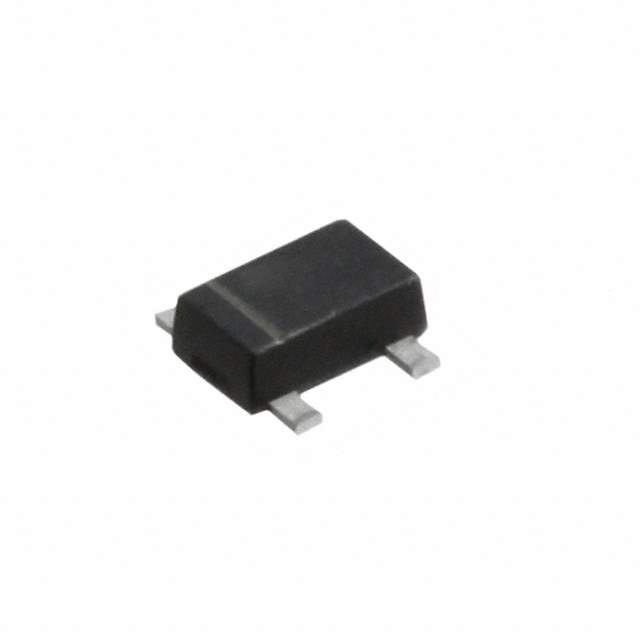
4.7V zener, 200mW ceiling, 2 independent channels, SMini4-F3-B package
Quick Engineering Summary
| Field | Value |
|---|---|
| Manufacturer | Panasonic |
| Category | Diodes - Zener - Arrays |
| Package | SMini4-F3-B |
| Core function | DIODE ZENER ARRAY 4. |
| Key electrical range | Current - Reverse Leakage @ Vr: 2μA @ 1V; Maximum Power Dissipation: 200mW; Supply and Demand Status: Balance; Voltage - Forward (Vf) (Max) @ If: 1V @ 10mA |
| Reported stock | 24226 pcs reported — confirm on RFQ |
Keep it for running builds, not fresh sockets
Sustaining only.
The lifecycle conflict is enough to stop a clean new design-in even before the electrical details come into play. One field says Active, another says 停止提供, and that mismatch matters more than the category label. Read it conservatively: keep DZ4J047K0R in existing production where the footprint and behavior are already qualified, but don't anchor a new platform to a part with mixed factory signals and no clear long-horizon status.
The listed numbers still tell you what kind of job it can do. This is a 4.7V nominal zener in a 2 Independent array, housed in SMini4-F3-B, with 200mW maximum power dissipation and 1V maximum forward drop at 10mA. That combination points to a compact clamp or bias role, not a part meant to absorb repeated energy and sort itself out thermally over time. EU RoHS is listed, so compliance is not the issue here. Lifecycle clarity is.
What do the listed numbers actually let you do?
Can I safely keep this on a 5V-adjacent node?
Only if you treat the 4.7V zener value as the target and every other number as a ceiling. The 200mW maximum power dissipation is the first hard stop, and it rules out using DZ4J047K0R as a casual catch-all on rails that may spend real time in conduction, especially when the listing gives no derating curve or thermal resistance to show how much ambient margin the package actually has.
The 1V maximum forward drop at 10mA sets the other side of the loss path. If a fault forward-biases the junction, that drop appears in the dissipation budget, and the package still lives under the same 200mW ceiling. The 80 Ohm maximum zener impedance also matters. It tells you the clamp shifts under current, so this is a coarse protection element rather than a precision reference. Reverse leakage is listed at 2µA at 1V, low enough for light bias networks, but it does not answer leakage behavior near the zener region.
The weak point is missing detail, not the package
What's missing is the problem, even though the physical fit is easy.
SMini4-F3-B and SMD mounting make board placement straightforward, and the 2 Independent configuration fits paired signal lines or two separate low-power clamp points without spending more area on discrete singles.
The release gaps are concrete. There is no zener tolerance, so the spread around 4.7V nominal is unknown. There is no operating temperature, so ambient fit stays open. There is no pinout or package drawing here, which blocks a layout check from this page alone. For fault or surge work, the missing transient or overload detail is the real hole; 200mW by itself does not show how DZ4J047K0R behaves when the event is short and ugly.
The buy constraint is lifecycle, not stock
The constraint is status, not availability.
Stock shows 24226, packaging is Reel - TR at 3k pcs, and supply-demand is listed as Balance. That supports a running line. Don't open a new BOM with it until the factory status is resolved.
View the Win-Source product page for DZ4J047K0R.
Key Takeaways for Engineers & Buyers
- Treat 200mW as the dissipation ceiling; don't assign DZ4J047K0R to clamps that live near continuous stress.
- Use it where 4.7V nominal zener behavior is the target and 80 Ohm max impedance is acceptable.
- Buy on reel only if 3k pcs packaging fits the line setup; stock shows 24226 now.