
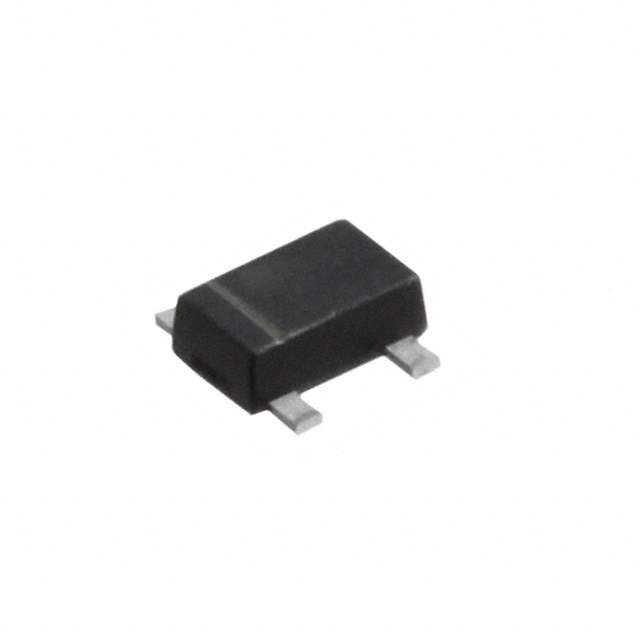
6.2V nominal zener, 200mW ceiling, 2 independent channels in SMini4-F3-B, with lifecycle conflict
Quick Engineering Summary
| Field | Value |
|---|---|
| Manufacturer | Panasonic |
| Category | Diodes - Zener - Arrays |
| Package | SMini4-F3-B |
| Core function | DIODE ZENER ARRAY 6. |
| Key electrical range | Current - Reverse Leakage @ Vr: 200nA @ 4V; Maximum Power Dissipation: 200mW; Supply and Demand Status: Balance; Voltage - Forward (Vf) (Max) @ If: 1V @ 10mA |
| Reported stock | 1 pcs reported — confirm on RFQ |
Can you start a new build on DZ4J062K0R?
Would you start a new build on this part? No. It is marked Active, but the same record also carries a 停止提供 signal, and stock is 1. EU RoHS is fine; the lifecycle conflict is the blocker.
The 6.2V mark helps, but the 200mW ceiling decides
That still leaves the electrical picture. The 6.2V nominal zener value places DZ4J062K0R in low-voltage clamp or reference duties around a 6.2V node, using 2 independent elements rather than a single shared structure.
The harder limit is 200mW maximum power dissipation. It is a ceiling, not a working point, and it rules out casual use where fault energy or steady shunt current can build in a tiny SMini4-F3-B body. The 1V at 10mA forward figure matters as a dissipation warning too: if one junction is driven forward, you already have real power to account for. Reverse leakage is listed at 200nA at 4V, which helps on light-bias nodes, but it says nothing about behavior at the 6.2V zener point. The 30 Ohm maximum impedance is another limit, because regulation stiffness is not the strong suit here.
Not for power clamps; fine for dense low-energy protection
Not for power clamps. Not for any rail where surge energy is the first question.
Where it does fit is compact signal-line protection or light reference work, where 2 independent zeners in one SMD body save area and the 6.2V nominal value matches the node you need to bound. SMini4-F3-B and SMD (SMT) point the same way: dense board-level use, not leaded serviceability or high-energy abuse. Reel packaging at 3k pcs also lines up with automated assembly rather than hand-loaded maintenance stock.
The missing items matter just as much as the listed ones. There is no surge current figure, no derating curve, no thermal resistance, and no operating temperature field, so the gap between “small dual zener array” and “qualified clamp in this exact fault case” stays open. That gap matters more here because the dissipation ceiling is only 200mW and the impedance is listed at 30 Ohm maximum, which is enough to frame the part as a dense, low-energy option rather than a forgiving protection device.
Buy narrowly, and fill the missing basics first
Buy narrowly.
Availability is the immediate constraint: stock is 1, packaging is Reel - TR, and the lifecycle record conflicts with itself. For DZ4J062K0R, that points to line support only, not a fresh release.
The missing basics are practical. The listing does not give pinout, package drawing, surge current, or thermal resistance, and those are the items that close layout and fault-case review fastest. Without them, DZ4J062K0R is identifiable as a small 6.2V dual zener array, but not fully design-closed.
View the Win-Source product page for DZ4J062K0R.
Key Takeaways for Engineers & Buyers
- Hold DZ4J062K0R for existing production only; the lifecycle record conflicts and stock is 1.
- Keep each channel inside the 200mW ceiling; that number is the dissipation limit, not a target.
- Check the missing pinout before layout; 2 independent channels in SMini4-F3-B still doesn't tell you node order.