
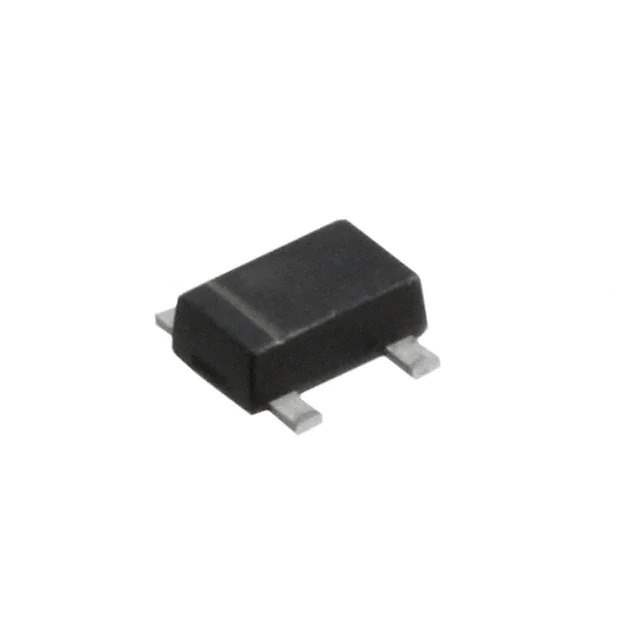
8.2 V nominal, 200 mW ceiling, SMini4-F3-B, -40°C to 85°C: usable only to keep an existing build moving
Quick Engineering Summary
| Field | Value |
|---|---|
| Manufacturer | Panasonic |
| Category | Diodes - Zener - Arrays |
| Package | Tape & Reel |
| Core function | DIODE ZENER ARRAY 8. |
| Key electrical range | Current - Reverse Leakage @ Vr: 100 nA @ 5 V; Power - Max: 200 mW; Temperature Range - Operating: -40°C ~ 85°C; Tolerance: ±5% |
| Reported stock | 1 pcs reported — confirm on RFQ |
Can you still buy this for a live build?
Can you still get one for a live build? Yes, but only to keep an existing production line moving. DZ4J082K0R is marked Discontinued, lifecycle notes also point to EOL, and available quantity is 1.
That answers the new-design question: no. The standard package is 3,000 pcs in Tape & Reel, but that detail barely matters at this stage. EU RoHS status is also unresolved here, because one field says compliant and another says non-compliant; match the manufacturer compliance record to DZ4J082K0R before treating it as acceptable.
200 mW is the ceiling that sets the whole conversation
200 mW is the ceiling. It places this dual zener array in low-power clamp and reference work, and the listing gives no thermal resistance or derating curve to show how much ambient margin is actually available.
Wrong for heavy surge work, fine for small dual clamps
Wrong for heavy surge work. The 200 mW maximum, the 1 V at 10 mA forward-drop point, and the 20 Ohms maximum zener impedance all push in the same direction: this is a small two-channel zener array for modest signal-line or bias protection, not a part for hard surge absorption or any rail clamp that lives near its limit.
Where it does fit is on dense boards that need two low-power zeners without spending extra area or routing effort. You get 2 Independent elements in a 4-SMD, Flat Leads body with the supplier package SMini4-F3-B, which is a practical packaging advantage when board space is tight and the protection job is modest.
The electrical window is usable, but not especially forgiving. The 8.2 V nominal zener voltage with ±5% tolerance is enough to frame threshold decisions, yet it does not close them if the clamp window is tight, because that tolerance band is the first thing that starts to eat margin when the protected node has little room to move.
Temperature sets another hard boundary. The listed operating range is -40°C to 85°C, so it can sit in ordinary industrial or consumer environments, but the page gives no derating behavior across that span and no thermal path data for the package, and those are the details that decide whether a clamp that looks stable on the bench stays stable once the board is boxed up and warm.
The missing datasheet items are the real blocker
The real constraint is missing review-critical detail. There is no pinout, no package drawing, no thermal resistance, and no derating curve in the listing.
For a zener array, those gaps matter more than another line of catalog text. Without the pinout and drawing, you can't lock footprint or channel orientation. Without thermal resistance and derating, the 200 mW number stays a ceiling with no ambient context. Reverse-recovery time and junction capacitance are also absent, so if the clamp sits on a fast edge or a sensitive analog node, the listing does not tell you what loading or switching behavior to expect.
View the Win-Source product page for DZ4J082K0R.
Key Takeaways for Engineers & Buyers
- Stop new BOM releases on DZ4J082K0R; lifecycle is Discontinued and stock is 1.
- Check clamp accuracy against the 8.2 V nominal and ±5% tolerance before touching any threshold-sensitive rail.
- Pull the manufacturer datasheet for pinout and thermal limits; the listing does not carry them for the 4-SMD package.