
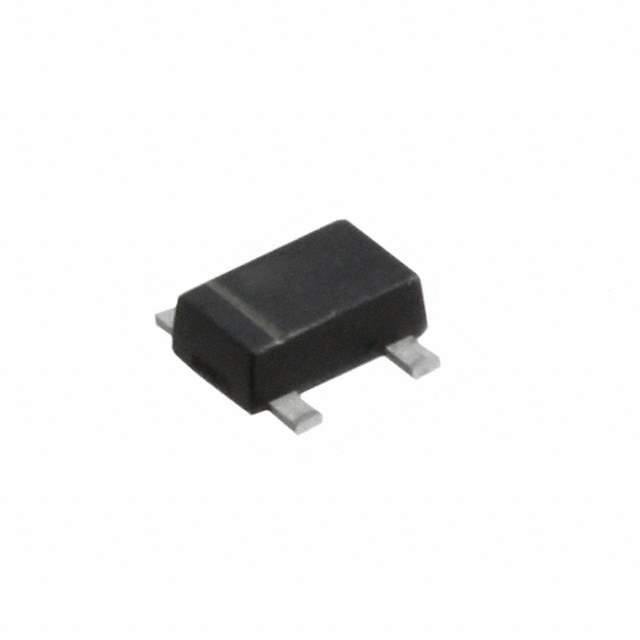
15 V nominal, 200 mW ceiling, 40 Ohms max Zzt, SMini4-F3-B package, dual independent array
Quick Engineering Summary
| Field | Value |
|---|---|
| Manufacturer | Panasonic |
| Category | Diodes - Zener - Arrays |
| Package | SMini4-F3-B |
| Core function | DIODE ZENER ARRAY 15V SMINI4F3-B |
| Key electrical range | Supply and Demand Status: Limited |
| Reported stock | 1 pcs reported — confirm on RFQ |
Use it to sustain a line, not to start one
Sustaining only.
A compact dual clamp is what this is: 2 independent 15 V zeners in SMini4-F3-B, surface mount, with EU RoHS compliance and MSL 1 (Unlimited). The issue is lifecycle confidence, not basic fit. One field says Active, another says 停止提供, and that conflict is enough to keep it out of a fresh design where second-pass qualification would cost more than the diode array.
For an existing production build that already uses DZ4J150K0R, the case changes. Keep it if the electrical behavior is already proven on your board, then secure only what you need for near-term demand. The Active flag alone is not a green light.
The weak point is supply; the strong point is leakage
Limited supply comes first, and the electrical listing is the better part of the story. The 50 nA reverse leakage at 11 V suits a high-impedance node without turning standby current into guesswork, and the 15 V nominal zener value places the clamp family where you expect it. What the listing does not give you is clamp spread across current, because tolerance is blank.
The 200 mW figure is a ceiling, not a working point, and it answers only one question: whether your transient or steady dissipation budget is even in range for a very small dual array. Thermal headroom stays open because there is no derating curve and no thermal resistance in the listing. The 1 V forward drop at 10 mA is just a point, useful for checking polarity-mistake behavior or bidirectional signal abuse, not for treating DZ4J150K0R like a general-purpose forward diode.
That package points to local protection, not rail dumping
And that is where the fit becomes clearer. A 4-SMD, flat-lead SMini4-F3-B body with 2 independent elements belongs close to two sensitive nodes that need the same nominal clamp level, not out on a power rail where energy is high and thermal spread matters more than footprint. For a neat pair of 15 V references or light-duty clamps in a dense surface-mount layout, the form factor works.
Where it does not work is any job that depends on a sharply defined knee or heavy surge handling. The 40 Ohms maximum Zzt is the number pushing back: dynamic impedance that high can move the clamp point enough to matter in threshold-sensitive protection or reference service, especially with the rest of the curve absent. Small package, small ceiling.
40 Ohms max is the number that decides the review
40 Ohms maximum Zzt is the listing's most decisive limit.
It tells you the 15 V label is not the whole story, because in a zener array dynamic impedance is what separates a tidy local clamp from a part that lets the protected node wander once current rises, and that matters more here because several of the usual bounding details are missing from the listing.
If your circuit only needs a light reference or a soft ceiling on a high-impedance line, DZ4J150K0R may fit. If the node has to stay tightly bounded during an event, confidence stops here.
The other gaps matter for the same reason. There is no tolerance on the 15 V nominal value, so worst-case clamp spread stays open. There is no operating temperature range, so ambient fit is still unresolved. There is no pinout or package drawing here, so land pattern and channel orientation still depend on the datasheet. There is also no surge current figure, no junction capacitance, and no thermal resistance, all of which decide whether DZ4J150K0R is merely a compact dual zener or a part you can trust on a fast or energetic line.
View the Win-Source product page for DZ4J150K0R.
Key Takeaways for Engineers & Buyers
- Hold DZ4J150K0R for existing production, not fresh releases, until the stop-supply conflict is resolved.
- Check clamp behavior at 40 Ohms max Zzt; that ceiling decides how soft the 15 V zener node can get under load.
- Buy only against a real build need: stock is 1 and supply status is Limited.