
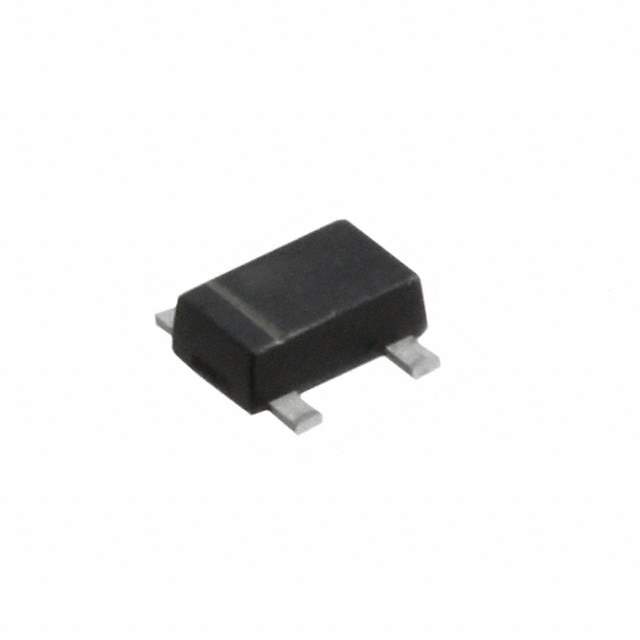
18 V zener array, 200 mW ceiling, SMini4-F3-B package; lifecycle and stock come first
Quick Engineering Summary
| Field | Value |
|---|---|
| Manufacturer | Panasonic |
| Category | Diodes - Zener - Arrays |
| Package | SMini4-F3-B |
| Core function | DIODE ZENER ARRAY 18V SMINI4F3-B |
| Key electrical range | Supply and Demand Status: Limited |
| Reported stock | 1 pcs reported — confirm on RFQ |
Can you still buy this for a live build?
If you need it for an active line, yes—but move now. DZ4J180K0R is marked EOL, the part status is Obsolete, supply is Limited, and stock quantity is 1. That settles the new-design question fast: don’t start with it.
Handling is not the issue here. It is a surface-mount part in SMini4-F3-B, shipped on reel in 3000 quantity per package, with MSL 1 (Unlimited). The real snag is compliance data: one field says RoHS Compliant while another says RoHS Non-Compliant, so EU RoHS status is not clean enough to treat as settled without the manufacturer record.
The 18 V label is useful, but the 200 mW ceiling bites first
And that is exactly why this part stays in low-power rail limiting and reference duty, not in positions where the zener has to soak up repeated abuse. The 18 V zener value tells you the clamp class. It does not tell you tolerance, because tolerance is blank, and it does not tell you transient stamina, because no surge figure is listed.
The 200 mW maximum is a ceiling, not a working point. In a two-independent array inside a small surface-mount body, that number decides whether the part is just watching a rail or actually dissipating fault energy. The 60 Ohms maximum Zzt matters more than it first seems, because it sets how soft the zener behavior can look around its test condition; if your circuit needs a tight knee or a cleaner reference, this listing does not answer that.
Forward conduction is only partly described. The listing gives 1 V at 10 mA, enough to flag a forward-drop budget when polarity flips, but not enough to size thermal headroom across temperature because the operating-temperature field is blank.
Weak documentation, decent niche
The missing operating-temperature range is the weak point. The fit is still clear: a compact dual independent 18 V zener array for dense surface-mount boards where two separate clamps in one SMini4-F3-B footprint matter more than broad power margin.
What the listing still doesn’t answer
The constraint is simple: the numbers stop short of a real protection decision. There is no surge or overload figure, no thermal resistance, no derating curve, and no operating-temperature range. Without those, you cannot tell how much ambient headroom the 200 mW ceiling really leaves, or whether a short fault pulse is survivable once the board is warm and the package has nowhere to hide the heat.
The gaps are not academic. Tolerance is blank, so the 18 V value alone is not enough for accuracy-sensitive reference use. There is also no package drawing or pinout here, which matters because this is a two-independent array in a 4-SMD body, and board assignment mistakes are exactly the kind that survive layout review and show up at bring-up.
Leakage is at least anchored once: 50 nA at 13 V. That helps on high-impedance nodes. It does not replace missing temperature behavior, and that is where leakage stops being a footnote and starts shifting your bias point.
View the Win-Source product page for DZ4J180K0R.
Key Takeaways for Engineers & Buyers
- Stop new BOM adds for DZ4J180K0R; lifecycle is EOL.
- Reserve remaining demand now; stock quantity is 1 and supply status is Limited.
- Check the 50 nA @ 13 V leakage and 60 Ohms Zzt against your clamp accuracy budget.