
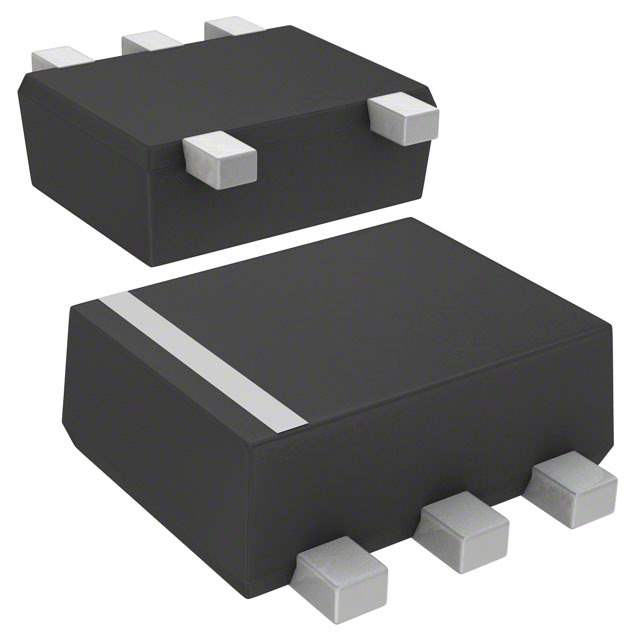
4V Vwm, 6.46V minimum breakdown, 4 unidirectional channels, SSMini5-F4-B, -40°C to 85°C
Quick Engineering Summary
| Field | Value |
|---|---|
| Manufacturer | Panasonic |
| Category | TVS - Diodes |
| Package | SSMini5-F4-B |
| Core function | TVS DIODE 4VWM SSMINI5-F4-B |
| Key electrical range | Minimum Breakdown Voltage: 6.46V; STAND-OFF Voltage (Vwm): 4V; Supply and Demand Status: Balance; Temperature Range - Operating: -40°C to 85°C (TA) |
| Reported stock | 6000 pcs reported — confirm on RFQ |
So the lifecycle conflict decides this first
And that conflict is enough to keep DZ5S068D0R out of a fresh platform unless there is a specific reason to accept the risk. The status fields say Active, but the same record also carries 停止提供, so the conservative read is sustaining only, not a clean green light for new design-in. EU RoHS is compliant, but that does not resolve a lifecycle contradiction.
The electrical picture is thin, which makes the status ambiguity harder to wave away. You do have a 4V stand-off voltage, a 6.46V minimum breakdown voltage, and 4 unidirectional channels in SSMini5-F4-B, and that is enough to place DZ5S068D0R in low-voltage protection around compact SMT layouts, but it is not enough to judge stress behavior under surge because clamp voltage, peak pulse current, and peak pulse power are not listed. For an existing production build, that can be workable if the part is already qualified in circuit. For a new program, too much remains open at once.
4V is the rail limit, not the rail target
4V is the decisive number here. The listed stand-off voltage is a ceiling on the protected line in normal operation, so DZ5S068D0R belongs on rails and signals that stay at or below 4V in steady state; it does not tell you how much surge energy the device can absorb when the line is hit.
The 6.46V minimum breakdown voltage answers a different question. Conduction starts above that point, so the gap between normal stand-off and breakdown onset has to fit your fault model and downstream tolerance. Get that wrong and the protection either sits too close to the rail or arrives too late to help. The operating range of -40°C to 85°C (TA) is also a limit on where you can place the device. No thermal resistance or derating curve is listed.
Wrong for surge sizing, usable for dense low-voltage protection
Not for line-card style surge budgeting. It is also a poor fit when you need to compare clamp behavior across candidates, because this listing gives no maximum clamping voltage at Ipp, no peak pulse current, and no peak pulse power.
It does fit compact board-level protection on low-voltage nodes where 4 unidirectional channels and SMT assembly matter more than headline surge numbers. The package callout is SSMini5-F4-B, and the listing also ties it to SOT-665, so the density story is clear even without a mechanical drawing. “General Purpose” is broad, but the practical fit is narrower: small multi-line protection around logic-level rails and interfaces that stay within a 4V stand-off ceiling and a -40°C to 85°C ambient envelope.
The real buying constraint is packaging and status
Reel-only flow with a status question is the constraint. Stock is 6000, packaging is Reel - TR, and quantity per package is 8k pcs, so line planning needs to match reel consumption while the lifecycle conflict is cleared.
View the Win-Source product page for DZ5S068D0R.
Key Takeaways for Engineers & Buyers
- Keep DZ5S068D0R on 4V rails only; 4V Vwm is a ceiling, not spare margin.
- Match the footprint to SSMini5-F4-B before release; the listing also references SOT-665.
- Buy to reel usage, not cut tape; packaging is Reel - TR with 8k pcs per package.