
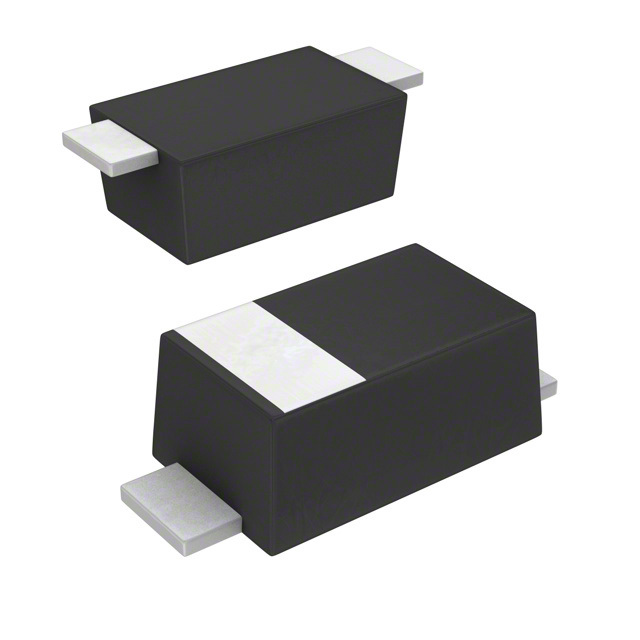
12 V nominal zener array, 200 mW ceiling, Mini5-G3-B package, -40°C to 85°C operating range
Quick Engineering Summary
| Field | Value |
|---|---|
| Manufacturer | Panasonic |
| Category | Diodes - Zener - Arrays |
| Package | SC-74A, SOT-753 |
| Core function | DIODE ZENER ARRAY 12V MINI5-G3-B |
| Key electrical range | Current - Reverse Leakage @ Vr: 50 nA @ 9 V; Power - Max: 200 mW; Supply and Demand Status: Limited; Temperature Range - Operating: -40°C ~ 85°C |
| Reported stock | 1 pcs reported — confirm on RFQ |
200 mW is the real limit, not the 12 V label
200 mW is the ceiling that decides whether this device belongs in the circuit at all. The 12 V zener rating tells you the intended clamp level in broad terms, but it does not answer the harder question of how much stress the part can actually absorb in a Mini5-G3-B / SC-74A, SOT-753 body, where repeated fault energy or long dwell near clamp can use up the thermal budget fast.
The other number that shapes the decision is 30 Ohms maximum zener impedance. That is high enough to expect clamp behavior to shift with current, so DZ5X120D0R fits light protection and reference work better than jobs that depend on a tight knee under changing load. Small package, small margin.
The 1 V maximum forward drop at 10 mA also reads as a ceiling, not a target operating point. It tells you the forward-biased path may cost that much headroom. The -40°C to 85°C operating range is workable for ordinary indoor and light industrial boards, but it still leaves hot-enclosure margin unresolved because no derating curve or thermal resistance is listed.
Not for heavy surge work; fine for compact board clamps
High-energy suppression is the wrong job for this part. DZ5X120D0R suits dense surface-mount boards that need a 2 Pair Common Anode zener array in a very small footprint, and 50 nA at 9 V keeps leakage quiet on lightly loaded sensing or bias nodes.
The weak point is continuity, not compliance
The weak point comes first: supply confidence is shaky. Stock is 1, supply-and-demand is Limited, and the lifecycle fields conflict, with Active in one place and a stop-supply signal in another.
The stronger point is simpler. Panasonic still shows an Active lifecycle field, and EU RoHS is clear, so if DZ5X120D0R is already qualified in an existing production build, it makes more sense to secure near-term demand than reopen the schematic around it.
What the listing still doesn't answer
What do you need to know before release? The missing items are concrete. There is no pinout or package drawing here, so the 2 Pair Common Anode description is not enough for layout. There is no thermal resistance or derating curve, so the 200 mW ceiling cannot be turned into ambient headroom. There is no zener tolerance field, and no surge or overload figure such as IFSM, so clamp spread and fault survivability remain open.
View the Win-Source product page for DZ5X120D0R.
Key Takeaways for Engineers & Buyers
- Hold DZ5X120D0R for existing builds only; the lifecycle fields conflict.
- Keep dissipation inside the 200 mW ceiling before relying on the 12 V clamp.
- Confirm pinout for the 2 Pair Common Anode Mini5-G3-B footprint before layout release.