
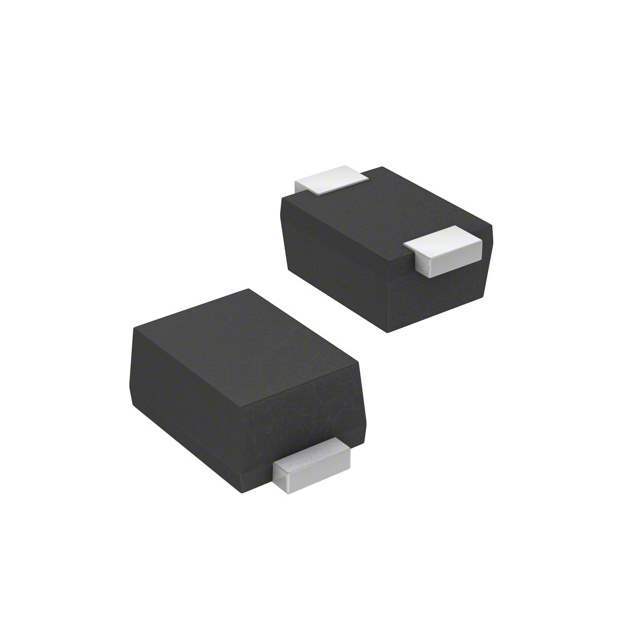
8.2 V nominal zener, ±20% tolerance, 1550 Ohms max impedance, and a lifecycle conflict decide this one
Quick Engineering Summary
| Field | Value |
|---|---|
| Manufacturer | Diodes Incorporated |
| Category | Diodes - Zener - Single |
| Package | 529-MAPBGA (19x19) |
| Core function | DIODE ZENER 16V 200MW SOD923 |
| Key electrical range | Current - Reverse Leakage @ Vr: 1 mA @ 60 V; Operating Temperature: -40°C ~ 85°C; Power - Max: 178.5 W; Tolerance: ±20% |
| Reported stock | 1 pcs reported — confirm on RFQ |
Sustaining only until the record agrees
Don't start here.
The lifecycle call is already broken. Lifecycle Status is Active, while Part Status is Obsolete, and that conflict is enough to stop a new design-in before the electrical contradictions even enter the discussion. With only one listed unit available, the practical use is sustaining support, not a fresh BOM decision. EU RoHS is clear, at least.
The electrical record adds another layer of doubt. One set of fields lists 8.2 V nominal with ±20% tolerance, 1550 Ohms max impedance, and 1 mA at a 60 V leakage ceiling; another lists 16 V, ±5%, 50 Ohms, and 100 nA at 12 V in SOD-923. Until those records line up, this is not a credible new design choice.
Can you actually buy enough to matter?
Can you get enough parts to build? No.
Quantity is the first blocker. Available stock is 1, so the part is a line-support device at best. If existing production already names it, keep that unit for debug or repair while the status conflict is sorted out. If qualification was the next step, stop before layout and purchasing drift farther apart.
The listed numbers don't support one coherent diode
8.2 V is the first red flag.
It sits beside a description that says 16 V 200 mW SOD923, and those statements do not describe the same clamp behavior. For a zener, nominal voltage sets rail selection and fault threshold, so the difference between 8.2 V and 16 V is not a rounding issue or a loose catalog shorthand; it changes where the device starts to matter in the circuit.
The tolerance conflict is just as serious. ±20% and ±5% point to very different expectations for protection margin and reference accuracy. The impedance entry breaks the picture again: a maximum Zzt of 1550 Ohms suggests a very soft zener characteristic, while 50 Ohms suggests a much stiffer device. Those are different design outcomes for line regulation and transient clamping, yet the record never settles on which set belongs to DZ9F16S92-7.
Leakage is split too, between 1 mA at a 60 V ceiling and 100 nA at 12 V, so standby loss and bias assumptions are unsettled. Then the package trail falls apart. One field says SOD923 and surface mount; another says Requires Holder and 529-MAPBGA (19x19). That is enough to stop footprint work outright, because package, mounting method, and supplier device package should not describe different physical parts. The missing pinout only adds to the stall.
Wrong for layout work, maybe right for a hold point
Wrong for layout work.
It fits only as a hold point on an existing bill where the real device is already proven. It does not belong in fresh protection networks, reference rails, or any board spin that depends on the listed package and zener voltage being correct.
View the Win-Source product page for DZ9F16S92-7.
Key Takeaways for Engineers & Buyers
- Stop new BOM adds until Active versus Obsolete is resolved for DZ9F16S92-7.
- Do not design to 8.2 V without the real tolerance and package data reconciled.
- Reserve the single available unit for failure analysis or line support only.