
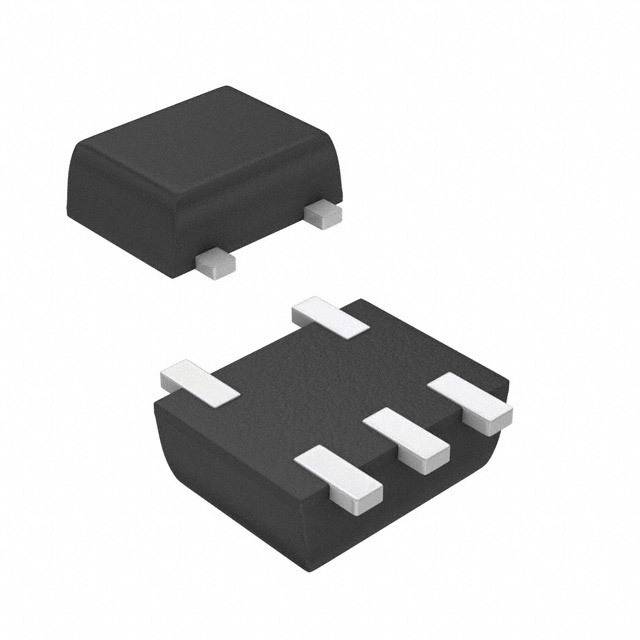
4.3V stand-off, 13V max clamp, 4 unidirectional channels, SOT-553, -55°C to 150°C junction
Quick Engineering Summary
| Field | Value |
|---|---|
| Manufacturer | Diodes Incorporated |
| Category | TVS - Diodes |
| Package | SOT-553 |
| Core function | TVS DIODE 4. |
| Key electrical range | Max Clamping Voltage: 13V; Minimum Breakdown Voltage: 6.47V; Power Dissipation - Pd: 20W; STAND-OFF Voltage (Vwm): 4.3V |
| Reported stock | 5950 pcs reported — confirm on RFQ |
Then the real call is rail fit, not lifecycle
And that is really the point: DZQA6V8AXV5-7 is a credible new design-in part, not merely a sustaining buy. Lifecycle is Active with no stated conflict, and the compliance note is straightforward: it is listed as EU RoHS compliant.
The real decision sits in the protection window. A 4.3V stand-off voltage is the ceiling for normal reverse standoff, not a place to run the rail, so any line that sits above that level in steady state is out. The 6.47V minimum breakdown voltage marks where the device starts to leave idle and enter protection, while the 13V max clamping voltage defines what the protected node may still see during a surge event. Get that pairing wrong, and the TVS can survive while the downstream silicon doesn't.
Will it actually fit the protected node?
Can the node live with 13V?
That is the first filter, because clamp voltage is what the rest of the circuit must tolerate when the surge arrives. DZQA6V8AXV5-7 fits low-voltage logic, sensor lines, or other nets only when a surge-limited excursion up to that 13V ceiling is acceptable.
The 4.3V stand-off voltage matters just as much for the opposite reason: it sets the normal-state ceiling and rules out any line that parks above 4.3V in regular operation. The 4 unidirectional channels in SOT-553 point to dense multi-line protection on a board rather than a single high-energy rail entry point. The listed 20W power dissipation is also a ceiling, not an operating point, and without peak pulse current tied to the surge waveform, that number does not become a usable surge budget.
Buy it for current builds
Yes.
Active status, 5950 in stock, and Reel - TR packaging make it a practical buy for current SMT builds when this exact 4-channel SOT-553 footprint is already in the layout.
The missing surge details are the real hold-up
The weak point is clear. The basic part identity is not.
You have a 20W ceiling and a 13V max clamp, but the listing does not give peak pulse current for the stated surge waveform, even though the 10/1000µs current field is blank. That missing current figure is the one that tells you whether the device is sized for the actual transient on the line or only for a lighter event, and without it the protection case stays incomplete no matter how tidy the headline ratings look.
Capacitance is also missing, which matters immediately on fast data or sensitive analog nodes because a 4-channel TVS in a tiny SOT-553 body is often chosen for line density before signal loading gets checked. There is no pinout or package drawing here either, so footprint orientation and channel assignment cannot be closed from this page. Thermal resistance and a derating curve are absent as well, leaving the -55°C to 150°C junction range as a boundary condition only rather than a guide to real ambient headroom under repeated stress.
View the Win-Source product page for DZQA6V8AXV5-7.
Key Takeaways for Engineers & Buyers
- Keep the protected rail below the 4.3V stand-off ceiling in normal operation.
- Budget for as much as 13V at clamp; that number decides downstream survivability.
- Buy on Reel - TR if the line needs DZQA6V8AXV5-7 now; stock shows 5950.