
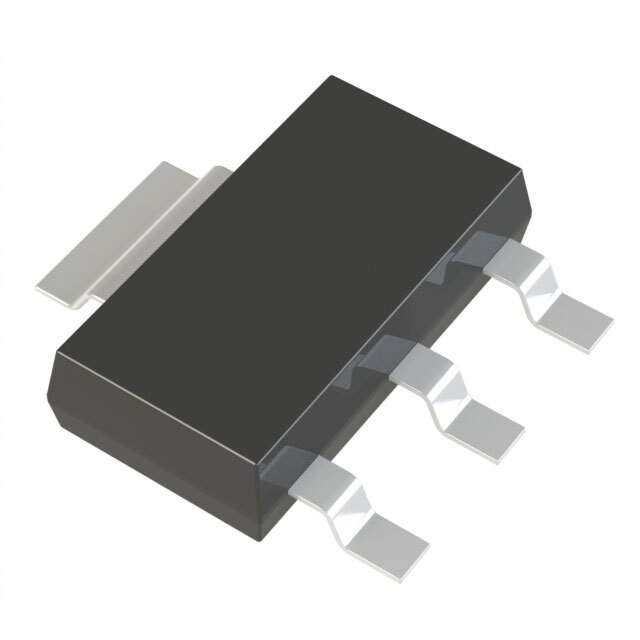
160 V, 600 mA, 2 W, SOT-223-3, -55°C to 150°C TJ define the design boundaries
Quick Engineering Summary
| Field | Value |
|---|---|
| Manufacturer | Diodes Incorporated |
| Category | Transistors (BJT) - Single |
| Package | SOT-223-3 |
| Core function | TRANS NPN 160V 0. |
| Key electrical range | Operating Temperature Range: -55°C ~ 150°C (TJ); Supply and Demand Status: Limited |
| Reported stock | 150000 pcs reported — confirm on RFQ |
Lead time is the weak point; lifecycle is not
The weak spot is supply, not lifecycle. DZT5551Q-13 is Active with no lifecycle conflict, so it remains a valid new design-in candidate, but the 25 Weeks estimated production lead time and Limited supply and demand status can still slow a release even when the part itself is healthy.
For a fresh BOM, secure coverage early and keep the reel format in view because it ships as TR with 2500 per package. EU RoHS is compliant, REACH is unaffected, and MSL 1 keeps storage handling simple.
The 160 V headline does not settle the thermal question
It doesn’t.
The 160 V collector-emitter figure is a ceiling, not a working point, and it answers only the rail-survival question. It does not tell you how much ambient headroom remains in SOT-223-3 once current and dissipation rise.
600 mA and 2 W decide where DZT5551Q-13 belongs
600 mA is the limit that matters most. That collector current is a ceiling, and alongside the 2 W maximum power figure it places DZT5551Q-13 in moderate-power, high-voltage small-signal work where board area and copper can support a SOT-223-3 device, not in designs that assume the package can run at every limit at once.
The rest of the listing sharpens the fit. This is an NPN BJT with 300MHz transition frequency, minimum hFE of 80 at 10mA and 5V, and Vce saturation listed at 200mV at 5mA and 50mA. Those numbers help with switching and gain budgeting at light to moderate drive, but they do not make DZT5551Q-13 a power switch for heavy saturated load paths. The -55°C to 150°C junction range and the Automotive, AEC-Q101 series callout also make it easier to place in vehicle-adjacent designs where qualification matters, provided the circuit really needs a single high-voltage NPN rather than a logic-level MOSFET or a low-voltage transistor.
Wrong for blind drop-in use; right for qualified high-voltage BJT slots
Wrong first: don’t choose DZT5551Q-13 on top-line limits alone when the review still needs transient current, thermal path, or package drawing detail. The listing gives no IFSM-style surge analogue for this transistor, no thermal resistance, no derating curve, and no pinout or mechanical drawing, so it cannot close layout or worst-case heat arguments by itself.
Right use is narrower and clearer. It fits when you need a single NPN in SOT-223-3 with a 160 V ceiling, a 600 mA ceiling, and an AEC-Q101 callout, and when reel buying is acceptable because stock is listed at 150000. The missing items that still matter are thermal resistance, the derating curve, the pinout, and the package drawing; those gaps decide copper area, orientation, and how much of the 2 W maximum is actually reachable in your board stack.
View the Win-Source product page for DZT5551Q-13.
Key Takeaways for Engineers & Buyers
- Reserve DZT5551Q-13 against the 25 Weeks lead time before releasing a new build.
- Treat 160 V and 600 mA as ceilings; size the use case from the missing thermal data, not the headline ratings.
- Keep assembly on 2500-piece TR reels and use the MSL 1 handling window already listed.