
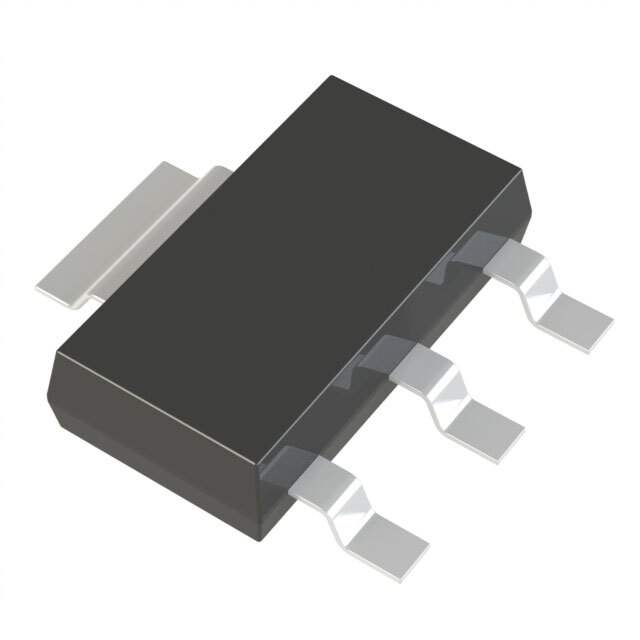
60V VCEO, 3A collector ceiling, 1W dissipation, SOT-223-3 package, -55°C to 150°C TJ
Quick Engineering Summary
| Field | Value |
|---|---|
| Manufacturer | Diodes Incorporated |
| Category | Transistors (BJT) - Single |
| Package | SOT-223 |
| Core function | TRANS PNP 60V 3A SOT-223-3 |
| Key electrical range | Collector Cut-off Current(Max): 100nA (ICBO); Frequency - Transition: 145MHz; Maximum Current Collector: 3A; Maximum Power Dissipation: 1W |
| Reported stock | 8700 pcs reported — confirm on RFQ |
The real limit is lifecycle, not transistor capability
The binding constraint is lifecycle. EOL alone moves DZT751-13 out of new design-in before the electrical limits even enter the discussion, because any new program built around it starts with a migration problem already attached.
For sustaining designs, the electrical envelope is still clear enough: 60V VCEO, 3A maximum collector current, and 1W maximum power dissipation in SOT-223-3. Those are ceilings, not proof that every 60V or 3A use case is comfortable in this package, especially once thermal headroom and board conditions enter the picture. EU RoHS compliance is not the blocker here. Lifecycle is.
The package helps, but 1W keeps it honest
The weak point comes first: 1W maximum power dissipation. SOT-223 gives you some board-level heat spreading, but the listed 600mV max VCE(sat) at 300mA, 3A still tells you conduction loss needs a hard look before the 3A collector limit is treated as broadly usable.
Where DZT751-13 still fits
Keep it narrow.
This part belongs in existing production where a PNP single BJT in SOT-223-3 is already qualified and the rail stays below the 60V collector-emitter breakdown ceiling, with real margin handled elsewhere in the design.
The 100 minimum hFE at 500mA, 2V shows it is not a mystery-gain device at that test point, but it does not finish base-drive design across the full load range. The 145MHz transition frequency says it is not slow, yet that number alone does not make it a switching-speed answer because no switching waveforms or storage-time data are listed. Push it into fast switching or hot, high-dissipation service and the missing thermal and dynamic data become the first thing that stalls approval.
Can you still buy enough to cover a running line?
Can you still cover the build? Yes, but only for a bounded need.
The stock quantity is 8700 and packaging is Reel - TR, so it can support a tape-and-reel assembly flow without a repack step. That matters only if the remaining build count is already known, because the supply-and-demand status is Limited and the lifecycle is EOL.
Treat this as a bridge buy, not routine replenishment. Match the order to the existing production schedule, then freeze unnecessary consumption on prototypes or service stock until the migration target is set. The separate listing field that says Active does not outweigh the lifecycle record and the EOL call, and ignoring that conflict leads to a simple outcome: the line keeps shipping until the last reel is gone, then stops on a part already identified as end of life.
One more practical limit sits in the documentation. ECAD models are not directly available here. That matters less for a sustaining line than for a fresh layout, but it still adds friction and reinforces the same conclusion: do not start a new board around DZT751-13 now.
What the listing still does not tell you
And that leaves the concrete gaps. Thermal resistance and pinout detail matter immediately. With 1W maximum dissipation in SOT-223-3, the thermal path sets ambient headroom, and that number is not here.
You also do not get switching-time data, a derating curve, or a package drawing in this listing. Those are the items that close the review for saturation switching, land pattern confidence, and temperature headroom.
View the Win-Source product page for DZT751-13.
Key Takeaways for Engineers & Buyers
- Block DZT751-13 on new BOMs; lifecycle is EOL.
- Check rail stress against the 60V VCEO ceiling before any last-time build.
- Review copper area and ambient because the package is SOT-223 and dissipation is capped at 1W.