
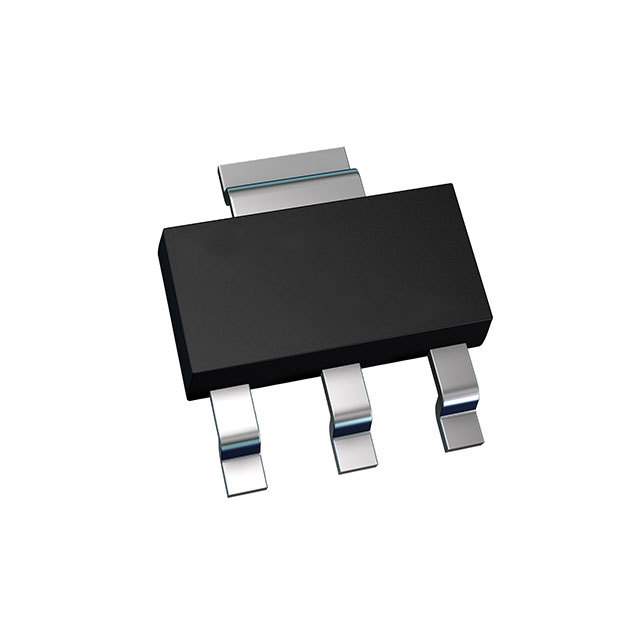
60V VCEO, 5A collector ceiling, 1W dissipation limit, SOT-223-3 package, -55°C to 150°C junction range
Quick Engineering Summary
| Field | Value |
|---|---|
| Manufacturer | Diodes Incorporated |
| Category | Transistors (BJT) - Single |
| Package | SOT-223 |
| Core function | TRANS PNP 60V 5A SOT-223-3 |
| Key electrical range | Collector Cut-off Current(Max): 50nA (ICBO); Frequency - Transition: 120MHz; Maximum Current Collector: 5A; Maximum Power Dissipation: 1W |
| Reported stock | 3000 pcs reported — confirm on RFQ |
60V is useful, but EOL decides the answer
60V is the collector-emitter breakdown ceiling, and it keeps DZT951-13 relevant for moderate-voltage PNP switching stages where lower-voltage small-signal parts drop out fast. The deciding factor is lifecycle, not voltage: the lifecycle fields are consistently EOL.
So the call is straightforward. Don’t start a new design on DZT951-13. For an existing production build, it remains a sustaining option because 3000 pieces are listed and the package is standard SOT-223-3 on reel, but that only buys time. EU RoHS compliance is not the issue here; lifecycle is.
The 5A headline is not the number to trust alone
Treat it cautiously.
The 5A maximum collector current is a ceiling, not evidence that DZT951-13 runs comfortably there on your board. The other hard limit is 1W maximum power dissipation, and that is the number that changes the reading of the part. Design to the current figure alone and the package is likely to become the first constraint. The listed 460mV VCE(sat) at 500mA, 5A shows conduction loss belongs in the budget, yet there is still no thermal answer because no thermal resistance or derating curve is listed.
hFE matters too, but only at the stated condition. It is given as 100 at 2A, 1V, which says this is not merely a tiny signal transistor in a larger body, though one test point still does not close base-drive design across current and temperature.
SOT-223-3 keeps it on the board, not off-board
3000 pieces are listed.
That is enough to support a running line while you qualify the next step. It ships on reel, fits normal SMT assembly, and stays within board-level PNP switching or linear stages that truly need a 60V ceiling and can live inside a 1W dissipation limit.
What would actually close the open questions?
What does a buyer or engineer need first? Thermal detail.
DZT951-13 lists 1W maximum power dissipation, but without thermal resistance or a derating curve, you still cannot judge the real ambient headroom on the board. That gap matters more here because the part is already EOL: if it stays in an existing build, the sustaining case has to be grounded in limits you can actually model rather than in a headline current rating that looks generous until enclosure temperature rises and margin disappears.
The mechanical picture is thin as well. The listing names SOT-223 and SOT-223-3, but it does not include the pinout or package drawing. Footprint confirmation still depends on the full datasheet and the land pattern library, and that is how you avoid a board spin on a part you should already be planning to replace.
Electrical gaps remain. There is no safe-operating-area information, and there is no switching-time data beyond a 120MHz transition frequency. For DZT951-13, those omissions leave linear stress and turn-off behavior unresolved, which is exactly where a transistor can look acceptable in a static table and still misbehave in the real circuit.
View the Win-Source product page for DZT951-13.
Key Takeaways for Engineers & Buyers
- Block DZT951-13 from new BOM releases; lifecycle is EOL.
- Check the 1W dissipation limit against your worst-case VCE(sat) point before using the 5A collector rating.
- Reserve the 3000 pieces now if this transistor is tied to an existing build.