
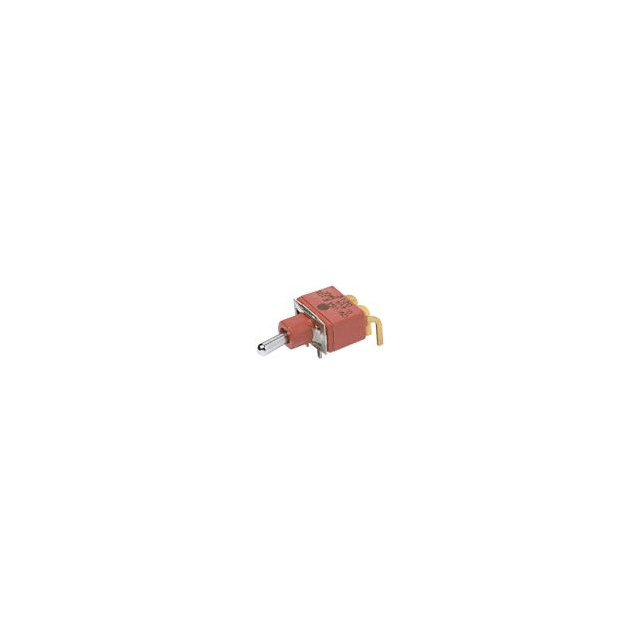
7.5A, 125 V AC, 28 V DC, through-hole SPDT toggle with IP57 and -30°C to 85°C range
Quick Engineering Summary
| Field | Value |
|---|---|
| Manufacturer | C&K Components |
| Category | Toggle Switches |
| Package | Tray |
| Core function | Toggle SWes ON None ON SPDT 7. |
| Key electrical range | Current Rating (Amps): 7.5A (AC/DC); Supply and Demand Status: Shortage; Temperature Range - Operating: -30°C ~ 85°C; Voltage Rating - AC: 125 V |
| Reported stock | 1 pcs reported — confirm on RFQ |
Active part, constrained buy
Buy carefully. Active status is clear, lifecycle risk is low, and EU RoHS is compliant. Supply is the issue: stock is 1 and demand is flagged Shortage.
Wrong for high-voltage DC or loose environmental claims
Start with where it does not belong. This is not the toggle to push past 28 V DC, and it is not a basis for broad environmental claims beyond what the listing actually states.
The 28 V DC rating is a ceiling, so higher-voltage DC rails are out even when current looks modest. The 125 V AC rating is also a ceiling. That makes it usable for mains-adjacent control switching, but it says nothing here about inrush behavior, contact life, or arc handling, and those omissions matter more than the headline ratings when the load is ugly.
The 7.5A (AC/DC) current rating sets the same kind of boundary. It places the contact set in moderate-power switching, not in applications where you treat 7.5A as a comfortable everyday operating point, and not in signal-selection duties where the mechanical interface matters more than power handling. If you lean on the limit, the switch becomes the stress point in the assembly.
In the right job, the fit is plain enough: SPDT, On-On, through-hole, PC pin termination, and a 12.70mm standard round actuator all point to board-mounted manual selection or mode switching where a maintained two-position action is the requirement. IP57 and epoxy sealed terminals make more sense at a panel boundary or in washdown-prone equipment than on a sheltered internal board, but IP57 still does not answer contact reliability under your actual load profile.
Supply is tighter than the lifecycle
The constraint is availability. Stock quantity is 1 and supply is marked Shortage, which weighs more heavily on the buy decision than the Active lifecycle does.
Electrically, E101SD1CGE is easier to justify than it is to source right now. For an existing production build, reserve it for immediate need and keep the allocation visible at the BOM line. For a fresh release, don't count on E101SD1CGE as a running line until supply improves.
The missing details are the ones that close the review
The weak point is documentation depth. The basic switch definition is solid enough, with circuit, function, ratings, mounting, sealing, and operating range all present.
What is missing closes the mechanical and reliability decision. The listing does not carry panel cutout dimensions, a drawing, or pinout detail beyond PC Pin and through-hole, and those are the details that decide whether E101SD1CGE drops into the front panel and PCB without rework. It also does not show contact life or any load-specific endurance figure, the number that separates a bench control from a field-return generator. A bushing thread field is present, but it says unthreaded, so panel retention hardware still depends on the full mechanical drawing before commit.
View the Win-Source product page for E101SD1CGE.
Key Takeaways for Engineers & Buyers
- Hold E101SD1CGE for circuits that stay within 125 V AC, 28 V DC, and 7.5A ceilings.
- Use E101SD1CGE where IP57 and epoxy sealed terminals matter at the panel edge.
- Do not release E101SD1CGE to volume build with stock at 1 and supply marked Shortage.