
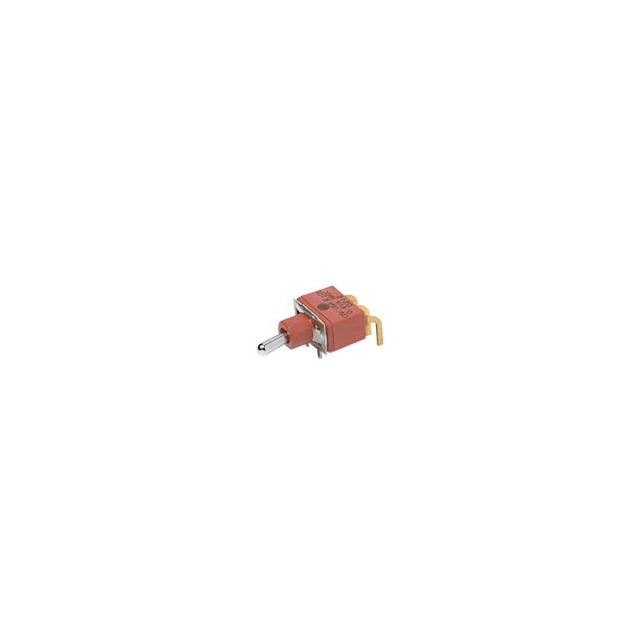
0.4VA at 20 V, SPDT mom-off-mom, through-hole PC pins, IP57, -30°C to 85°C
Quick Engineering Summary
| Field | Value |
|---|---|
| Manufacturer | C&K Components |
| Category | Toggle Switches |
| Package | Tray |
| Core function | SWITCH TOGGLE SPDT 0. |
| Key electrical range | Current Rating (Amps): 0.4VA (AC/DC); Supply and Demand Status: Shortage; Temperature Range - Operating: -30°C ~ 85°C; Voltage Rating - AC: 20 V |
| Reported stock | 3 pcs reported — confirm on RFQ |
Shortage is the weak point; the switch itself is usable
Start with the problem: available stock is 3, and the supply status is Shortage. That can stop a build even though the lifecycle status is Active with no conflict.
Past that, the switch is easy to place. It is a through-hole SPDT toggle with Mom-Off-Mom action, PC pins, epoxy sealed terminals, and IP57 protection. That suits panel-operated control inputs and low-power selection functions where momentary return is the point. EU RoHS is listed, so compliance is not the issue here.
The 0.4VA rating is a ceiling, not a comfort margin
And that limit narrows the use case fast. The listed 0.4VA (AC/DC) with 20 V AC and 20 V DC is a ceiling. If the load goes beyond light signaling or very small control power, this part is out.
12.70mm and unthreaded change the mechanical fit
12.70mm is the actuator length, and it matters because it affects what the operator actually reaches. The unthreaded bushing matters just as much, because it rules out any panel scheme that depends on a threaded bushing and panel nut retention.
The rest of the mechanical picture lines up: through-hole mounting, PC pin termination, standard round actuator, and tray packaging. With IP57 and epoxy sealed terminals, this looks like a board-mounted switch that handles dust and water exposure better than an open-frame toggle. The listing still leaves out the panel cutout and drawing, so the mounting decision is not closed.
Wrong for maintained states, right for brief operator commands
Not for latching user selections. This is a Mom-Off-Mom SPDT switch, so both throws are momentary and the center is off.
It fits brief human commands instead: jog, test, reset, or directional inputs that should spring back to center after release. The operating range is -30°C to 85°C, which sets the environmental boundary. Non-illuminated also means it adds no status indication, so any interface that depends on visible state needs a separate indicator.
Three missing details still decide whether E105SD1CBE closes
20 V is the decisive figure, because it keeps this switch in the low-voltage corner from the start, and once that is true, the missing mechanical and endurance details matter more than repeating the topology.
First is the panel opening and dimensional drawing. The listing gives a 12.70mm actuator length and says the bushing is unthreaded, but it does not give the cutout, body size, or mounting geometry that determines whether the switch clears nearby hardware and lands in the panel the way the assembly expects.
Second is contact resistance and electrical life. A 0.4VA ceiling tells you where the limit is, but not how the switch holds up over repeated low-level switching, where nuisance failures tend to appear first as intermittent inputs, rising contact loss, and field complaints that look random until the switch is isolated.
Third is sealing detail beyond IP57. IP57 sets the enclosure exposure class, and epoxy sealed terminals help, but the listing does not say how protection is handled at the actuator and body interface or what mounting conditions preserve it. Pull the full datasheet before freezing the panel and PCB.
View the Win-Source product page for E105SD1CBE.
Key Takeaways for Engineers & Buyers
- Keep E105SD1CBE on signal-level or very light power switching only; 0.4VA at 20 V is the ceiling.
- Match the UI to momentary center-off behavior before layout; E105SD1CBE is not a maintained-position toggle.
- Cover the shortage now if this switch is already on the BOM; available stock is 3.