
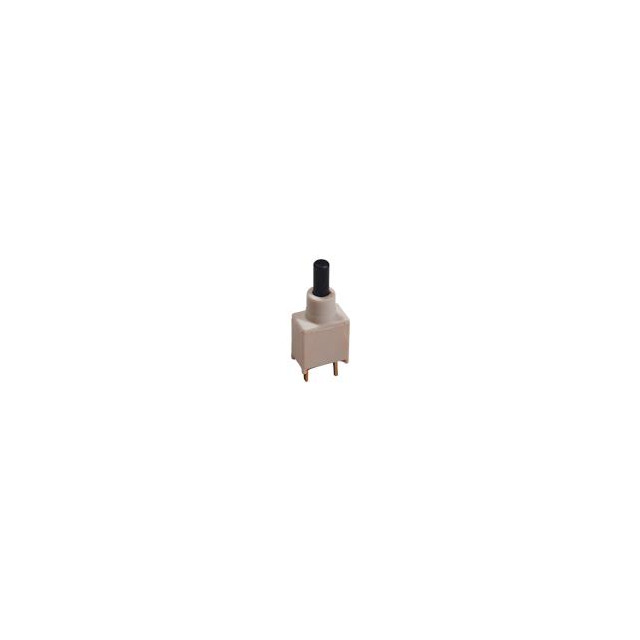
0.4VA at 20 V AC/DC, SPDT On-Mom, through-hole right-angle, -30°C to 75°C
Quick Engineering Summary
| Field | Value |
|---|---|
| Manufacturer | C&K Components |
| Category | Pushbutton Switches |
| Package | Tray |
| Core function | SWITCH PUSH SPDT 0. |
| Key electrical range | Current Rating (Amps): 0.4VA (AC/DC); Supply and Demand Status: Shortage; Temperature Range - Operating: -30°C ~ 75°C; Voltage Rating - AC: 20 V |
| Reported stock | 1929 pcs reported — confirm on RFQ |
The contact limit is the whole story here
The numbers set the constraint: 0.4VA (AC/DC) at 20 V AC and 20 V DC keeps E112SD1ABE in low-power switching, not load switching. Those are ceilings. They place the contacts on logic, control, and other light-duty paths, but they do not say the switch is comfortable near those limits in every use case.
The rest of the listing points the same way. SPDT with On-Mom action makes E112SD1ABE a momentary changeover input device, and process sealed matters if the board will see cleaning after assembly. Good for human interface and mode selection. Not for carrying real power.
Not for power rails; right for board-edge operator input
Wrong job first: don't use this where the switch is expected to interrupt or carry meaningful power. The 20 V AC and 20 V DC ratings are ceilings, not permission to treat E112SD1ABE like a general load switch, and the 0.4VA figure closes that door fast.
A better fit is a through-hole, right-angle pushbutton mounted to a PCB edge or front panel line, with PC Pin termination and a round white plunger the operator can find easily. The -30°C to 75°C operating range covers ordinary indoor equipment and many industrial enclosures, but it does not settle placement near hot regulators or other warm zones on the board.
1929 pieces helps, but shortage is the buying constraint
1929 pieces helps support builds now, but it does not remove the real constraint: supply and demand status is Shortage.
That matters more to the buy decision than the Active lifecycle does. E112SD1ABE is not a sustaining-only part; the lifecycle is clean, and EU RoHS is straightforward. If this switch is going onto a running line, place coverage against tray packaging and current demand instead of assuming the listed quantity will still be there when the next build releases.
The missing mechanical and contact data still matter
The weak point is documentation depth, not the basic identity of the part. You can tell E112SD1ABE is a process-sealed, right-angle, through-hole SPDT momentary pushbutton, but the listing stops short of the details that actually close a footprint and reliability review.
No drawing or panel-opening information is shown, and that is what fixes keepout, actuator position, and enclosure alignment. No pinout beyond SPDT and PC Pin is listed, so the PCB pattern still depends on the full datasheet. No mechanical life or electrical life appears here either, leaving switch wear and contact endurance unanswered for high-use interfaces.
There is also no contact resistance figure in the listing. For a low-power switch like E112SD1ABE, that omission matters because signal integrity at the contact can become the real failure mode long before anyone reaches the headline voltage ceiling.
View the Win-Source product page for E112SD1ABE.
Key Takeaways for Engineers & Buyers
- Keep E112SD1ABE on signal-level loads only; 0.4VA at 20 V is the contact ceiling.
- Reserve tray builds early if E112SD1ABE is for production; stock shows 1929 and shortage is flagged.
- Match the PCB to through-hole right-angle PC pins before release.