
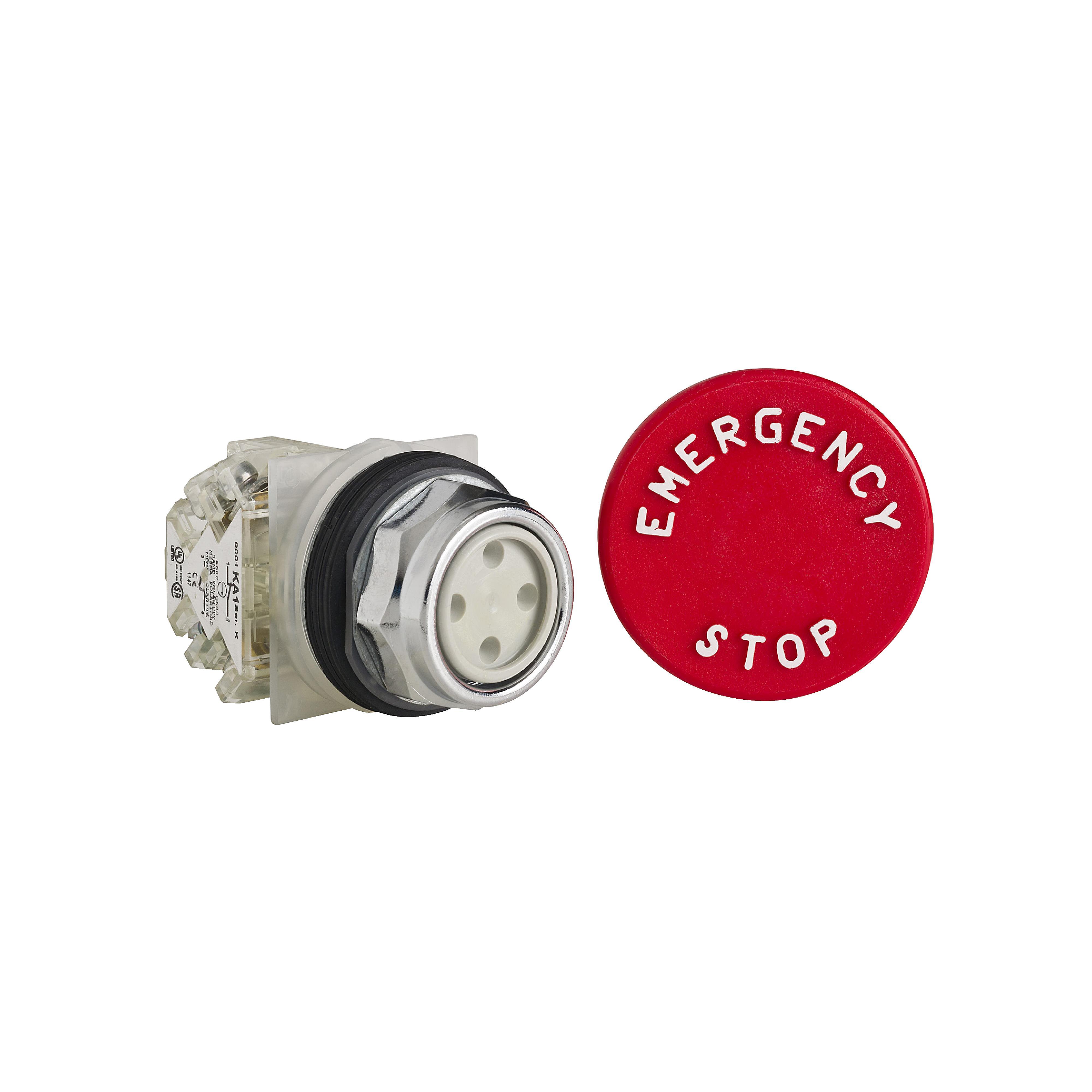
20 V AC/DC, 0.4VA, SPDT On-Mom, right-angle through-hole, -30°C to 75°C
Quick Engineering Summary
| Field | Value |
|---|---|
| Manufacturer | C&K Components |
| Category | Pushbutton Switches |
| Package | Tray |
| Core function | SWITCH PUSH SPDT 0. |
| Key electrical range | Current Rating (Amps): 0.4VA (AC/DC); Supply and Demand Status: Shortage; Temperature Range - Operating: -30°C ~ 75°C; Voltage Rating - AC: 20 V |
| Reported stock | 6 pcs reported — confirm on RFQ |
Unknown lifecycle is the weak point, shortage is the blocker
The weak point comes first: lifecycle is still marked Unknown, so this listing does not support a fresh design-in on its own. The stronger signal is supply. It is flagged Shortage, with stock shown as 6, and that is too thin to support a new program unless you already control build rate and can secure material immediately.
That leaves E125SD1ABE in sustaining duty, not as a clean-sheet choice. In an existing build, the mix of SPDT, On-Mom action, right-angle through-hole mounting, and process sealing may be exactly what keeps the board unchanged, while EU RoHS compliance removes compliance status as the deciding issue.
0.4VA is the number that decides whether it belongs
0.4VA is the ceiling that decides the fit. It places E125SD1ABE in low-power signal switching and rules out any use that treats the contacts like a general-purpose power switch. The 20 V AC and 20 V DC ratings are ceilings as well, so they answer the rail question only up to that limit, not contact stress under every load shape.
The SPDT circuit and On-Mom function narrow the use case in a useful way: momentary user input, mode select, reset, or low-energy routing where a changeover contact is required. Get that wrong and the failure mode is not subtle; contact life drops or intermittent field behavior shows up long before the mechanical format becomes the problem.
The -30°C to 75°C operating range is another boundary. It covers ordinary indoor and light industrial temperature bands, but it does not qualify the switch for hotter enclosures or wider ambient swings.
Good board fit, but only for low-energy human interface work
A narrow fit.
E125SD1ABE works on a PCB edge where a right-angle, through-hole pushbutton needs to survive assembly cleaning or board wash, because the listing calls it process sealed and gives PC pin termination. The round white plunger and no-marking actuator also point to simple operator input rather than a control that needs legend feedback on the switch itself.
It does not belong in panel-power switching, elevated voltage headroom, or applications that need broad environmental margin. The package and function point to a board-mounted momentary input, and the 0.4VA and 20 V ceilings keep it there.
The buy constraint is immediate availability
The constraint is immediate availability: shortage, with 6 shown in stock. If E125SD1ABE is on a running BOM, reserve material against actual build demand now and avoid opening a second use case on the same line.
View the Win-Source product page for E125SD1ABE.
The missing details are the ones that close contact risk
Wrong for high-confidence contact-risk decisions with incomplete detail. Right for a narrow first-pass fit check on circuit, action, mounting style, and top-line electrical ceilings.
What is missing matters because the absent items are the ones that close real design questions. E125SD1ABE is listed with SPDT, On-Mom action, right-angle through-hole mounting, process sealing, and 20 V AC, 20 V DC, and 0.4VA ceilings, but not with contact resistance, insulation resistance, or dielectric strength. Those values determine how cleanly it handles low-level signals and how much isolation margin the switch body gives the board.
Mechanical life and electrical life are also absent, which leaves duty cycle unresolved. For a momentary pushbutton, those figures often separate an occasional setup input from a front-panel control that gets used all day, every day, and that distinction matters more here than any broad marketing label.
There is no drawing or pinout here either. For a right-angle through-hole part, that is a practical gap, because lead pattern and body geometry decide whether E125SD1ABE drops into the board and clears the enclosure without a footprint respin.
View the Win-Source product page for E125SD1ABE.
Key Takeaways for Engineers & Buyers
- Keep E125SD1ABE off rails above 20 V AC or 20 V DC.
- Use E125SD1ABE only where a 0.4VA contact ceiling is acceptable.
- Cover the shortage now; listed stock is 6 and package is tray.