
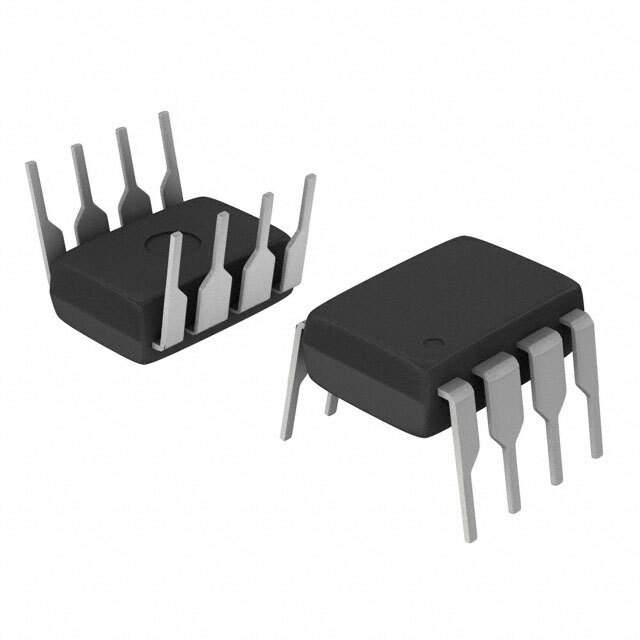
32kHz max input, 1.1 V to 2.2 V supply, 8-DIP through-hole, -20°C to 70°C: enough to place it, not reopen a platform.
Quick Engineering Summary
| Field | Value |
|---|---|
| Manufacturer | Microchip Technology |
| Category | Clock/Timing - Application Specific |
| Package | 8-DIP |
| Core function | IC CLOCK 32KHZ DGTL-TRIM 8DIP |
| Key electrical range | Maximum Input Frequency: 32kHz; Supply and Demand Status: Balance; Supply Voltage - Operating: 1.1 V to 2.2 V; Temperature Range - Operating: -20°C to 70°C |
| Reported stock | 1 pcs reported — confirm on RFQ |
32kHz is the first gate, and it closes fast
32kHz is the decisive number here. It is the maximum input frequency, so it sets a hard eligibility limit for the clock path. Past that point, the part is simply out. The listing does not give jitter, accuracy, startup behavior, or margin near the ceiling.
That narrow use case shapes the rest of the fit. E1466DAO-DOF is a single-circuit, application-specific clock device in an 8-DIP through-hole body, which keeps it in established low-frequency boards that already have room for PDIP assembly and do not need PLL behavior. It does not belong in a denser surface-mount refresh, and the low supply range does not change that.
That low-voltage range helps only if the board already matches it
And the supply range is just as restrictive. E1466DAO-DOF runs from 1.1 V to 2.2 V, so rail compatibility has to be there already. That range does not tell you tolerance to transients, sequencing, or behavior outside the window. If the clock rail sits elsewhere, the part is out before layout starts.
Temperature sets the next boundary. The listed operating range is -20°C to 70°C, which fits ordinary indoor or lightly controlled equipment, not hardware that must handle wider ambient swings. Push beyond that window and the risk is direct: the clock source is being asked to operate outside the only range the listing gives.
New design-in is off the table
New design-in is out.
E1466DAO-DOF is marked EOL, and the available quantity is 1. That settles it: sustaining designs only, and only where the board already expects an 8-DIP through-hole clock device with no PLL and a 32kHz ceiling. The compliance picture also needs resolution before release, because one field shows EU RoHS while another says RoHS Non-Compliant.
Can you keep a line running on one piece in tube packaging?
Can you keep a line running on one piece in tube packaging? No, unless the need is a one-off repair or a very small sustaining event.
The stock figure is 1, the packaging is Tube/Rail, and the lifecycle is EOL, so E1466DAO-DOF is not a practical source for ongoing production coverage. Reserve it only against a known existing unit requirement, not against forecast, and do not let it become the accidental anchor for a continuing build plan.
Mechanical fit is at least clearer than supply. The listing points to 8-DIP, and the package callout also says 8-PDIP, both through-hole formats, so the package story is consistent enough for older socketed or wave-soldered assemblies. What remains open is the detail that decides whether a last-time buy really drops in without rework: lead form, body drawing, and pinout are not settled here, and a nominal DIP label by itself is not enough when the package family is this broad.
The missing details are the real stop signs
The constraint is missing definition. Pinout, package drawing, output description, and timing quality data such as startup or accuracy behavior are not given, and ECAD access is gated.
View the Win-Source product page for E1466DAO-DOF.
Key Takeaways for Engineers & Buyers
- Lock E1466DAO-DOF to existing builds only; lifecycle is EOL and stock is 1.
- Keep the clock path at or below 32kHz; that figure is a ceiling, not a target for margin-free operation.
- Resolve the RoHS conflict before release, because the record shows both RoHS Compliant and RoHS Non-Compliant.