
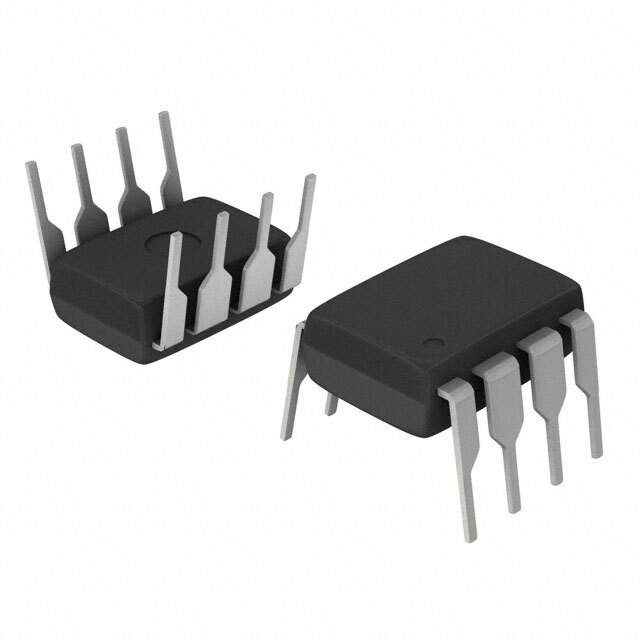
32kHz max, 1.1 V to 2.2 V supply, 8-DIP through-hole, -20°C to 70°C: existing builds only
Quick Engineering Summary
| Field | Value |
|---|---|
| Manufacturer | Microchip Technology |
| Category | Clock/Timing - Application Specific |
| Package | 8-DIP |
| Core function | IC CLOCK 32KHZ DGTL-TRIM 8DIP |
| Key electrical range | Frequency - Max: 32kHz; Operating Supply Voltage: 1.1 V ~ 2.2 V; Operating Temperature Range: -20°C ~ 70°C; Supply and Demand Status: Limited |
| Reported stock | 1 pcs reported — confirm on RFQ |
EOL kills new design-in, even though the fit is narrow and clear
The weak point comes first: E1466DHO-P8 is EOL, and that alone ends any case for new design-in. What it did fit is still clear enough to describe: a single-circuit, application-specific 32kHz clock in an 8-DIP through-hole package, running from 1.1 V to 2.2 V and rated for -20°C to 70°C.
So this is a sustaining part, not a forward path. Stock is listed at 1 and supply status is Limited, which turns availability into the immediate problem. EU RoHS is not settled either, because one field says compliant and another says non-compliant.
The numbers box you into a low-voltage, room-grade clock slot
The constraint is tight. A 1.1 V to 2.2 V operating supply range puts E1466DHO-P8 in very low-voltage designs only, and 2.2 V is the ceiling named here, not a point to lean past.
The 32kHz maximum frequency sets another hard limit. This is low-frequency timing duty, not general clock generation, and any design that needs margin above 32kHz rules it out early. The -20°C to 70°C operating range is just as specific: fine for ordinary indoor equipment, not for colder starts or hotter enclosed ambient conditions.
Package and missing detail decide whether E1466DHO-P8 is usable at all
Use it carefully.
E1466DHO-P8 is through-hole in 8-DIP (0.300", 7.62mm) form and packaged in tube. It is one circuit with no PLL, which points to a straightforward low-frequency timing position where an established footprint matters more than density. In products already built around socketed or wave-soldered DIP timing parts, that package can work in its favor. In compact boards, surface-mount assembly flows, or layouts under area pressure, it becomes the first reason to stop.
The larger problem is the missing integration detail, because several items that decide real usability are absent from the visible specs, and without them you cannot close signal-level fit or board-level fit with confidence. There is no pinout, no package drawing beyond the basic 8-DIP callout, and no output or input description. There is also no accuracy figure, no trimming detail beyond the phrase digital-trim in the description, and no startup behavior. Those gaps matter on a 32kHz timing part: they determine whether system timing is met, whether firmware can trust the clock at power-up, and whether the board can even be wired correctly once the full part documentation is in hand.
Buy only against a named build
And that carries straight into purchasing: with stock at 1 and supply marked Limited, buy E1466DHO-P8 only for a specific sustaining requirement.
View the Win-Source product page for E1466DHO-P8.
Key Takeaways for Engineers & Buyers
- Freeze E1466DHO-P8 to sustaining BOMs only; lifecycle is EOL.
- Check rail compatibility first: E1466DHO-P8 operates from 1.1 V to 2.2 V only.
- Reserve through-hole space for an 8-DIP (0.300", 7.62mm) body before touching layout.