
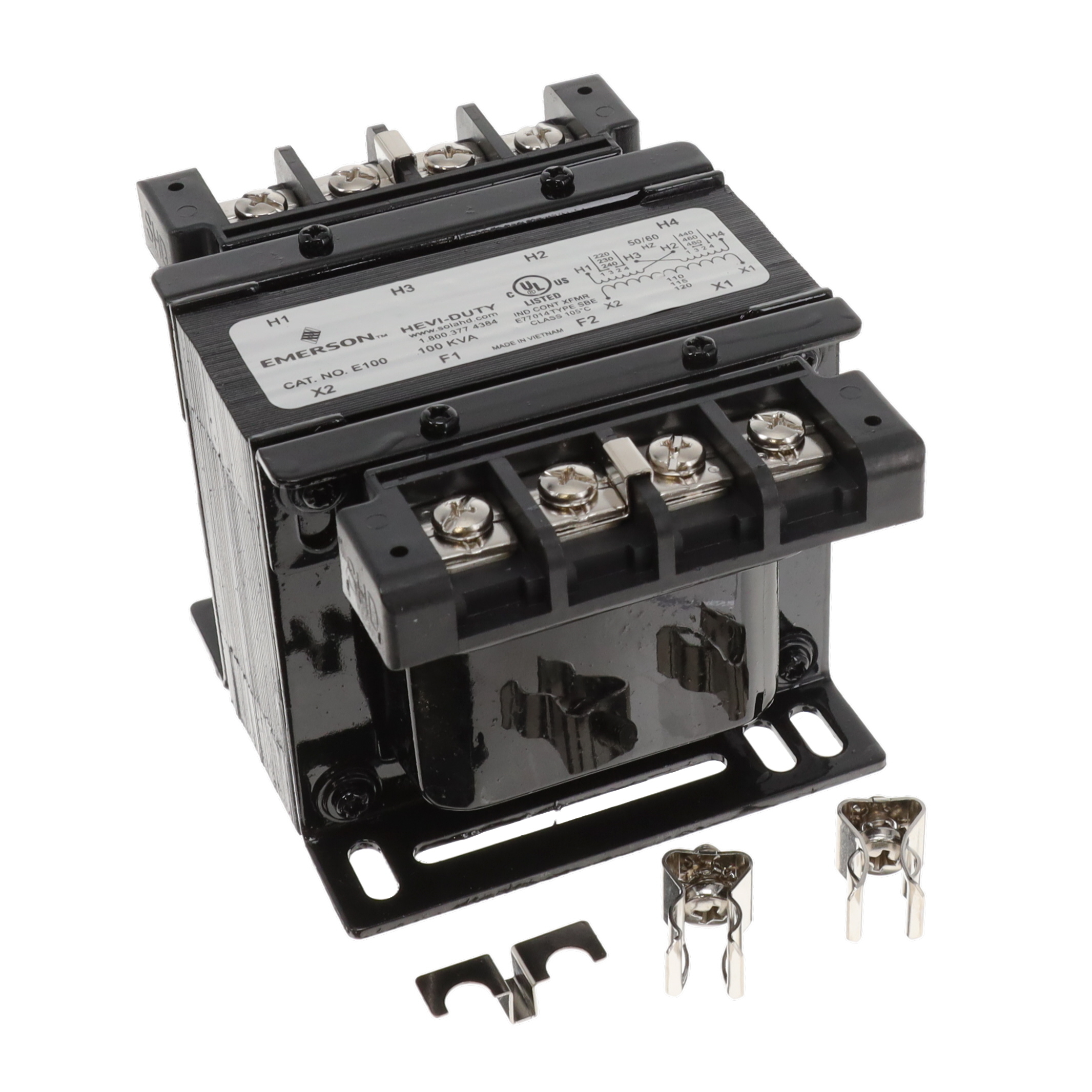
150VA ceiling, 120V/240V dual primary taps, 24V full-load secondary, chassis-mount laminated core
Quick Engineering Summary
| Field | Value |
|---|---|
| Manufacturer | SolaHD |
| Category | Power Transformers |
| Package | Box |
| Core function | PWR XFMR LAMINATED 150VA CHAS MT |
| Key electrical range | Power - Max: 150VA; Supply and Demand Status: Shortage; Voltage - Primary: 120V, 240V; Voltage - Secondary (Full Load): 24V |
| Reported stock | 2 pcs reported — confirm on RFQ |
150VA is the real design limit here
The constraint is capacity, not voltage selection. E150E gives you a 24V secondary at full load, but 150VA is the number that closes the first design decision, because it sets the ceiling on what the transformer can deliver before the rest of the thermal and regulation story even starts.
The 120V and 240V primary options matter for another reason: they let one chassis design cover more than one mains input plan, and the dual, multiple-tap primary says this unit is meant to be wired into that choice rather than treated like a universal-input black box. Get that wrong and the build fails at first power-up, even if the secondary voltage still looked familiar on paper.
A center tap can help when the downstream supply needs it. If it doesn't, it's just more wiring to manage. In practice, E150E fits line-frequency, chassis-mounted power stages where a laminated core and solder or quick-connect terminations are acceptable, not compact assemblies that need a board-mounted magnetics answer.
Not for compact layouts; right for wired chassis power
This is wrong for dense, space-sensitive packaging. E150E is chassis mount with a laminated core and solder or quick-connect terminations, so it belongs in a wired power compartment with mechanical support from the enclosure, not on a PCB footprint.
Where it does fit is straightforward mains-frequency conversion in equipment that can use a single 24V secondary and may benefit from a center tap. The package field says Box, but that does not settle the installed size question; the listing gives no dimensions, no mounting drawing, and no height figure. That gap matters more than the package label, because mechanical interference is what keeps a chassis transformer out of production.
Buy risk is stock, not lifecycle
Active is fine.
The real constraint is availability: stock is 2 and supply status is Shortage. E150E is not a lifecycle problem today, and EU RoHS is already covered, but it is a scheduling problem if you need more than a sample or repair quantity. Reserve parts for prototype or sustaining demand first, then place any production buy early enough that the shortage does not stall the line.
The missing details are the ones that close the build
Weak listing, usable part. E150E still needs isolation voltage, dimensions, mounting height, output current, weight, and a drawing before a chassis release can close.
View the Win-Source product page for E150E.
Key Takeaways for Engineers & Buyers
- Lock the mains scheme first: E150E supports 120V and 240V on a dual, multiple-tap primary.
- Treat 150VA as the loading ceiling; don't size the build from the 24V secondary alone.
- Place the buy now if E150E is on the BOM; stock is 2 and supply status is Shortage.